


Attorney
Your real estate investment represents one of your most significant financial assets, but a single property dispute can quickly turn that security into a source of constant stress. You shouldn’t have to face the fear of long, expensive court battles alone or feel ignored by a law firm that treats you like a case number. It’s frustrating to deal with confusing statutes while your property’s value hangs in the balance. You need a clear understanding of where you stand and a direct line to a professional who will fight for your rights.
This article provides a strategic roadmap for resolving property disputes under Pennsylvania law. By working with an experienced real estate litigation attorney Pennsylvania, you can move past the uncertainty of unresponsive legal counsel and complex filing deadlines. We will explore how to protect your investment through aggressive advocacy, the specific statutes of repose affecting your claims, and the tactical steps required to achieve a favorable resolution in the Commonwealth’s court system.
Legal Disclaimer: This article is provided for general informational and educational purposes only and is not intended to provide legal advice regarding any specific situation. Reading this article or accessing DintinoLaw.com does not create an attorney-client relationship with D’Intino Law Firm, LLC or any of its attorneys. Every legal matter is different, and readers should consult with a qualified attorney regarding their individual circumstances.
Key Takeaways
- Learn the critical distinction between transactional property law and the aggressive advocacy required for successful real estate litigation.
- Identify common triggers for legal action in Pennsylvania, including breach of contract and title disputes that can threaten your equity.
- Understand the strategic differences between mediation and trial to determine the most effective path for resolving your specific property conflict.
- Discover why partnering with a seasoned real estate litigation attorney Pennsylvania ensures your case receives direct, hands-on attention from a trial lawyer.
- Gain a clear perspective on how protective, boutique legal representation helps safeguard your high-stakes real estate investments from long-term loss.
Understanding Real Estate Litigation in Pennsylvania
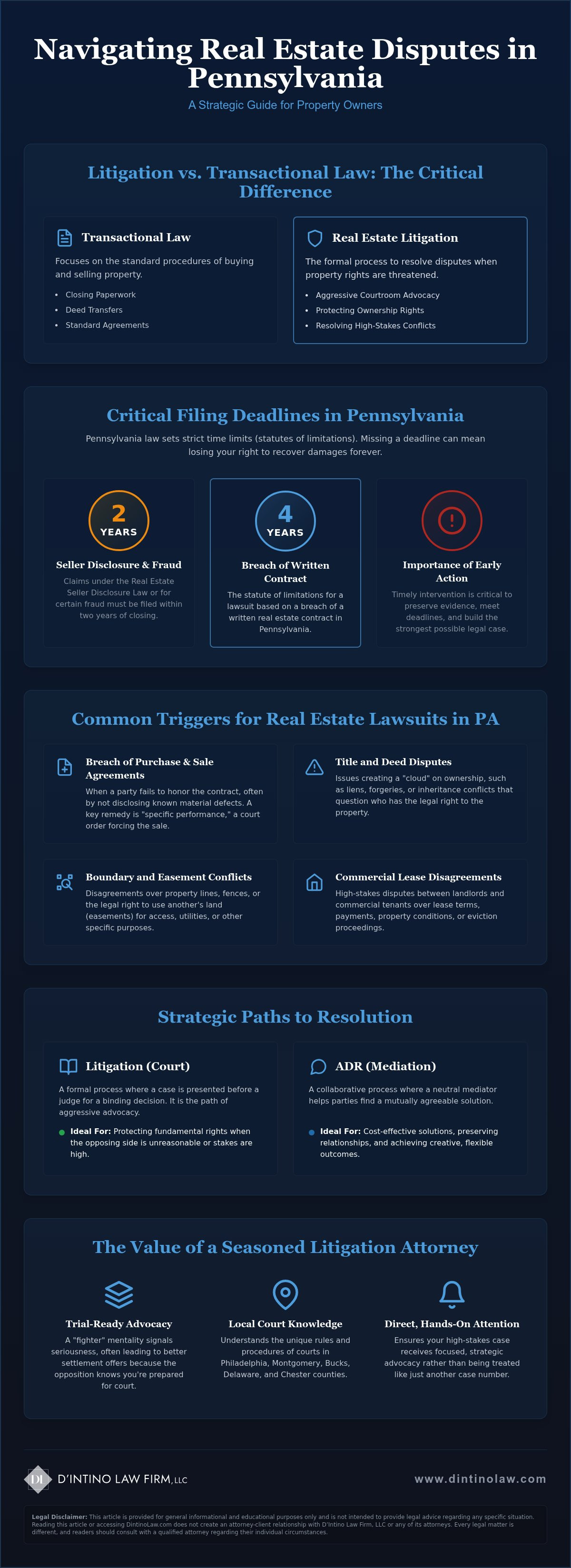
Real estate isn’t just about moving boxes; it’s about protecting one of your largest financial investments. Most property owners only deal with transactional law, which covers the standard paperwork and signatures of a closing. Real estate litigation is different. It’s the formal legal process used to resolve disputes when negotiations fail and property rights are threatened. While Property law in the United States provides a broad foundation, Pennsylvania has specific statutes that govern how these battles are fought in court.
A real estate litigation attorney Pennsylvania steps in when a deal goes sour or an ownership claim is challenged. This role focuses on aggressive courtroom advocacy, protecting your equity, and ensuring that your ownership rights remain intact. Pennsylvania’s legal landscape is unique. The rules and procedures in the Philadelphia County Court of Common Pleas often differ from those in Montgomery, Bucks, Delaware, or Chester counties. Success requires a local perspective that understands these regional nuances and how they impact your case.
When Does a Dispute Become a Legal Action?
Disputes often start as simple disagreements over repair costs or boundary lines. The “point of no return” usually arrives when one party stops communicating or a financial loss becomes unavoidable. You shouldn’t wait until a lawsuit is officially served to seek counsel. Timely intervention is critical to preserve your legal claims in Pennsylvania courts. Missing a filing deadline, such as the two year limit for certain fraud claims, can mean losing your right to recover damages forever. Early action allows your attorney to gather evidence while it’s still fresh and build a strategic path toward resolution.
The Scope of Litigation Services
Litigation services cover a wide range of high-stakes issues for both residential homeowners and commercial investors. This isn’t just about filing paperwork; it’s about civil litigation strategy. Key areas of focus include:
- Breach of contract claims where a buyer or seller fails to perform.
- Title and deed disputes that create “clouds” on ownership.
- Boundary and easement conflicts between neighbors or developers.
- Commercial lease disagreements involving significant financial stakes.
Your real estate litigation attorney Pennsylvania should be trial-ready from the start. Even if a case eventually settles, having a “fighter” mentality in your corner shows the opposition that you won’t be pushed around. This level of preparedness often leads to better settlement terms because the other side knows you’re ready to present your case before a judge if necessary.
Common Triggers for Real Estate Lawsuits in PA
Real estate transactions in Pennsylvania involve intricate layers of disclosure, financing, and physical boundaries. When one of these layers fails, litigation often follows. Understanding these triggers is the first step in protecting your investment and your peace of mind. Most disputes fall into a few specific categories that require a “fighter” mentality to resolve effectively.
Breach of Purchase and Sale Agreements
Contracts are the backbone of any property deal. A breach occurs when a party fails to honor their side of the agreement. In Pennsylvania, one of the most frequent triggers is the failure to disclose material defects. The Pennsylvania State Real Estate Commission sets standards for disclosure, and violating these can lead to lawsuits. Under the Real Estate Seller Disclosure Law, claims must be filed within two years of the final settlement date. This absolute deadline makes immediate action essential if you discover a hidden defect after closing.
Buyers may seek monetary damages to cover repair costs, or they might seek to hold the seller accountable for a breach of the written contract. In Pennsylvania, the statute of limitations for a breach of a written real estate contract is four years. Sometimes, money isn’t enough to make things right. Specific performance is a remedy where the court orders the completion of a sale. This is common when a seller tries to back out of a deal after the contract is signed, leaving the buyer without the property they were promised.
Title Disputes and Quiet Title Actions
A “cloud” on a title can stop a sale in its tracks. These issues often stem from historical liens, unrecorded encumbrances, or errors in public records. To fix this, you may need a “Quiet Title” action. This is a lawsuit filed specifically to establish a party’s title to real property against anyone else. A real estate litigation attorney Pennsylvania uses this process to clear the path for future sales or refinancing. It effectively “quiets” any other claims to the land, giving you the legal certainty you need to move forward.
Commercial and Partnership Conflicts
High-stakes investments often involve multiple partners or joint ventures. When management disagreements or profit distribution issues arise, the project can stall. Disagreements between real estate developers are common in growing areas like Philadelphia. These cases require a sophisticated understanding of both contract law and property rights. A Real Estate Lawyer Philadelphia: Protecting Your Property and Interests can help navigate these internal disputes. If your partnership agreement is being ignored, you need a strategy that protects your capital and your reputation.
Boundary and easement conflicts also trigger litigation. Whether it’s a neighbor encroaching on your lot or a dispute over a shared driveway, these issues affect your property’s value. Strategic litigation ensures these physical limits are respected. If you are facing an escalating dispute, it’s wise to consult with a legal professional who understands the local court systems and can provide a clear path to resolution. When a trusted partner stops communicating or funds are frozen, understanding the legal frameworks governing real estate litigation: joint venture and partnership disputes in Pennsylvania is essential to protecting your equity.
Litigation vs. Alternative Dispute Resolution (ADR)
Choosing the right path for a property dispute is a tactical decision that impacts your timeline, budget, and final outcome. Many standard Pennsylvania residential sales agreements contain mandatory mediation clauses. Mediation is a collaborative process where a neutral third party helps both sides reach a voluntary agreement. It’s often faster than a trial, but it lacks the finality of a court order. If the other side isn’t negotiating in good faith, mediation can feel like a waste of valuable time. You need to know when to pivot from a handshake to a more assertive stance.
Traditional litigation is the necessary choice when property rights are non-negotiable or when the financial stakes are too high to risk a weak compromise. An experienced real estate litigation attorney Pennsylvania evaluates your case to see if a courtroom battle is the only way to protect your interests. While the Pennsylvania State Real Estate Commission regulates the conduct of licensees, it doesn’t resolve private civil disputes. That’s where the court system comes in. A boutique firm approach ensures your lead attorney personally assesses the cost-effectiveness of each path, rather than following a corporate checklist.
The Pros and Cons of Settling Out of Court
Settling offers confidentiality and speed, which is often a priority for commercial investors. It keeps the details of your financial holdings and business strategies out of the public record. However, a settlement only works if it reflects the true value of your claim. This is where a “fighter” mentality becomes your greatest asset. When you’re fully prepared for trial, you gain significant leverage at the bargaining table. The opposition is much more likely to offer a fair deal when they realize you’re ready to present your evidence to a judge or jury.
Pennsylvania Court Procedures for Property Cases
If a case proceeds to litigation, it moves into the discovery phase. This is a methodical period where both sides gather evidence, take depositions, and exchange documents. In property cases, this often involves hiring expert witnesses like land surveyors or structural engineers to provide technical testimony. Pre-trial motions are also a critical part of the process. These legal filings can sometimes resolve specific parts of a case before the trial even begins. Whether your dispute ends in a bench trial decided by a judge or a jury trial, the goal is a clear, enforceable judgment that secures your investment for the long term.
Legal Disclaimer: This article is provided for general informational and educational purposes only and is not intended to provide legal advice regarding any specific situation. Reading this article or accessing DintinoLaw.com does not create an attorney-client relationship with D’Intino Law Firm, LLC or any of its attorneys. Every legal matter is different, and readers should consult with a qualified attorney regarding their individual circumstances.
Selecting a Real Estate Litigation Attorney Pennsylvania
Selecting a real estate litigation attorney Pennsylvania is a high-stakes decision that directly impacts the safety of your property investment. You shouldn’t settle for a faceless corporate entity where your case is just another file on a massive stack. You need a partner who understands the specific procedural nuances of Pennsylvania’s court systems. Each county, from Philadelphia to Chester, has its own set of local rules that can influence the speed and outcome of your litigation. A lawyer with deep regional knowledge knows how to move through these systems efficiently.
One of the most significant risks in hiring a large firm is the “associate hand-off.” You might meet a senior partner during the initial consultation only to have your case managed by a junior associate with limited trial experience. This lack of continuity can lead to miscommunication and a diluted strategy. Direct attorney access is non-negotiable when your equity is on the line. You deserve a seasoned advocate who is personally invested in your success and remains your primary point of contact from start to finish.
Questions to Ask During Your Consultation
Before you sign a retainer, you must vet your potential advocate. Start by asking how many cases like yours they’ve taken to trial in Pennsylvania. Many attorneys prefer to settle because they aren’t comfortable in a courtroom. You want a litigator who is ready to fight if a settlement doesn’t meet your needs. Ask whether you’ll be working directly with the lead attorney or an associate. Finally, ask for their specific strategy regarding your title or contract dispute. A clear, strategic roadmap is a sign of an experienced professional.
The Importance of Personalized Advocacy
Limiting caseloads is a hallmark of boutique service. It allows for a deeper focus on complex litigation that high-volume firms often overlook. This personalized approach means your attorney has the time to uncover critical details that could turn the tide of your case. Transparency is equally vital. You should receive a clear explanation of fees and a logical plan for your legal journey. With over two decades of local legal experience, a dedicated advocate provides the tenacity and technical precision required to protect your real estate interests. If you’re facing a high-stakes property conflict, you can reach out to a dedicated trial lawyer to discuss your options.
Legal Disclaimer: This article is provided for general informational and educational purposes only and is not intended to provide legal advice regarding any specific situation. Reading this article or accessing DintinoLaw.com does not create an attorney-client relationship with D’Intino Law Firm, LLC or any of its attorneys. Every legal matter is different, and readers should consult with a qualified attorney regarding their individual circumstances.
Strategic Advocacy with D’Intino Law Firm, LLC
When you’re facing a property dispute that threatens your financial future, you can’t afford to be just another case number in a high-volume law firm. D’Intino Law Firm, LLC provides a boutique experience where quality of representation always takes priority over the quantity of cases. You won’t be passed off to a junior associate or a case manager who is unfamiliar with the details of your investment. Instead, you’ll have direct access to John D’Intino Jr. from your initial consultation through the final resolution of your case.
A seasoned real estate litigation attorney Pennsylvania must be more than just a legal advisor; they must be a protective partner who understands the high stakes involved. With over 20 years of legal experience, John D’Intino Jr. brings a fighter mentality to every dispute, whether it involves a complex commercial partnership or a residential boundary conflict. This aggressive courtroom presence is always tempered by empathetic support for the client. We serve clients throughout Philadelphia and the surrounding counties, including Media in Delaware County and West Chester in Chester County, ensuring local expertise is applied to every Pennsylvania property matter.
Protecting Your Real Estate Interests
Every property dispute requires a unique strategy. We provide tailored advocacy for a diverse range of clients, including:
- Real Estate Developers: Resolving joint venture conflicts and contract breaches to keep projects on schedule.
- Landlords: Protecting rental investments and navigating complex lease litigation. When a tenant fails to pay rent or violates a lease, working with experienced eviction lawyers for landlords ensures every procedural step is handled correctly to avoid costly delays.
- Homeowners: Defending equity against title defects, disclosure failures, and boundary encroachments.
We believe in transparency and clarity. You’ll receive a strategic roadmap of your case explained in plain English, not dense legalese. We prioritize financial transparency so you always understand the costs associated with your litigation. If you’re ready to discuss your needs, you can schedule a consultation to explore your legal standing and potential paths to resolution.
Your Partner in Pennsylvania Property Law
Legal uncertainty can make you feel like you’ve lost control of your investment. Our goal is to restore that agency by providing decisive, results-oriented representation. We guide you through the complexities of the Pennsylvania court system with a steady, confident pace that mirrors the urgency of your situation. You don’t have to face unresponsive firms or confusing statutes alone. Contact D’Intino Law Firm, LLC today to begin building a strategic defense for your property rights.
Legal Disclaimer: This article is provided for general informational and educational purposes only and is not intended to provide legal advice regarding any specific situation. Reading this article or accessing DintinoLaw.com does not create an attorney-client relationship with D’Intino Law Firm, LLC or any of its attorneys. Every legal matter is different, and readers should consult with a qualified attorney regarding their individual circumstances.
Protecting Your Property Investments for the Future
Securing your real estate assets in the Commonwealth requires a combination of local procedural knowledge and a willingness to take a case to trial. As we have discussed, navigating the four-year statute of limitations for contracts or the strict two-year repose for seller disclosures is not a journey you should take alone. Success in these high-stakes matters depends on having a clear strategy that prioritizes your equity over a quick, undervalued settlement.
By choosing a real estate litigation attorney Pennsylvania who offers direct accountability, you ensure your case is never lost in the shuffle of a large firm. D’Intino Law Firm, LLC brings over 20 years of legal experience and a boutique, hands-on approach to property disputes in Philadelphia, Media, West Chester, and the surrounding counties. We are here to help you maintain control and protect what you’ve built. Contact D’Intino Law Firm, LLC for a Consultation to discuss your specific legal concerns and begin your path toward resolution.
Legal Disclaimer: This article is provided for general informational and educational purposes only and is not intended to provide legal advice regarding any specific situation. Reading this article or accessing DintinoLaw.com does not create an attorney-client relationship with D’Intino Law Firm, LLC or any of its attorneys. Every legal matter is different, and readers should consult with a qualified attorney regarding their individual circumstances.
Frequently Asked Questions
What is the difference between a real estate lawyer and a real estate litigation attorney?
A standard real estate lawyer typically manages the logistics of buying or selling property, such as title insurance and settlement. In contrast, a real estate litigation attorney Pennsylvania focuses on resolving conflicts that arise when those transactions fail or ownership is challenged. You need a litigator when you’re facing a courtroom battle or high-stakes negotiations that require an aggressive advocate to protect your financial interests.
How long does a real estate lawsuit typically take in Pennsylvania?
The duration of a property lawsuit in Pennsylvania depends on the complexity of the case and the court’s current backlog. A straightforward dispute that reaches an early settlement might be resolved in 90 to 120 days. However, cases involving extensive discovery, expert witnesses, or a full jury trial in counties like Philadelphia or Montgomery can take 18 to 24 months to reach a final judgment.
Can I recover my attorney fees in a PA real estate dispute?
Pennsylvania follows the “American Rule,” meaning each party generally pays their own legal fees. You can only recover attorney fees if a specific state statute allows for it or if your written contract contains a “prevailing party” clause. Many standard real estate agreements include this provision, which allows the winner of the litigation to seek reimbursement for their legal costs from the losing party.
What should I do if a buyer breaches a real estate contract in Philadelphia?
If a buyer fails to perform under a purchase agreement, you should first review the “Default” section of your contract. Depending on the terms, you may be entitled to keep the buyer’s earnest money deposit as liquidated damages. Alternatively, you might file a lawsuit for specific performance to compel the buyer to complete the purchase or seek monetary damages for the financial loss caused by the breach.
Is mediation required before filing a real estate lawsuit in Pennsylvania?
Pennsylvania law does not universally require mediation for all property disputes, but most residential sales agreements used in the state make it a mandatory first step. If your contract has a mediation clause, you must attempt this alternative dispute resolution before you can file a formal complaint in court. Failing to do so could result in your case being stayed or dismissed by the judge.
What is a Quiet Title action and when is it necessary?
A Quiet Title action is a lawsuit used to clear “clouds” on a property title, such as old liens, unrecorded deeds, or boundary errors. This is necessary when you cannot sell or refinance because someone else might have a claim to the land. The court’s judgment “quiets” these claims, establishing you as the sole, rightful owner and ensuring the title is marketable for future transactions.
How can I stop a neighbor from encroaching on my property line in PA?
If a neighbor builds on your land or uses your property without permission, you should first obtain a certified survey to verify the encroachment. A real estate litigation attorney Pennsylvania can then file an action in ejectment or seek an injunction to stop the trespass. Acting quickly is essential to prevent the neighbor from claiming rights to your land through the legal doctrine of adverse possession.
What are the most common reasons for commercial real estate litigation?
Commercial disputes often involve higher financial stakes and more complex organizational structures than residential cases. Common reasons for litigation include breaches of commercial leases, disagreements between joint venture partners over profit distribution, and conflicts regarding land use or zoning permits. These cases often require a methodical analysis of both contract law and specific Pennsylvania commercial property regulations to reach a resolution. For a deeper look at how these conflicts unfold and how to protect your equity, explore our guide on real estate litigation: joint venture and partnership disputes in Pennsylvania.
Legal Disclaimer: This article is provided for general informational and educational purposes only and is not intended to provide legal advice regarding any specific situation. Reading this article or accessing DintinoLaw.com does not create an attorney-client relationship with D’Intino Law Firm, LLC or any of its attorneys. Every legal matter is different, and readers should consult with a qualified attorney regarding their individual circumstances.
Disclaimer
Legal Disclaimer: The information provided on DintinoLaw.com, including articles, blog posts, testimonials, case results, and other content, is for general informational and educational purposes only and does not constitute legal advice or create an attorney-client relationship with D’Intino Law Firm, LLC or any of its attorneys. Visiting this website, submitting a contact form, sending an email, calling, texting, or otherwise communicating with the firm does not establish an attorney-client relationship or obligate the firm to represent you. Do not submit confidential, privileged, or time-sensitive information through this website or electronic communications unless and until the firm has expressly agreed to represent you. Legal rights, procedures, statutes of limitation, filing deadlines, and other requirements vary based on the facts and jurisdiction and may change over time; nothing on this website should be relied upon to determine whether a legal deadline applies to your matter. If you have an urgent legal matter or a potential filing deadline, consult a qualified attorney promptly. Testimonials and statements regarding client experiences are individual opinions and experiences and are not a guarantee of future results. Prior results, verdicts, settlements, or case examples do not guarantee or predict the outcome of any future case, and every matter is different. This website may constitute attorney advertising under applicable Pennsylvania rules. D’Intino Law Firm, LLC makes no representation that the information on this website is complete, current, or applicable to your particular circumstances. For legal advice concerning your specific situation, consult directly with a qualified Pennsylvania attorney. D’Intino Law Firm, LLC | Philadelphia, Pennsylvania | DintinoLaw.com
