


Attorney
What if a mistake from your past didn’t have to follow you into every job interview for the rest of your life? It’s a painful reality for many who find that an old arrest or conviction acts as a permanent barrier to their career. You’ve likely felt the sting of a rejected application or the deep frustration of trying to decipher complex legal codes on your own. Pursuing a criminal record expungement Pennsylvania law allows isn’t just about filing paperwork; it’s about reclaiming your reputation. We understand the fear of the courtroom and the stress that comes with these high-stakes legal hurdles.
This 2026 guide will show you how to clear your history using the latest legislative updates. We’ll break down the vital differences between automatic sealing under Clean Slate 3.0 and the formal petition process. You’ll discover the specific pathways available to you, whether you’re dealing with a summary offense or a third-degree felony. By the end, you’ll have a strategic path to move forward with confidence and leave the past behind.
Legal Disclaimer: This article is provided for general informational and educational purposes only and is not intended to provide legal advice regarding any specific situation. Reading this article or accessing DintinoLaw.com does not create an attorney-client relationship with D’Intino Law Firm, LLC or any of its attorneys. Every legal matter is different, and readers should consult with a qualified attorney regarding their individual circumstances.
Key Takeaways
- Distinguish between “Clean Slate” automatic sealing and a full expungement to determine which level of privacy you actually need.
- Check your eligibility for clearing non-convictions, summary offenses, and certain third-degree felonies recently added under the Clean Slate 3.0 expansion.
- Learn how to initiate the formal petition process by securing Form SP 4-170 and filing with the appropriate county Clerk of Courts.
- Discover the specific legal pathways for a criminal record expungement Pennsylvania residents can use to reclaim their professional future.
- Understand the importance of addressing “ghost records” in private databases to ensure your cleared history doesn’t reappear during a background check.
Understanding Expungement and Record Sealing in Pennsylvania
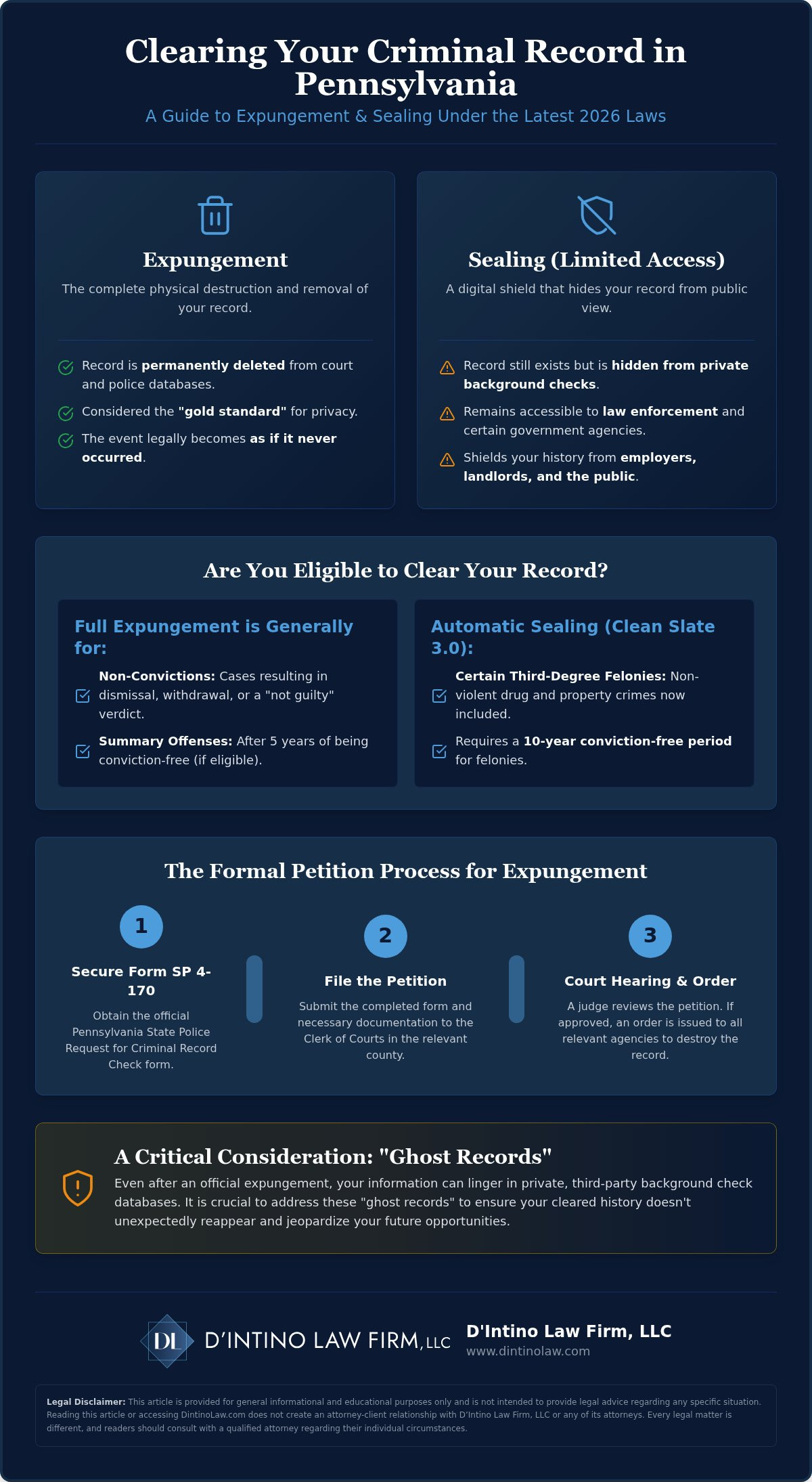
Criminal records don’t just document the past. They often dictate the future. In Pennsylvania, the legal system provides specific mechanisms to move forward, but you must understand the terminology to choose the right strategy. A criminal record expungement Pennsylvania residents pursue is the gold standard for privacy because it involves the physical destruction of the record. This means the court and police departments delete the information from their databases entirely. It’s a definitive way to close a chapter and ensure that an old mistake doesn’t resurface during a routine background check. We focus on providing this level of protection for our clients.
Pennsylvania distinguishes between expungement and sealing based on the severity of the offense. While an expungement erases the record, “limited access” or sealing acts as a digital shield. The record still exists within law enforcement systems, but it’s hidden from private employers, landlords, and the general public. It’s a strategic response to modern background screening. It is vital to remember that these state-level processes do not affect federal records. For a broader perspective on how these laws vary, you can research Expungement in the United States to see how Pennsylvania’s statutes compare to other jurisdictions. This knowledge helps you set realistic expectations for your legal journey.
Expungement vs. Sealing: What’s the Difference?
The primary difference lies in visibility. Expungement involves the complete removal of the record from court and police systems. It’s as if the event never occurred. Sealing keeps the record accessible to law enforcement but removes it from private background checks. Specifically, sealing hides your history from:
- Private sector employers
- Landlords and property managers
- The general public
The Benefits of Clearing Your Pennsylvania Record
Clearing your record opens locked doors. Many professional licensing boards in healthcare or education have strict standards. By securing a criminal record expungement Pennsylvania residents can finally move forward and remove these hurdles. In competitive areas like Philadelphia or Montgomery County, a clean background check is vital for securing a lease. Beyond practical benefits, there is profound relief. You reclaim your narrative and career.
Legal Disclaimer: This article is provided for general informational and educational purposes only and is not intended to provide legal advice regarding any specific situation. Reading this article or accessing DintinoLaw.com does not create an attorney-client relationship with D’Intino Law Firm, LLC or any of its attorneys. Every legal matter is different, and readers should consult with a qualified attorney regarding their individual circumstances.
Determining Your Eligibility for Expungement
Eligibility is the first hurdle in the process of a criminal record expungement Pennsylvania residents must clear. Many people mistakenly believe that if a charge was dismissed or withdrawn, it simply vanishes from their history. It doesn’t. These “non-convictions” stay on your record and remain visible to employers until you take legal action to remove them. Generally, if your case resulted in a “not guilty” verdict, a dismissal, or a withdrawal, you are eligible to petition for a full expungement immediately. We focus on these cases to ensure a client’s professional reputation remains untarnished by charges that never led to a conviction.
Recent legislative changes have expanded the horizon for those seeking a second chance. While traditional expungement is often reserved for non-convictions and minor violations, the 2024 implementation of Clean Slate 3.0 has changed how we view more serious records. Certain non-violent third-degree felonies, including specific drug and property crimes, are now eligible for automatic sealing after 10 conviction-free years. This is a significant shift that addresses a long-standing gap in the law. For those navigating these complexities, the Pennsylvania government guide on criminal records provides an official foundation for understanding these categories.
Expunging Summary Offenses and Minor Violations
Summary offenses are the least serious type of criminal charges in Pennsylvania, yet they can still create friction during a job search. Common examples include disorderly conduct, harassment, or retail theft. You can typically seek an expungement for a summary conviction if you’ve remained arrest-free for five years following the conviction. Under Rule 490, these petitions are often handled at the Magisterial District Court level. This “five-year rule” is a vital tool for individuals looking to put minor lapses in judgment behind them permanently.
Eligibility for Non-Convictions and ARD
The Accelerated Rehabilitative Disposition (ARD) program offers a unique path for first-time offenders. ARD is a diversionary program for first-time offenders. Once you successfully complete the program’s requirements, you are usually eligible to have the original charges expunged. In Philadelphia and surrounding counties, this process isn’t always automatic. You must ensure the petition is filed correctly to prevent “ghost records” from lingering in court databases. If you are unsure whether your specific charges qualify under the latest 2026 standards, consulting with a criminal defense advocate can provide the clarity you need to proceed.
Finally, Pennsylvania law provides specific relief for older individuals. If you are 70 years of age or older and have been free from arrest for at least 10 years since your conviction, you may be eligible for expungement. Similar rules apply to deceased individuals, allowing family members to clear a loved one’s name. These provisions acknowledge that a decades-old record shouldn’t define a person’s entire life.
Legal Disclaimer: This article is provided for general informational and educational purposes only and is not intended to provide legal advice regarding any specific situation. Every legal matter is different, and readers should consult with a qualified attorney regarding their individual circumstances.
The Step-by-Step Process to Petition for Expungement
You can’t clear a record you haven’t seen. The first step in a criminal record expungement Pennsylvania residents must take is requesting an Access and Review of their history. You must file Form SP 4-170 with the Pennsylvania State Police Central Repository. As of 2026, this request requires a $20 fee paid via certified check or money order. Once you receive your official arrest record, you can identify which specific charges are eligible for removal. Accuracy at this stage is vital. Even a small typo on your petition can lead to a summary rejection by the court.
After reviewing your record, you must file a formal petition in the county where the arrest occurred. Whether you are in Philadelphia, Montgomery, or Delaware County, you must choose the correct legal framework. Use Rule 790 for full expungements of non-convictions or summary offenses. Use Rule 791 if you are seeking “Limited Access” or sealing for qualifying misdemeanors. Filing fees vary by jurisdiction but often exceed $150 per petition. We ensure every detail matches the court’s strict requirements to prevent unnecessary delays or denials.
Filing Your Petition with the Clerk of Courts
Navigating a criminal record expungement Pennsylvania petition requires precision. You must provide the court with your full name, aliases, social security number, and the specific docket numbers for the cases you wish to clear. The Clerk of Courts will not correct errors for you; they will simply return the paperwork. We handle the heavy lifting of drafting these documents to ensure they meet the specific local rules of the county where your case originated. This proactive approach saves time and reduces the stress of the filing process.
Handling Objections from the District Attorney
Filing the petition is only half the battle. You must serve notice to the District Attorney’s office in the relevant county. The DA has the right to object to your petition, especially if they believe the public interest outweighs your privacy. If an objection is filed, the court will schedule a formal hearing. During this proceeding, a judge will hear arguments from both sides before deciding. This is where a felony defense attorney Philadelphia provides essential advocacy. Having a fighter in your corner ensures your voice is heard when the stakes are highest.
If the judge signs the expungement order, the work isn’t finished. The order must be served to all relevant agencies, including the State Police and the arresting department. This ensures the record is physically destroyed or sealed across all government databases. We track this process to confirm that the “clean slate” you were promised actually happens. We don’t stop until the job is done.
Legal Disclaimer: This article is provided for general informational and educational purposes only and is not intended to provide legal advice regarding any specific situation. Every legal matter is different, and readers should consult with a qualified attorney regarding their individual circumstances.
Pennsylvania’s Clean Slate Law: Automatic Sealing Explained
Pennsylvania’s Clean Slate law represents a major shift in justice reform. Unlike the formal petition process for a criminal record expungement Pennsylvania residents often pursue, Clean Slate is designed to be automatic. This means the state’s computer system identifies eligible records and seals them without you needing to file a single piece of paperwork. However, this automation relies on strict waiting periods and the full payment of all court-ordered fines and costs. If you still owe money to the court, the “automatic” clock never starts ticking. We often see clients frustrated because their records remain public simply due to an unpaid fee they didn’t know existed.
The waiting periods vary by the level of the offense. Summary offenses are typically sealed after 5 conviction-free years. Qualifying second and third-degree misdemeanors require 7 years. With the 2024 implementation of Clean Slate 3.0, certain non-violent third-degree felonies are now eligible after 10 conviction-free years. This expansion is a game-changer for those previously held back by old property or drug-related convictions. It provides a path to privacy that was previously unavailable to many.
What Charges Qualify for Automatic Sealing?
Many common offenses fall under this umbrella. This includes second and third-degree misdemeanors like certain DUI offenses or matters requiring a drug charge defense lawyer Philadelphia can assist with. Clean Slate 3.0 specifically added non-violent third-degree felonies such as theft, forgery, and fraud. These property-related crimes can now be hidden from public view if the 10-year requirement is met. It’s just as important to know what doesn’t qualify. Crimes involving violence, firearms, sexual offenses, or cruelty to animals are strictly excluded from automatic sealing. These records remain public unless you pursue other complex legal avenues.
The Limits of Automatic Sealing
While the system is supposed to be automatic, it’s far from perfect. Records frequently “fall through the cracks” due to technical glitches or incomplete data entry at the county level. If your record should have been sealed but still appears on background checks, you must take action. There is also a critical distinction between “Limited Access” and a full expungement. Sealing hides the record from the public but keeps it visible to law enforcement. If you need the record physically destroyed, an automatic process won’t suffice. You will still need to file a formal petition. If your record hasn’t updated as expected, contact our firm for a strategic review of your history.
Legal Disclaimer: This article is provided for general informational and educational purposes only and is not intended to provide legal advice regarding any specific situation. Every legal matter is different, and readers should consult with a qualified attorney regarding their individual circumstances.
Navigating Legal Hurdles with an Expungement Attorney
Clearing a record is more than just checking a box on a website. It involves untangling years of bureaucratic records across multiple jurisdictions. If you have arrests in Philadelphia and others in Montgomery or Bucks County, you face different local rules for each. A criminal record expungement Pennsylvania residents seek requires a personalized strategy to ensure no piece of the past is left behind. Attorney John D’Intino Jr. handles this directly. He manages the Clerk of Courts’ specific requirements so you don’t have to. This hands-on approach is vital for complex histories that don’t fit into the automatic “Clean Slate” categories.
One of the biggest risks of a DIY approach is the “ghost record.” Even after a court erases your official file, private background check databases often lag behind. These companies may continue to report your cleared history to potential employers. We don’t just file the paperwork; we provide the guidance needed to address these private entities. Our goal is to move you from a state of legal uncertainty to a strategic plan that protects your reputation long-term. This is especially important if you are also navigating supervision requirements, where working with a probation violation lawyer Philadelphia residents trust can help you avoid setbacks that could jeopardize your eligibility for expungement.
Why Experience Matters in Pennsylvania Courts
Each county operates with its own set of customs and procedures. What works in Philadelphia might be rejected in Bucks County due to a minor filing technicality. We ensure all law enforcement agencies, from the State Police to local townships, receive and acknowledge the final order. This is especially critical for sensitive matters involving an assault defense attorney Philadelphia PA. These records often carry a heavy stigma and require a “fighter” mentality to ensure they are fully purged from the system. We fight to make sure the District Attorney’s office understands why your record deserves to be cleared.
Next Steps: Taking Control of Your Criminal History
Reclaiming your future starts with a clear plan. When you prepare for an initial consultation, gather any docket transcripts or court notices you still have. If you don’t have them, we can help locate the necessary information through the Pennsylvania court portal. The timeline for a typical expungement often spans several months from the initial filing to the final destruction of the record. This depends heavily on the court’s current backlog and the responsiveness of the relevant police departments. You don’t have to live with the weight of a prior mistake. Contact D’Intino Law Firm, LLC for a dedicated review of your eligibility and start your journey toward a clean slate today.
Legal Disclaimer: This article is provided for general informational and educational purposes only and is not intended to provide legal advice regarding any specific situation. Every legal matter is different, and readers should consult with a qualified attorney regarding their individual circumstances.
Reclaiming Your Future and Your Reputation
Navigating the path to a clean slate doesn’t have to be a solo journey through complex bureaucracy. Pennsylvania laws have evolved to offer more second chances than ever before. Whether you qualify for automatic sealing under the Clean Slate 3.0 expansion or require a formal petition for a criminal record expungement Pennsylvania residents can now take decisive action. While automatic systems are helpful, they often miss technical details that only a seasoned advocate can catch. Ensuring your record is cleared across all databases is the only way to protect your career from “ghost records.” You’ve worked hard to move past your mistakes and your record should reflect that progress.
Don’t let an old arrest dictate your professional potential. Attorney John D’Intino Jr. brings over 20 years of criminal defense experience directly to your case. We serve Philadelphia, Montgomery, Bucks, and Delaware counties with a hands-on approach. Contact D’Intino Law Firm, LLC today for a free consultation regarding your Pennsylvania expungement. You deserve the peace of mind that comes with a truly clean history and the freedom to move forward.
Legal Disclaimer: This article is provided for general informational and educational purposes only and is not intended to provide legal advice regarding any specific situation. Every legal matter is different, and readers should consult with a qualified attorney regarding their individual circumstances.
Frequently Asked Questions
How long does the expungement process take in Pennsylvania?
A criminal record expungement Pennsylvania residents pursue typically takes between four to six months from the initial filing to the final destruction of the record. The timeline varies based on the specific county’s court backlog and how quickly the Pennsylvania State Police process the order. In Philadelphia, the high volume of cases can sometimes extend this window. We monitor every stage of the process to ensure agencies receive and act on the court’s directives without unnecessary delays.
Can I expunge a felony conviction in PA?
Full expungement for a felony conviction is rare and usually restricted to individuals over age 70 or those who have been deceased for three years. However, the 2024 implementation of Clean Slate 3.0 allows for the automatic sealing of certain non-violent third-degree felonies after ten conviction-free years. This includes specific drug and property crimes. While the record isn’t physically destroyed, it becomes hidden from private employers and landlords, providing a vital second chance for your career.
What is the difference between Clean Slate and expungement?
Clean Slate is an automatic process that seals qualifying records from public view but keeps them visible to law enforcement. Expungement is a proactive legal process where a judge orders the physical destruction of the record. While Clean Slate covers many misdemeanors and some felonies, a criminal record expungement Pennsylvania petition is generally required for non-convictions, summary offenses, and ARD completions. We help clients determine which pathway provides the maximum level of privacy for their specific professional goals.
Do I need to go to court for my expungement hearing?
You often don’t need to appear in court if the District Attorney’s office doesn’t object to your petition. In many counties like Montgomery or Delaware County, the judge signs the order based on the written paperwork. If the DA files a formal objection, a hearing is scheduled. During this proceeding, your attorney argues why the interest of justice supports clearing your record. We handle these high-stakes hearings to ensure your voice is heard by the court.
Will an expunged record still show up on an FBI background check?
An expunged record should not appear on an FBI background check once the Pennsylvania State Police update their central repository and notify federal authorities. However, private background check companies often maintain outdated databases. These “ghost records” can cause issues even after a successful expungement. We provide guidance on how to notify these private entities to ensure your cleared history doesn’t reappear during a high-level security clearance or a routine job screening in Philadelphia.
How much does it cost to expunge a criminal record in Philadelphia?
The total cost involves several state and local fees. You must pay a $20 fee to the Pennsylvania State Police for your initial record review. Court filing fees in Philadelphia and surrounding counties often exceed $150 per petition. These fees are set by the jurisdiction and are separate from any legal representation costs. It’s important to verify the current 2026 rates for your specific county before filing to avoid having your petition rejected for insufficient payment.
Can a DUI be expunged in Pennsylvania?
A DUI conviction generally cannot be expunged, but it may qualify for automatic sealing under Clean Slate after seven to ten conviction-free years. The primary exception is the Accelerated Rehabilitative Disposition (ARD) program. If you successfully complete ARD for a first-time DUI, you are typically eligible to have the original charges fully expunged. We work with clients across West Chester and Media to ensure their ARD completions lead to a permanent removal of the record from their history.
What happens if my expungement petition is denied?
If a judge denies your petition, you have the right to file an appeal with the Superior Court of Pennsylvania. Denials often happen because the District Attorney successfully argued that the record serves a public interest or because the waiting period hasn’t been fully met. We analyze the reasons for the denial to determine if a different legal strategy is possible. Sometimes, waiting for additional time to pass or seeking a pardon is the next logical step toward clearing your name.
Legal Disclaimer: This article is provided for general informational and educational purposes only and is not intended to provide legal advice regarding any specific situation. Every legal matter is different, and readers should consult with a qualified attorney regarding their individual circumstances.
Disclaimer
Legal Disclaimer: The information provided on DintinoLaw.com, including articles, blog posts, testimonials, case results, and other content, is for general informational and educational purposes only and does not constitute legal advice or create an attorney-client relationship with D’Intino Law Firm, LLC or any of its attorneys. Visiting this website, submitting a contact form, sending an email, calling, texting, or otherwise communicating with the firm does not establish an attorney-client relationship or obligate the firm to represent you. Do not submit confidential, privileged, or time-sensitive information through this website or electronic communications unless and until the firm has expressly agreed to represent you. Legal rights, procedures, statutes of limitation, filing deadlines, and other requirements vary based on the facts and jurisdiction and may change over time; nothing on this website should be relied upon to determine whether a legal deadline applies to your matter. If you have an urgent legal matter or a potential filing deadline, consult a qualified attorney promptly. Testimonials and statements regarding client experiences are individual opinions and experiences and are not a guarantee of future results. Prior results, verdicts, settlements, or case examples do not guarantee or predict the outcome of any future case, and every matter is different. This website may constitute attorney advertising under applicable Pennsylvania rules. D’Intino Law Firm, LLC makes no representation that the information on this website is complete, current, or applicable to your particular circumstances. For legal advice concerning your specific situation, consult directly with a qualified Pennsylvania attorney. D’Intino Law Firm, LLC | Philadelphia, Pennsylvania | DintinoLaw.com
