


Attorney
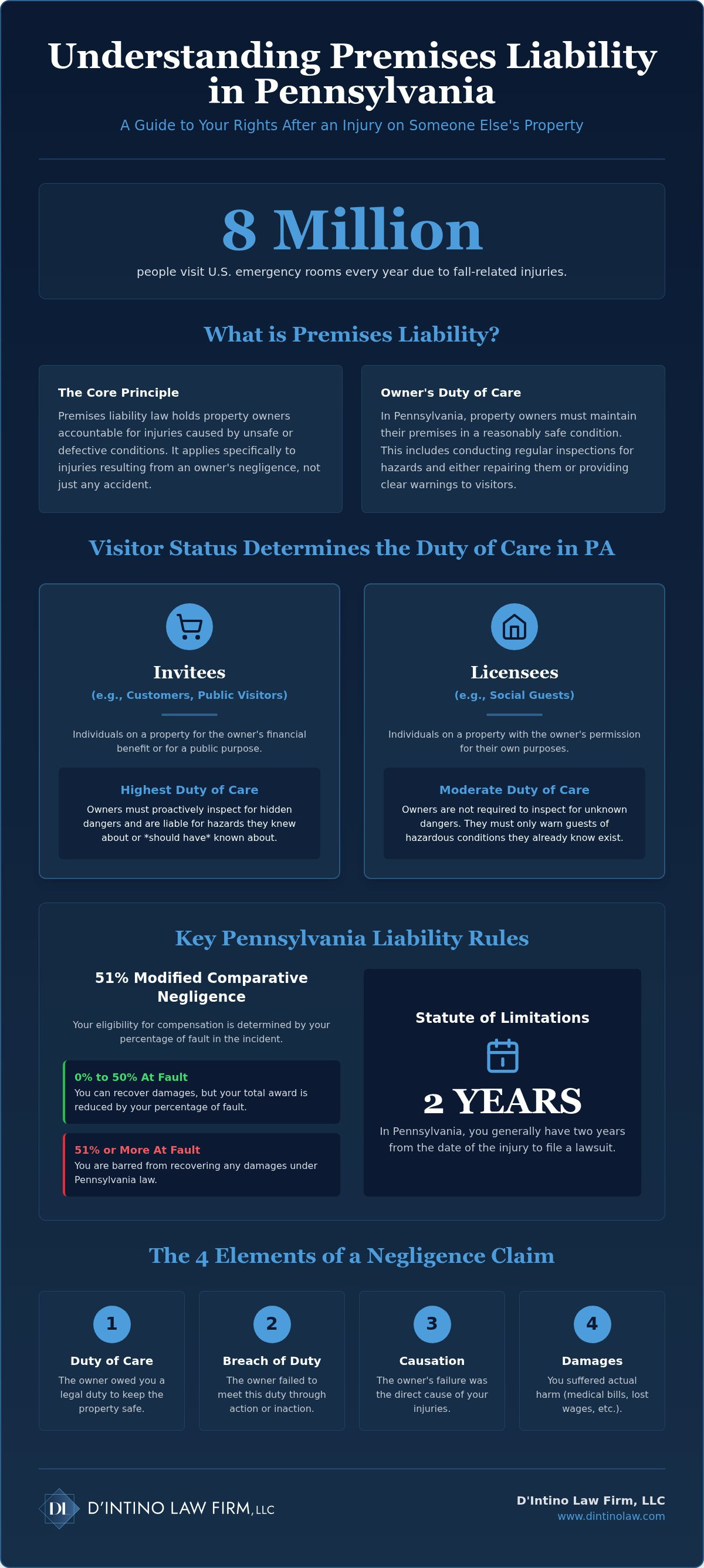
The National Floor Safety Institute reports that eight million people visit the emergency room every year due to fall-related injuries. If you’re one of them, you know that the physical pain is only the beginning. Between rising medical debt and the stress of dealing with aggressive insurance adjusters, the path to recovery feels blocked by legal hurdles you didn’t ask for. It’s frustrating to feel like a number in a giant system when you just want your life back. Partnering with an experienced premises liability lawyer Philadelphia ensures you have a dedicated advocate who treats your case with the personal attention it deserves.
You deserve to know exactly where you stand under Pennsylvania law. In this guide, you’ll learn how the state’s liability rules protect victims when property owners fail to maintain safe environments. We’ll clarify your rights regarding the 51 percent modified comparative negligence rule and the strict two-year statute of limitations for filing a claim in PA. From understanding the legal duty of care to building a roadmap for your recovery, this information provides the strategic clarity you need to move forward with confidence.
Key Takeaways
- Understand the legal obligations property owners in Pennsylvania must follow to keep their premises safe for visitors.
- Learn how your status as a visitor determines the level of care you’re owed and what standards apply to business “invitees.”
- Discover the four essential elements required to prove negligence and how Pennsylvania’s 51 percent comparative negligence rule impacts your potential recovery.
- Find out why partnering with a premises liability lawyer Philadelphia is critical for managing strict filing deadlines and complex insurance negotiations.
- Explore the benefits of a boutique firm approach where an experienced attorney handles your case personally rather than passing it to a case manager.
What Is Premises Liability Law in Pennsylvania?
Premises liability is a legal concept that applies when an injury occurs due to an unsafe or defective condition on a property. In Pennsylvania, this law ensures that individuals who are hurt because of a property owner’s carelessness can seek accountability. It’s a foundational part of personal injury law that focuses on the environment where the injury happened. You must understand that Pennsylvania law doesn’t automatically make an owner liable just because an injury occurred on their land. Instead, the law looks for negligence. While an “unfortunate accident” can happen to anyone, a “liable injury” involves a situation where the owner failed to meet their legal obligations. If a property owner’s negligence led to your injury, you have the right to pursue compensation for your losses.
The Legal Responsibility of Property Owners
Property owners in Pennsylvania have a clear “duty of care” to maintain their premises in a condition that’s safe for others. This responsibility isn’t passive. Owners are expected to conduct regular inspections to find hidden dangers. If they find a hazard, they must either fix it or warn visitors about its presence. For example, if a grocery store manager knows about a liquid spill but doesn’t put up a sign or mop it up, they’ve breached their duty. Proving this breach often hinges on what the owner knew. In legal terms, actual knowledge means they were aware of the danger. Constructive knowledge is often more common; it suggests that the hazard was present for such a duration that any responsible owner should’ve seen it and dealt with it.
Why Premises Liability Matters for Philadelphia Residents
Philadelphia’s unique landscape of historic buildings, crowded commercial corridors, and aging infrastructure makes these laws especially relevant. The city’s high density means that property hazards, such as crumbling steps in a South Philly rowhome or poorly lit parking garages in Center City, affect hundreds of residents daily. Philadelphia’s Property Maintenance Code provides strict standards for fire safety, lighting, and general upkeep. When owners ignore these local rules, they put the public at risk. Working with a dedicated philadelphia personal injury lawyer is essential for identifying these specific violations. A qualified premises liability lawyer Philadelphia can investigate whether a building’s failure to meet city standards was the direct cause of your injury. This local expertise is vital when building a case against a negligent landlord or business entity.
Determining the ‘Duty of Care’: Visitor Status in PA
In Pennsylvania, the law doesn’t treat every visitor the same. Your legal rights after an injury depend entirely on your reason for being on the property. This classification determines the specific “duty of care” the owner owed you at the time of the accident. A premises liability lawyer Philadelphia will first identify which category you fall into: invitee, licensee, or trespasser. This distinction is the foundational step of your claim and dictates the specific evidence needed to prove negligence.
Invitees: Customers and Public Visitors
Invitees receive the highest level of protection under state law. These are individuals invited onto a property for the owner’s financial benefit or as members of the public for a purpose the land is held open. When you’re shopping at a retail store in Philadelphia, you’re an invitee. Because businesses profit from your presence, they owe you a proactive duty of care. Owners must regularly inspect their premises for hidden dangers that aren’t immediately obvious. They can’t simply wait for a problem to arise. Common examples include mopping up wet floors in grocery stores or clearing ice from sidewalks. If a business fails to conduct these regular checks and you’re injured by a hazard they should’ve found, they’re likely liable for your damages.
Licensees and Social Guests
Licensees are people who enter a property with the owner’s permission for their own purposes, such as social guests. If you’re visiting a friend’s home in Montgomery or Bucks County, you’re a licensee. The duty of care here is moderate compared to commercial settings. Homeowners don’t have a legal obligation to inspect for unknown defects before you arrive. However, they must warn you about any dangerous conditions they already know about that you aren’t likely to discover on your own. If a host knows their basement stairs are rotting but fails to mention it, they’ve breached their duty. If you’re navigating the aftermath of an injury at a private residence, you can reach out to D’Intino Law Firm, LLC for clarity on your rights.
Trespassers are those who enter land without any right or permission. Generally, property owners only have a duty to refrain from “willful or wanton” misconduct. There are, however, specific exceptions to these rules. For example, the Recreation Use of Land and Water Act limits the liability of landowners who allow the public to use their property for recreation without a fee. This law protects owners from ordinary negligence claims to encourage the shared use of land and water across the Commonwealth. Understanding these nuances is vital to ensuring your claim is filed correctly under Pennsylvania’s complex legal framework.
Common Hazards That Lead to Property Injury Claims
Hazards in Philadelphia range from icy sidewalks in Manayunk to broken elevators in Center City office buildings. While many people associate these claims only with wet floors, the scope of Premises Liability Law in Pennsylvania is much broader. Property owners must address any condition that poses a foreseeable risk to visitors. When they fail to do so, they create an environment where serious injuries become inevitable. A dedicated premises liability lawyer Philadelphia can help you identify exactly where a property owner’s maintenance plan fell short.
Slip and Fall Hazards in Philadelphia
Slip and fall accidents are the most frequent source of property injury claims in the Commonwealth. According to the National Floor Safety Institute, 12% of all fall-related emergency room visits are caused by slip and fall accidents. In our region, winter weather often leads to dangerous accumulations of ice and snow on walkways. However, liquid spills in supermarkets or uneven flooring in retail shops are equally dangerous. The legal strength of your claim often depends on timing. You must prove the hazard existed long enough that the owner should’ve known about it and taken action. For deeper insight into these specific cases, explore our guide on slip and fall lawsuits.
Inadequate Maintenance and Structural Defects
Maintenance failures often go unnoticed until a catastrophe occurs. Broken handrails, crumbling masonry on stairs, and burnt-out lightbulbs in stairwells are classic examples of negligence. These issues are common in Philadelphia apartment complexes and aging office buildings where owners prioritize profits over safety. In industrial settings, maintenance failures on loading docks can even lead to dangerous truck accidents if trailers aren’t properly secured or walking surfaces are unstable. Proving these defects requires a meticulous investigation of maintenance logs and building records to show a pattern of neglect.
Negligent Security and Failure to Warn
Property owners also have a duty to protect you from foreseeable criminal acts. If a parking garage has a history of crime but lacks working locks or adequate lighting, the owner may be liable for an assault that occurs there. This concept of negligent security applies to hotels, malls, and public venues across Philadelphia. Additionally, if a danger exists that can’t be fixed immediately, the owner must provide a clear and visible warning. Failing to warn visitors about a malfunctioning elevator or a known structural weakness is a direct breach of their legal duty to keep you safe from harm. Property hazards near roadways and parking areas can also create conditions that put pedestrians at risk; if you were struck by a vehicle in such a situation, consulting a pedestrian accident attorney Philadelphia PA can help you understand whether multiple parties share liability for your injuries.
Proving Negligence and Recovering Damages in PA
Success in a Pennsylvania premises liability claim requires more than just showing you were injured. You must prove that the property owner’s negligence was the direct cause of your harm. In our legal system, this involves establishing four specific elements: a legal duty of care, a breach of that duty, causation, and actual damages. If any of these pieces are missing, your claim may fail. Building this foundation requires concrete evidence, such as scene photographs, witness statements, and detailed medical records that link your injury to the property defect. A seasoned premises liability lawyer Philadelphia understands how to compile this evidence to build a compelling narrative of accountability.
Economic vs. Non-Economic Damages
When you seek compensation, the law divides your losses into two categories. Economic damages are the tangible financial costs you’ve incurred. These include hospital bills, physical therapy expenses, and wages lost while you were unable to work. Non-economic damages are more subjective but just as real. They cover pain and suffering, emotional distress, and the loss of life’s enjoyments. In Philadelphia, calculating these requires looking at the severity of your injury and how it has permanently altered your daily routine. Because there are generally no caps on compensatory damages against private parties in Pennsylvania, it’s vital to document every way the injury has impacted your life.
The Role of Comparative Negligence
Pennsylvania follows a modified comparative negligence rule, often called the “51 percent rule.” This means your own actions at the time of the accident are under scrutiny. If a court finds you were partially responsible for your fall, your total compensation will be reduced by your percentage of fault. For example, if your damages are $100,000 but you are found 20 percent at fault for being distracted, you would receive $80,000. However, if you are found 51 percent or more at fault, you cannot recover any damages at all. This is a high-stakes rule that insurance companies frequently use to shift blame onto victims to protect their bottom line.
You shouldn’t have to fight these “blame the victim” tactics alone while you are trying to heal. If you are struggling with medical debt and insurance pressure after a property accident, consult with D’Intino Law Firm, LLC to evaluate your recovery options and protect your right to fair compensation.
Why Personal Advocacy Matters for Your Premises Claim
Large firms often treat clients like files on an assembly line. At D’Intino Law Firm, LLC, we believe your recovery deserves more than a case manager’s periodic check-in. Choosing a boutique firm means you receive personalized attention from a seasoned advocate who’s personally invested in your success. Our strategic approach centers on building every case as if it’s going to trial. This sends a clear message to insurance companies that we aren’t looking for a quick, low-ball settlement. We prioritize quality over volume to ensure your story is heard and your rights are protected.
Direct Attorney Representation in Philadelphia
When you work with Attorney John D’Intino Jr., you gain direct access to over 20 years of experience in Pennsylvania courts. You won’t be passed off to a junior associate or an administrative assistant who doesn’t know your name. This direct line of communication ensures that your legal strategy is informed by every nuance of your specific situation. Direct representation improves the quality of your claim because your attorney handles every piece of evidence and every negotiation personally. This level of accountability is vital for complex claims where the details of a property defect determine the outcome.
Strategic Steps to Take After a Property Injury
The moments following an injury are critical for your future claim. You should seek medical care immediately to document your physical condition and establish a professional record of your injuries. If you’re physically able, take photos of the hazard before the property owner has a chance to fix it. Gather contact information from any witnesses who saw the incident occur. You should report the accident to the property owner, but avoid giving a detailed or recorded statement to their insurance adjuster. These adjusters often look for ways to use your words against you to minimize their liability. Consulting a premises liability lawyer Philadelphia before speaking with an insurance company protects your interests and prevents costly mistakes.
We understand that medical bills and lost wages create significant financial pressure during an already stressful time. That’s why we offer free initial consultations and work on a contingency fee basis. You don’t owe us any legal fees unless we successfully recover compensation for you. This “no win, no fee” structure allows you to pursue justice without adding to your financial burden. Whether your injury happened in Philadelphia, Montgomery, or Bucks County, we’re ready to provide the high-stakes advocacy you need.
If you have questions about a property injury or need guidance on Pennsylvania’s liability rules, contact D’Intino Law Firm, LLC. We’re here to listen to your concerns and help you understand your options for recovery.
Legal Disclaimer: This article is provided for general informational and educational purposes only and is not intended to provide legal advice regarding any specific situation. Reading this article or accessing DintinoLaw.com does not create an attorney-client relationship with D’Intino Law Firm, LLC or any of its attorneys. Every legal matter is different, and readers should consult with a qualified attorney regarding their individual circumstances.
Protect Your Rights and Secure Your Recovery
Recovering from a serious property injury is a heavy burden, but you don’t have to carry the legal weight alone. Understanding your status as a visitor and the specific duty of care owed to you under Pennsylvania law is the first step toward accountability. Success depends on acting quickly within the state’s two-year statute of limitations and countering insurance tactics that seek to shift blame onto victims. Each piece of evidence you gather helps build a stronger foundation for your claim.
Partnering with a dedicated premises liability lawyer Philadelphia ensures your case receives the specialized attention it requires. Attorney John D’Intino Jr. brings over 20 years of experience to every file, handling each case personally for residents in Philadelphia and the surrounding counties. You deserve an advocate who prioritizes your recovery over firm volume. We’re ready to help you navigate this complex process with transparency and strength.
Facing a property injury? Contact D’Intino Law Firm, LLC today for a free consultation. We’re here to listen to your concerns and provide the professional guidance you need to move forward.
Legal Disclaimer: This article is provided for general informational and educational purposes only and is not intended to provide legal advice regarding any specific situation. Reading this article or accessing DintinoLaw.com does not create an attorney-client relationship with D’Intino Law Firm, LLC or any of its attorneys. Every legal matter is different, and readers should consult with a qualified attorney regarding their individual circumstances.
Frequently Asked Questions
How long do I have to file a premises liability lawsuit in Philadelphia?
You have two years from the date of your injury to file a premises liability lawsuit in Pennsylvania. This strict deadline applies to all personal injury claims across the Commonwealth. If you miss this window, you lose the right to seek compensation for your medical bills and pain. It’s vital to consult a premises liability lawyer Philadelphia early to ensure all evidence is preserved and your claim is filed correctly within the court’s timeline.
Can I sue if I was partially at fault for my slip and fall accident?
Yes, you can still recover damages as long as you are not more than 50 percent at fault for the accident. Pennsylvania uses a modified comparative negligence rule. This means your total compensation will be reduced by your percentage of responsibility. For instance, if a court finds you 20 percent liable for being distracted, you would receive 80 percent of the total award. An attorney helps protect you against unfair blame from insurance companies.
What if I was injured at a friend’s house in Pennsylvania?
You can file a claim if your friend’s negligence caused your injury. In Pennsylvania, social guests are considered “licensees.” Homeowners have a legal duty to warn you about dangerous conditions they know about that aren’t obvious to a visitor. These claims are typically handled through the friend’s homeowner’s insurance policy. It’s a way to cover your medical expenses without personally burdening your friend, provided the homeowner failed to warn you of a known hazard.
Do I need to show that the property owner knew about the hazard?
Yes, proving the owner had actual or constructive knowledge is a core part of a negligence claim. Actual knowledge means they were aware of the danger. Constructive knowledge implies the hazard existed for such a long time that any reasonable owner should’ve discovered it. Proving this often requires examining maintenance logs, security footage, or witness accounts. This evidence demonstrates that the owner had a fair opportunity to fix the problem but failed to act.
Will my premises liability case have to go to court in Philadelphia?
Most personal injury claims in Pennsylvania settle before reaching a courtroom. However, preparing your case for trial is the best way to secure a fair settlement from an insurance company. If the insurer refuses to offer a reasonable amount, taking the case to a jury may be necessary. Attorney John D’Intino Jr. handles every aspect of litigation personally, ensuring your case is trial-ready from day one to maximize your chances for a successful resolution.
How much does it cost to hire a premises liability lawyer?
Hiring a premises liability lawyer Philadelphia at D’Intino Law Firm, LLC involves no upfront costs. We work on a contingency fee basis, which means our legal fees are a percentage of the final settlement or verdict we win for you. If we don’t recover money, you don’t owe us an attorney fee. This structure ensures that everyone has access to high-quality legal representation, regardless of their current financial situation or medical debt.
Can I file a claim for an injury that happened on government property?
You can sue a government entity in Pennsylvania, but specific rules and damage caps apply. Claims against the City of Philadelphia have a $500,000 cap, while claims against state agencies are limited to $250,000 per person. You must also provide a formal notice of your intent to sue within six months of the injury. These cases are complex because of sovereign immunity laws, making professional legal guidance essential for following the strict procedural requirements.
In the most tragic cases, a property owner’s negligence doesn’t just cause injury — it causes death. If you have lost a loved one due to unsafe conditions on someone else’s property, consulting a wrongful death attorney Philadelphia PA can help your family understand your rights and pursue the accountability your loved one deserves.
Legal Disclaimer: This article is provided for general informational and educational purposes only and is not intended to provide legal advice regarding any specific situation. Every legal matter is different, and readers should consult with a qualified attorney regarding their individual circumstances.
Disclaimer
Legal Disclaimer: The information provided on DintinoLaw.com, including articles, blog posts, testimonials, case results, and other content, is for general informational and educational purposes only and does not constitute legal advice or create an attorney-client relationship with D’Intino Law Firm, LLC or any of its attorneys. Visiting this website, submitting a contact form, sending an email, calling, texting, or otherwise communicating with the firm does not establish an attorney-client relationship or obligate the firm to represent you. Do not submit confidential, privileged, or time-sensitive information through this website or electronic communications unless and until the firm has expressly agreed to represent you. Legal rights, procedures, statutes of limitation, filing deadlines, and other requirements vary based on the facts and jurisdiction and may change over time; nothing on this website should be relied upon to determine whether a legal deadline applies to your matter. If you have an urgent legal matter or a potential filing deadline, consult a qualified attorney promptly. Testimonials and statements regarding client experiences are individual opinions and experiences and are not a guarantee of future results. Prior results, verdicts, settlements, or case examples do not guarantee or predict the outcome of any future case, and every matter is different. This website may constitute attorney advertising under applicable Pennsylvania rules. D’Intino Law Firm, LLC makes no representation that the information on this website is complete, current, or applicable to your particular circumstances. For legal advice concerning your specific situation, consult directly with a qualified Pennsylvania attorney. D’Intino Law Firm, LLC | Philadelphia, Pennsylvania | DintinoLaw.com
