


Attorney
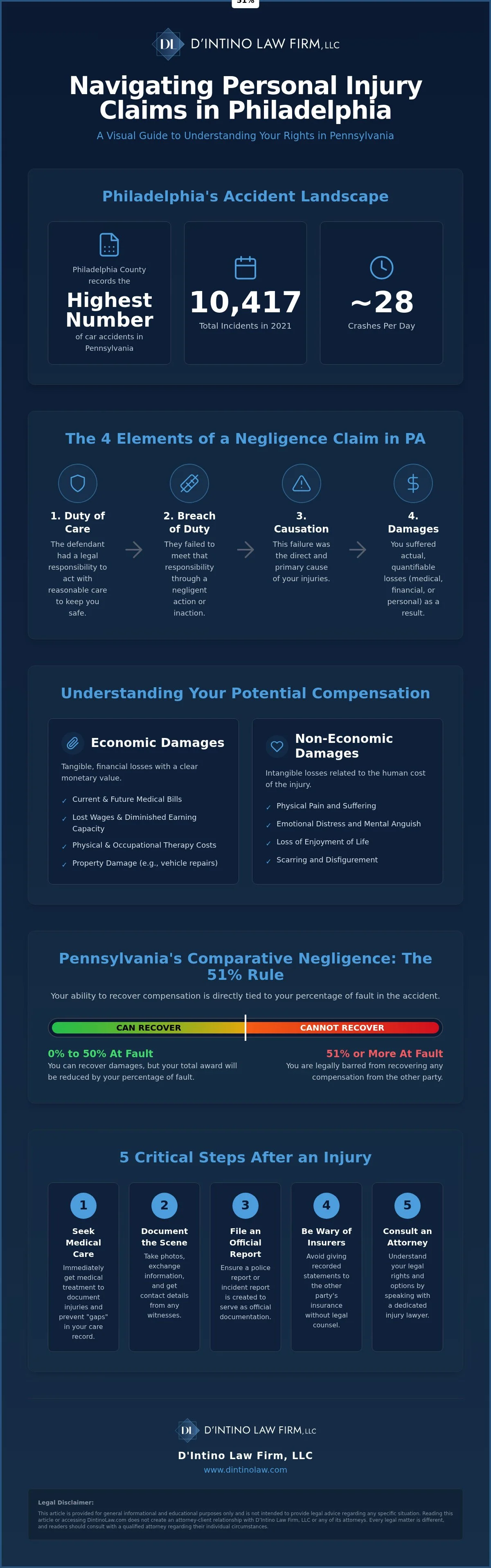
Did you know that Philadelphia County records the highest number of car accidents in Pennsylvania? In 2021 alone, there were 10,417 incidents, which averages out to about 28 crashes every single day. If you’re one of the many residents currently dealing with the aftermath of an accident, you’re likely facing more than just physical pain. Between aggressive insurance adjusters and mounting medical debt, it’s easy to feel like you’ve been reduced to a mere case number at a large, impersonal firm. You shouldn’t have to fight these battles alone while trying to heal.
Securing a dedicated Philadelphia personal injury lawyer is the first step toward reclaiming control of your future. We believe that every client deserves direct access to a seasoned advocate who treats their recovery as a priority, not a quota. This guide offers a clear path through the complexities of Pennsylvania law, helping you understand your claim’s true value and the steps necessary to secure a full resolution. We’ll explore how to handle insurance tactics and ensure your recovery covers all medical and personal losses.
Legal Disclaimer: This article is provided for general informational and educational purposes only and is not intended to provide legal advice regarding any specific situation. Reading this article or accessing DintinoLaw.com does not create an attorney-client relationship with D’Intino Law Firm, LLC or any of its attorneys. Every legal matter is different, and readers should consult with a qualified attorney regarding their individual circumstances.
Key Takeaways
- Understand how the concept of “duty of care” forms the legal foundation for personal injury claims within the Pennsylvania civil court system.
- Learn why partnering with a dedicated Philadelphia personal injury lawyer who offers direct attorney access is often more effective than working with high-volume “settlement mills.”
- Discover how Pennsylvania’s modified comparative negligence standard and the “51% Rule” directly impact your ability to recover compensation.
- Explore the specific legal nuances involved in motor vehicle accidents and premises liability claims throughout the Philadelphia region.
- Identify the critical steps to take after an injury, including the importance of “gap-free” medical treatment and securing official incident documentation.
Navigating Personal Injury Claims in Philadelphia, Pennsylvania
The Pennsylvania civil court system provides a structured framework for individuals to seek compensation when they’ve been harmed by someone else’s actions or inaction. This area of personal injury law centers on the principle that people and businesses owe a “duty of care” to others. In Philadelphia, this might mean a driver’s duty to obey traffic signals on Broad Street or a shop owner’s duty to keep walkways clear of hazards. When this duty is ignored, the resulting accidents can lead to significant financial and emotional burdens that no one should have to carry alone.
Pennsylvania law recognizes that victims deserve to be “made whole” again through the recovery of damages. These damages are generally split into two categories: economic and non-economic. Economic damages cover tangible financial hits like medical bills, physical therapy costs, and lost wages. Non-economic damages address the human side of an accident, including physical pain, emotional trauma, and the loss of life’s daily pleasures. Securing these funds requires a deep understanding of how local courts value these losses.
The Legal Basis for Injury Claims in PA
Negligence isn’t just a complex legal term; it’s a failure to act with the level of care that a reasonable person would use in a similar situation. To build a successful case in Pennsylvania, your philadelphia personal injury lawyer must establish four specific elements: duty, breach, causation, and damages. You must prove the defendant had a responsibility to keep you safe, they failed that responsibility, their failure directly caused your injury, and you suffered real losses because of it. Pennsylvania statutes are designed to protect victims of avoidable accidents, ensuring that the burden of a mistake falls on the person who made it rather than the person who was hurt. While this guide focuses on local laws, the same principles of accountability apply across the country, as seen with the work of Herron Law, a personal injury attorney Portland serving the Pacific Northwest, as well as rdavidsonlaw.com in Birmingham, Alabama.
The Legal Basis for Injury Claims in PA
Filing a claim in the Philadelphia County Court of Common Pleas is different than filing in Montgomery or Bucks counties. Each jurisdiction has its own set of local rules and procedural expectations that can influence the timeline of your case. A philadelphia personal injury lawyer who regularly practices in these courtrooms understands the local landscape and how to move a case forward efficiently. Beyond the technical rules, local reputation matters during insurance negotiations. Adjusters often gauge their settlement offers based on an attorney’s willingness and ability to take a case to trial in front of a Philadelphia jury. Having an advocate who is a known presence in the local legal community provides a strategic advantage from day one.
Legal Disclaimer: This article is provided for general informational and educational purposes only and is not intended to provide legal advice regarding any specific situation. Reading this article or accessing DintinoLaw.com does not create an attorney-client relationship with D’Intino Law Firm, LLC or any of its attorneys. Every legal matter is different, and readers should consult with a qualified attorney regarding their individual circumstances.
Common Types of Personal Injury Cases in the Philadelphia Region
Philadelphia’s dense urban landscape and aging infrastructure create a unique environment where accidents are unfortunately common. Whether you’re commuting on the “Schuylkill” or walking through a commercial district in Center City, the risks are real. Each type of injury case carries its own set of legal hurdles and evidentiary requirements under Pennsylvania’s negligence laws. Understanding these distinctions is vital for anyone seeking to hold a negligent party accountable for their actions.
Motor Vehicle Accidents on Philadelphia Roadways
The city’s major arteries, including I-95, I-76, and Roosevelt Boulevard, are frequent sites of high-impact collisions. Roosevelt Boulevard is particularly notorious, often cited as one of the most dangerous roads in the country. In these cases, your insurance “tort” selection plays a massive role in your recovery options. Pennsylvania allows drivers to choose between limited tort and full tort coverage. Limited tort usually prevents you from suing for pain and suffering unless your injuries meet a “serious” threshold, while full tort preserves your right to seek total compensation. A philadelphia personal injury lawyer is essential in these scenarios to investigate multi-vehicle accidents, secure traffic camera footage, and navigate the complexities of insurance policy language. If you’ve recently been involved in a crash, our detailed guide on what to do after a car accident in Philadelphia provides a step-by-step framework to protect your health and legal rights from the very first moment.
Premises Liability: Slip and Fall Incidents
Property owners in Philadelphia and Montgomery County have a legal obligation to maintain safe premises for visitors and customers. Slip and fall accidents often occur due to icy sidewalks, spilled liquids in grocery stores, or poorly lit stairwells. To win a premises liability case, you must prove that the owner had “notice” of the hazard. This means they either knew about the danger or should have known about it through reasonable inspections. Documenting the scene immediately is critical; taking photos of the hazard and reporting the incident to management can prevent evidence from “disappearing” before a claim is filed. If you’ve been hurt on someone else’s property, our comprehensive guide to filing a slip and fall lawsuit in Pennsylvania explains the legal standards, evidence requirements, and how the state’s comparative negligence rule affects your recovery. Consulting with a seasoned legal advocate can help you determine if the owner failed in their duty of care. If your injury occurred on a property that is also the subject of an ownership or title dispute, working with an experienced real estate lawyer Philadelphia residents trust can help protect your broader property interests alongside your personal injury claim.
Construction and Workplace Injuries
While workers’ compensation provides a safety net for medical bills and lost wages after a job site accident, it doesn’t cover pain and suffering. However, many Philadelphia construction accidents involve “third-party” claims. If a subcontractor’s negligence or a defective piece of machinery caused your injury, you may be able to file a personal injury lawsuit against that third party in addition to your workers’ comp claim. These cases often require site inspections and expert testimony to prove that safety regulations were ignored. A philadelphia personal injury lawyer can help identify these additional avenues for recovery, ensuring that your settlement accounts for the full scope of your physical and emotional trauma. For accidents involving complex workplace rights, Leon Legal Group offers focused representation in both personal injury and employment law.
Legal Disclaimer: This article is provided for general informational and educational purposes only and is not intended to provide legal advice regarding any specific situation. Reading this article or accessing DintinoLaw.com does not create an attorney-client relationship with D’Intino Law Firm, LLC or any of its attorneys. Every legal matter is different, and readers should consult with a qualified attorney regarding their individual circumstances.
Pennsylvania uses a “modified comparative negligence” standard to determine how much compensation a victim can recover when they share some responsibility for an accident. This system is codified in Pennsylvania’s comparative negligence law. Under this framework, your financial recovery is directly tied to your percentage of fault. If you’re found to be partially responsible for the incident, your total award is reduced by that specific percentage. This makes the investigation phase of your case vital, as even a small shift in fault can significantly impact your final settlement.
The 51% Rule: How Shared Fault Impacts Your Claim
The most critical aspect of this law is what’s often called the “51% Rule.” In Pennsylvania, you can only recover damages if your percentage of fault isn’t greater than the fault of the defendant. If a jury decides you’re 51% or more at fault, you’re barred from recovering any compensation at all. For example, imagine you’re in a car accident at a Philadelphia intersection. If a court determines you were 20% responsible because you were slightly over the speed limit, but the other driver was 80% responsible for failing to yield, you can still collect. However, if your total damages were $100,000, your payout would be reduced by 20%, leaving you with $80,000. Insurance companies know this rule well and often use aggressive tactics to shift blame onto the victim. A philadelphia personal injury lawyer acts as a shield against these tactics, gathering evidence to prove the other party’s majority liability.
Filing Deadlines: The Pennsylvania Statute of Limitations
Timing is everything when it comes to legal claims. For most personal injury cases in Pennsylvania, the statute of limitations is exactly two years from the date the injury occurred. This deadline is strict; if you fail to file a lawsuit before this window closes, you’ll likely lose your right to seek compensation forever. There are rare exceptions, such as the “discovery rule,” which might apply if an injury wasn’t immediately apparent. Additionally, the clock may be paused for minors until they turn 18. Despite these exceptions, waiting is a risk you shouldn’t take because evidence disappears and memories fade. Consulting a philadelphia personal injury lawyer early ensures that all procedural requirements are met while the details of your accident are fresh. If your situation involves both civil injury claims and related criminal charges, working with an experienced felony defense attorney Philadelphia residents rely on can help ensure your rights are protected on all legal fronts simultaneously.
Legal Disclaimer: This article is provided for general informational and educational purposes only and is not intended to provide legal advice regarding any specific situation. Reading this article or accessing DintinoLaw.com does not create an attorney-client relationship with D’Intino Law Firm, LLC or any of its attorneys. Every legal matter is different, and readers should consult with a qualified attorney regarding their individual circumstances.
Key Steps to Take After an Unexpected Injury in Philadelphia
The moments following an accident are often a blur of adrenaline and confusion. While your health is the absolute priority, the actions you take immediately can significantly impact your future legal options. Seeking medical attention right away is essential, even if you feel fine. Some internal injuries or soft-tissue damage may not show symptoms for days. In Pennsylvania, insurance companies look for “gaps” in medical treatment as an excuse to deny claims. Maintaining a consistent, gap-free treatment plan creates a clear medical record that links your injuries directly to the accident.
Immediate Post-Accident Documentation
Always call the Philadelphia Police Department to the scene, even if the accident seems minor. An official police report acts as a vital, neutral piece of evidence that documents the date, time, and parties involved. While waiting for officers to arrive, use your phone to gather as much information as possible. Take wide-angle photos of the entire scene and close-ups of specific vehicle damage or property hazards. Look for nearby surveillance cameras on storefronts or traffic poles; this footage often “loops” and is deleted quickly, so identifying it early is critical. If bystanders saw what happened, politely ask for their names and phone numbers. You don’t need to interview them on the spot. A philadelphia personal injury lawyer can reach out later to secure their formal statements while their memories are still fresh. For a comprehensive breakdown of every action you should take at the scene and in the days that follow, review our step-by-step checklist of what to do after a car accident in Philadelphia.
Navigating Insurance Communications
You should expect a call from an insurance adjuster shortly after the incident. They may sound empathetic, but their primary job is to protect their company’s bottom line. Avoid giving any recorded statements until you’ve consulted with a professional. Adjusters are trained to ask leading questions that might trick you into admitting fault or downplaying your pain. Most Pennsylvania insurance policies have “notice” requirements, meaning you must report the accident to your own carrier promptly. However, you are under no obligation to accept an early settlement offer from the other party’s insurer. These initial offers are rarely enough to cover rising medical debt and the full scope of your lost wages. If you’re feeling pressured by an adjuster, contacting a dedicated advocate can ensure your communications are handled professionally without compromising your claim.
Legal Disclaimer: This article is provided for general informational and educational purposes only and is not intended to provide legal advice regarding any specific situation. Reading this article or accessing DintinoLaw.com does not create an attorney-client relationship with D’Intino Law Firm, LLC or any of its attorneys. Every legal matter is different, and readers should consult with a qualified attorney regarding their individual circumstances.
Why a Boutique Legal Strategy Matters for Your Recovery
Choosing a philadelphia personal injury lawyer involves deciding between a high-volume corporate firm and a focused boutique practice. Many large firms function as “settlement mills,” where the objective is to move files through the system as quickly as possible. This high-turnover approach often treats cases like commodities rather than life-altering events for real people. A boutique strategy, however, prioritizes the quality of advocacy over the sheer quantity of clients. By limiting caseloads, a firm can devote the necessary hours to uncover the subtle details that increase a claim’s value in Pennsylvania.
John D’Intino Jr. applies more than 20 years of legal experience to every file in the office. This depth of knowledge is essential when navigating the procedural nuances of the local court systems. When an attorney isn’t juggling hundreds of files, they can focus on exhaustive case preparation. This dedication ensures that every piece of evidence, from medical records to expert testimonies, is meticulously organized. A smaller caseload translates to the elite, tailored service that complex injury matters require. The same personalized approach applies across D’Intino Law Firm’s practice areas; clients seeking a dedicated real estate lawyer in Philadelphia benefit from the same direct attorney access and meticulous preparation that defines every case the firm handles.
Direct Attorney Access vs. Case Managers
In many large operations, clients rarely speak with the lead attorney. Instead, they are often assigned to case managers or legal assistants who handle the bulk of the communication. This hierarchy can lead to critical information being lost or misinterpreted. Direct attorney access means you discuss your concerns and recovery milestones directly with your lawyer. This partnership fosters trust and ensures that your advocate is personally invested in your future. It provides a level of accountability and reassurance that a faceless corporate entity cannot offer. You deserve to know that the professional representing you is intimately familiar with the facts of your accident. The same principle of direct, hands-on representation is equally vital when facing serious criminal charges; a dedicated felony defense attorney in Philadelphia who provides personal attention can make a decisive difference in protecting your freedom and future.
Trial-Ready Representation in Pennsylvania Courts
Insurance adjusters are aware of which firms are willing to take a case to a jury and which ones prefer a quick settlement. A “fighter” mentality is vital during high-stakes negotiations. Being prepared for trial in Pennsylvania courts forces insurance companies to approach the table with more fairness. Whether your case is in Philadelphia, Delaware, or Bucks County, having an advocate prepared for litigation changes the dynamic of the discussion. It signals that you will not accept a settlement that fails to address the full scope of your losses. We maintain a methodical, results-oriented pace to move your case toward a fair and comprehensive resolution.
If you’re seeking a philadelphia personal injury lawyer who values direct interaction and assertive advocacy, contact D’Intino Law Firm, LLC today to discuss your legal concerns. We’re ready to help you navigate this challenging time with the personalized attention your recovery requires.
Legal Disclaimer: This article is provided for general informational and educational purposes only and is not intended to provide legal advice regarding any specific situation. Reading this article or accessing DintinoLaw.com does not create an attorney-client relationship with D’Intino Law Firm, LLC or any of its attorneys. Every legal matter is different, and readers should consult with a qualified attorney regarding their individual circumstances.
Take the Next Step Toward Your Recovery
Navigating the aftermath of an accident in Pennsylvania is a complex journey, but you don’t have to walk it alone. We’ve explored the critical role of medical documentation and how Pennsylvania’s modified comparative negligence laws impact your final settlement. Most importantly, we’ve discussed why a boutique legal strategy leads to more thorough case preparation than high-volume firms.
Securing a philadelphia personal injury lawyer who offers direct access to a seasoned advocate is a strategic advantage. With over 20 years of legal experience, John D’Intino Jr. provides trial-ready advocacy with no hand-offs to case managers. Your recovery is the priority; let a dedicated professional handle the legal burdens while you focus on healing.
Contact D’Intino Law Firm, LLC for a free consultation regarding your injury claim.
Legal Disclaimer: This article is provided for general informational and educational purposes only and is not intended to provide legal advice regarding any specific situation. Reading this article or accessing DintinoLaw.com does not create an attorney-client relationship with D’Intino Law Firm, LLC or any of its attorneys. Every legal matter is different, and readers should consult with a qualified attorney regarding their individual circumstances.
Frequently Asked Questions
How much does it cost to hire a personal injury lawyer in Philadelphia?
Most personal injury attorneys work on a contingency fee basis. This means you don’t pay any upfront legal fees out of pocket to start your case. Instead, the attorney’s fee is a pre-agreed percentage of the final settlement or court award. If you don’t recover compensation, you typically don’t owe any attorney fees. This structure ensures that high quality legal advocacy is accessible to everyone regardless of their current financial situation.
What is the average settlement for a personal injury claim in Pennsylvania?
There is no universal average settlement because every case depends on specific variables. The value of a claim is determined by the severity of the injuries, the total cost of medical treatment, and the amount of lost wages. Factors like the available insurance coverage and the clarity of liability also play major roles. While some cases resolve for smaller amounts, others involving catastrophic harm can result in much higher compensation totals.
Can I still file a lawsuit if I was partially at fault for the accident?
Yes, you can still seek compensation as long as you weren’t more than 50% responsible for the incident. Pennsylvania follows a modified comparative negligence rule. If a court finds you were 20% at fault, your total financial recovery will be reduced by that same 20%. However, if your share of the blame reaches 51%, the law bars you from recovering any damages from the other parties involved in the accident.
How long will it take to resolve my personal injury case in Philadelphia?
The duration of a case depends on the complexity of the investigation and the length of your medical recovery. Some claims resolve within a few months through direct negotiation with insurance companies. More complex cases that require filing a lawsuit or going to trial can take a year or longer. It’s often vital to wait until you’ve reached maximum medical improvement before settling to ensure all future costs are covered.
What should I bring to my first consultation with an injury attorney?
You should bring any evidence you’ve gathered to your meeting with a philadelphia personal injury lawyer. This includes the police report, photos of the accident scene, and contact information for witnesses. It’s also helpful to provide medical discharge papers, recent bills, and any letters you’ve received from insurance adjusters. Having these documents ready allows your attorney to perform a more accurate initial assessment of your legal options and the potential claim value.
Do I have to go to court for a personal injury claim in PA?
Most personal injury claims are settled before they ever reach a courtroom. In fact, research indicates that only about 3% of these cases go to trial. However, your legal team must prepare every file as if a trial is inevitable. This trial-ready stance often encourages insurance companies to offer a fairer settlement during the negotiation phase. If the insurer refuses to provide a reasonable resolution, going to court may become necessary.
What is the difference between limited tort and full tort insurance?
These options determine your right to sue for pain and suffering under Pennsylvania law. Limited tort insurance usually offers lower premiums but restricts your ability to seek non-economic damages unless your injury meets a “serious” legal threshold. Full tort coverage is more expensive but preserves your unrestricted right to seek compensation for all your losses. This includes physical pain and emotional distress, regardless of the specific severity of the injury sustained.
What if the person who hit me doesn’t have insurance?
If you’re involved in an accident with an uninsured driver, you can often seek compensation through your own insurance policy. Many Pennsylvania drivers carry Uninsured Motorist (UM) coverage to protect themselves in this exact situation. This allows your own carrier to provide the benefits that the at-fault driver’s insurance should have covered. A philadelphia personal injury lawyer can help you navigate this process to ensure your insurance company honors the terms of your policy.
If you’re facing the challenges of a serious injury, don’t navigate the legal system alone. Contact D’Intino Law Firm, LLC today to discuss your concerns and learn how we can help you move forward. We provide the dedicated, personalized advocacy you deserve during your recovery.
Legal Disclaimer: This article is provided for general informational and educational purposes only and is not intended to provide legal advice regarding any specific situation. Reading this article or accessing DintinoLaw.com does not create an attorney-client relationship with D’Intino Law Firm, LLC or any of its attorneys. Every legal matter is different, and readers should consult with a qualified attorney regarding their individual circumstances.
Disclaimer
Legal Disclaimer: The information provided on DintinoLaw.com, including articles, blog posts, testimonials, case results, and other content, is for general informational and educational purposes only and does not constitute legal advice or create an attorney-client relationship with D’Intino Law Firm, LLC or any of its attorneys. Visiting this website, submitting a contact form, sending an email, calling, texting, or otherwise communicating with the firm does not establish an attorney-client relationship or obligate the firm to represent you. Do not submit confidential, privileged, or time-sensitive information through this website or electronic communications unless and until the firm has expressly agreed to represent you. Legal rights, procedures, statutes of limitation, filing deadlines, and other requirements vary based on the facts and jurisdiction and may change over time; nothing on this website should be relied upon to determine whether a legal deadline applies to your matter. If you have an urgent legal matter or a potential filing deadline, consult a qualified attorney promptly. Testimonials and statements regarding client experiences are individual opinions and experiences and are not a guarantee of future results. Prior results, verdicts, settlements, or case examples do not guarantee or predict the outcome of any future case, and every matter is different. This website may constitute attorney advertising under applicable Pennsylvania rules. D’Intino Law Firm, LLC makes no representation that the information on this website is complete, current, or applicable to your particular circumstances. For legal advice concerning your specific situation, consult directly with a qualified Pennsylvania attorney. D’Intino Law Firm, LLC | Philadelphia, Pennsylvania | DintinoLaw.com
