


Attorney
Imagine waiting weeks for a simple update on your car accident claim while your medical bills continue to mount. When you finally reach your attorney, they push you toward a settlement that feels far below what your injuries are worth. It’s a common and stressful scenario, but you have the legal right to expect more from your representation. Many Pennsylvanians hesitate to switch firms because they worry about the cost or believe they’re locked into a contract. It’s understandable to feel anxious about the legal fees or potential delays, but staying with a lawyer who doesn’t communicate can be even more costly. This article clarifies the process of changing lawyers mid-case personal injury claims in Pennsylvania, ensuring you understand your rights and the strategic steps required to protect your case.
We’ll explore how Pennsylvania law protects you from paying double contingency fees and how the transition between firms is managed without stalling your progress. You’ll learn about the substitution of counsel process and how a dedicated, hands-on advocate can provide the transparency and attention your claim deserves. Your path to a fair resolution doesn’t have to be a solo journey through silence and uncertainty. Under the Pennsylvania Rules of Professional Conduct, you have an absolute right to choose who represents your interests, and we’ll show you how to exercise that right effectively.
Key Takeaways
- Understand your absolute right under Pennsylvania law to discharge your current attorney at any point if the trust in your professional relationship has broken down.
- Learn how the “one-fee” rule works to protect you from paying double contingency fees when changing lawyers mid-case personal injury claims.
- Discover the specific procedural steps to transfer your case file and secure new counsel without causing unnecessary delays to your settlement or trial timeline.
- Identify the red flags of “volume firms,” such as chronic lack of communication, and why direct access to your attorney is vital for your claim’s value.
- See how transitioning to a boutique firm with personalized advocacy can provide the transparency and strategic focus your legal matter requires.
Can You Change Your Personal Injury Lawyer Mid-Case in Pennsylvania?
Yes, you can. In Pennsylvania, the relationship between a lawyer and a client is built on trust. If that trust breaks, you aren’t stuck with your initial choice. You have an absolute right to fire your attorney at any time. This applies whether your case just started or if you’re deep in litigation. Changing lawyers mid-case personal injury claims is a procedural reality that the Pennsylvania court system recognizes. You don’t need to prove “malpractice” or provide a complex legal reason to make a move. If you feel your current counsel isn’t prioritizing your recovery, you have the power to walk away.
The Legal Right to Discharge Counsel in PA
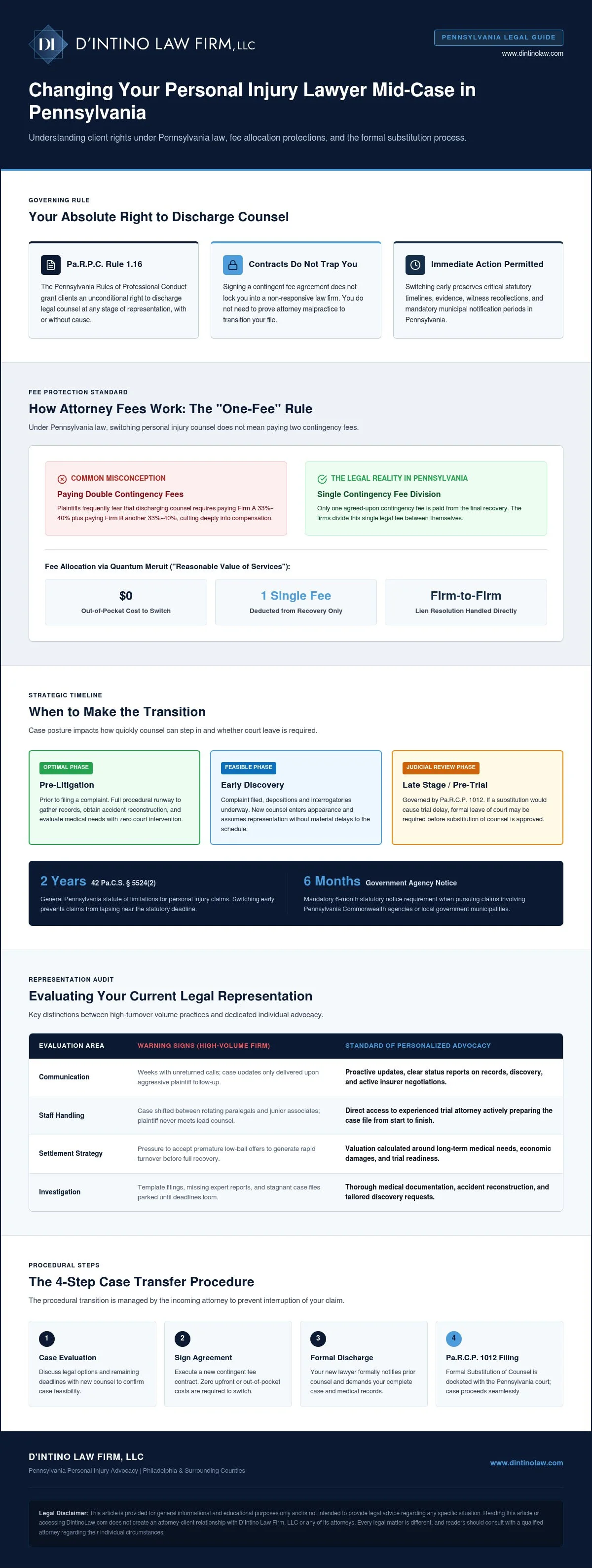
The Pennsylvania Rules of Professional Conduct specifically protect your autonomy. Rule 1.16 confirms that a client has the power to discharge their lawyer whenever they choose, with or without cause. Many people fear they’re “trapped” because they signed contingent fee agreements early in the process. However, these contracts don’t force you to stay with a firm that isn’t performing. The right to switch counsel is a fundamental protection for Pennsylvania plaintiffs. While the firm may have a right to be paid for the reasonable value of work already done, that doesn’t stop you from moving your file to an advocate who actually returns your calls and values your case.
When is the Best Time to Make a Switch?
Timing is everything in a legal claim. Ideally, you should consider a change during the pre-litigation phase or early in the Discovery process. This gives your new attorney time to gather evidence and meet critical deadlines. For example, Pennsylvania generally has a two-year statute of limitations for personal injury claims under 42 Pa.C.S. § 5524(2). If you wait until a month before this deadline, a new firm might struggle to file your complaint in time. Early action prevents your case from sitting stagnant on a shelf.
Switching too close to a trial date is more complex. Under Pennsylvania Rule of Civil Procedure 1012, if a change in lawyers would cause a delay in the trial, you might need the court’s permission to switch. A new attorney will evaluate the feasibility of changing lawyers mid-case personal injury litigation based on your remaining timeline. They’ll look at specific factors, including:
- Upcoming deposition schedules and expert witness deadlines.
- Whether the 6-month notice requirement for claims against PA government agencies has been met.
- The current status of settlement negotiations with the insurance company.
- Mandatory court conferences already scheduled by the judge.
Common Reasons Plaintiffs Seek New Representation in Pennsylvania
Most people start their injury claim with high hopes. Over time, that confidence can erode if the relationship with their legal team falters. If you find yourself wondering about changing lawyers mid-case personal injury, it’s usually because the service you were promised doesn’t match the daily reality of your experience. In Pennsylvania, the most frequent driver for switching firms is a fundamental breakdown in communication. You deserve to know the status of your medical records, the progress of discovery, and the timeline for your settlement. When phone calls go unreturned for weeks, it’s a sign that your case may not be getting the active attention it requires.
The Problem with Large-Volume Law Firms
Many big firms in cities like Philadelphia or surrounding areas like Media and West Chester operate on a high-turnover model. Your file might be handled by a junior associate or a case manager you’ve never met. This “volume firm” trap means your case is often parked on a shelf until a specific deadline looms. When a firm prioritizes quantity over quality, they may skip thorough investigations or fail to hire the necessary medical experts. This impersonal approach can lead to a lack of visible progress in the Pennsylvania court system. If you feel like just another case number, it might be appropriate to discuss your options with a dedicated advocate who handles cases personally.
Strategic Red Flags in an Injury Claim
You might notice your attorney pressuring you to accept a low-ball settlement offer from the insurance company early in the process. This sometimes happens when a lawyer prefers a quick resolution rather than putting in the intensive work required for a civil trial. A lack of preparation for Pennsylvania civil trials is a major red flag for any plaintiff. If your lawyer hasn’t discussed the specific strengths and weaknesses of your claim or fails to meet the six-month notice requirement for claims against PA government units under 42 Pa.C.S. § 5522(a), the eventual value of your recovery could be at risk.
Some attorneys may mention attorney charging liens when a client expresses dissatisfaction. While a former lawyer has a right to be paid for work done, this is a procedural matter resolved between the law firms at the end of the case. It should not be a barrier to seeking better representation. Changing lawyers mid-case personal injury is about ensuring the strategic direction of your claim aligns with your recovery goals. If your current counsel isn’t meeting your expectations, you have the right to seek a partner who is as invested in your success as you are.
Understanding Attorney Liens and Fees in Pennsylvania
A common misconception stops many injured people from seeking the help they deserve. They believe that changing lawyers mid-case personal injury will result in paying two separate 33% or 40% contingency fees. This is simply not true under Pennsylvania law. You aren’t responsible for paying your former lawyer out of your own pocket, nor will you see your total legal fees double. The system is designed to protect your recovery while ensuring attorneys are fairly compensated for work they actually performed. Your financial focus should remain on your medical recovery, not on the fear of hidden legal costs.
Quantum Meruit: How the Former Lawyer is Compensated
When you discharge an attorney in Pennsylvania, the original contingency fee agreement is extinguished and cannot be enforced against you. However, the law recognizes that the previous firm may have contributed value to the case. This is where the legal principle of quantum meruit applies. Translated from Latin, it means “as much as he deserved.” It’s a fair-market valuation of the services rendered up to the date of termination.
Pennsylvania courts determine the value of the prior lawyer’s work by looking at the specific tasks they completed. They evaluate the hours logged, the complexity of the legal issues addressed, and the tangible progress made toward a settlement or trial. This valuation process is a matter for the attorneys to resolve. If a dispute arises between the old and new firms regarding the split, it’s typically handled through an equitable action in court or private negotiation. You are shielded from these disputes and do not need to mediate between the two firms.
The Mechanics of the Fee Split
The transition of your case file includes the resolution of an “attorney lien.” This is a legal claim asserted by the discharged firm against the eventual proceeds of your settlement or verdict. It ensures they receive their portion of the fee and reimbursement for advanced litigation costs, such as medical record fees or filing costs. Your new lawyer assumes the responsibility of negotiating this lien when the case concludes.
The client typically pays the same percentage regardless of the switch. This single fee is deducted from the final recovery, and the two law firms divide that amount based on their respective contributions. You won’t be asked to write a check to your old lawyer for their time or expenses when you fire them. Instead, those costs are carried forward and resolved at the end of the journey. This structure allows you to demand better advocacy without facing an immediate financial hurdle.
How to Switch Your Injury Lawyer: A Step-by-Step Process
Deciding to move on from your current representation is a significant choice. To ensure your claim stays on track, you must follow a methodical process. The most critical rule is to never fire your current lawyer until you have secured new counsel. Leaving your case unrepresented even for a few days can lead to missed court deadlines or ignored correspondence from insurance adjusters. Changing lawyers mid-case personal injury claims requires a clean hand-off to prevent the defense from taking advantage of a gap in your advocacy.
Step 1: Consult with a Potential New Attorney
Think of your first meeting with a new firm as a second opinion. You should bring any documents you have, such as the initial accident report, medical records, and any settlement offers you’ve received. This allows the new attorney to evaluate the strategic direction of your claim. Pay close attention to how they explain the case’s value and their plan for discovery. You need a partner who prioritizes direct communication. If you’re looking for a Philadelphia Personal Injury Lawyer: Dedicated Advocacy for Your Recovery, this consultation is your chance to see if their boutique approach fits your needs. They’ll review your current fee agreement to identify any specific termination clauses that might affect the logistics of the switch.
Step 2: The Formal Substitution of Counsel
Once you’ve signed with a new firm, the formal transition begins. In Pennsylvania, this is typically handled through a “Praecipe for Substitution of Counsel” filed under Pa. R.C.P. 1012. This document notifies the court and the opposing side that your new lawyer is now the primary point of contact. Your new attorney generally handles the professional courtesy of notifying your old firm and requesting the transfer of your physical and digital case files.
Under Pennsylvania Rule of Professional Conduct 1.16(d), your former lawyer must surrender your papers and property promptly to protect your interests. This transition happens behind the scenes, allowing the litigation schedule to continue without interruption. Most clients find relief in knowing they don’t have to engage in a difficult confrontation with their old firm. If you’re tired of being ignored by a volume firm, you can schedule a confidential case review to discuss how a seamless transition works for your specific claim.
The Benefits of Personalized Advocacy at D’Intino Law Firm, LLC
Switching to a firm that treats you as a person rather than a case number changes the trajectory of your claim. D’Intino Law Firm, LLC is a boutique practice where direct communication isn’t just a promise; it’s the standard. When you’re considering changing lawyers mid-case personal injury, you need more than just a new name on your legal documents. You need a seasoned advocate who will conduct a comprehensive review of your existing Pennsylvania case file to identify missed opportunities or evidence that a volume firm might have ignored. With over two decades of legal experience, John D’Intino Jr. provides the steady, assertive leadership your case requires.
Direct Accountability for Every Client
Many large firms in the region rely on case managers or junior associates to handle the daily tasks of an injury claim. At our firm, we eliminate the middleman. You have direct access to your attorney, ensuring that the strategic direction of your case is set by an expert. This direct accountability leads to more thorough evidence gathering because your lawyer is personally involved in every deposition and negotiation. We’re committed to keeping you informed at every stage of the PA legal process. You’ll never have to wonder about the status of your recovery or wait weeks for a return phone call. This hands-on approach is designed to ensure no detail is overlooked during the investigation phase.
Taking the Next Step Toward Recovery
Scheduling a free, confidential case evaluation is the first step in regaining control of your legal journey. During your first meeting at our Philadelphia office, we’ll listen to your concerns about your current representation and provide a transparent explanation of your options. We offer this “second opinion” to help you decide if changing lawyers mid-case personal injury is the right strategic move for your specific circumstances. Our goal is a seamless transition that keeps your claim moving forward without unnecessary delays. We approach every case with a “fighter” mentality, prepared to take cases to trial in Pennsylvania when insurance companies refuse to offer a fair settlement.
You deserve a partner who is as invested in your success as you are. We value quality of representation over case volume, allowing us to dedicate the time and resources your specific injuries demand. If you feel your current case is stagnant or your lawyer is pushing for a low-ball settlement, an attorney can evaluate the circumstances and explain the available legal options. Contact us today to discuss how we can put our experience to work for your recovery.
Secure the Advocacy Your Recovery Deserves
Your personal injury claim is a high-stakes matter that requires a partner who is fully invested in your success. As we have discussed, you are never locked into a relationship with a firm that doesn’t prioritize your needs or communicate with transparency. The process of changing lawyers mid-case personal injury is a protected right in Pennsylvania, designed to ensure your case stays on track without the burden of double legal fees. By choosing a firm that values quality over volume, you gain a dedicated advocate who handles every detail of your file personally.
D’Intino Law Firm, LLC brings over two decades of legal experience to the table, focusing on Philadelphia and the surrounding counties. You’ll work directly with Attorney John D’Intino Jr. to pursue the strategic outcome your recovery deserves. Contact D’Intino Law Firm, LLC today for a confidential review of your Pennsylvania injury case. Don’t let your claim sit stagnant; take the step toward the personalized representation you deserve.
Legal Disclaimer: This article is provided for general informational and educational purposes only and is not intended to provide legal advice regarding any specific situation. Reading this article or accessing DintinoLaw.com does not create an attorney-client relationship with D’Intino Law Firm, LLC or any of its attorneys. Every legal matter is different, and readers should consult with a qualified attorney regarding their individual circumstances.
Frequently Asked Questions
Is it ever too late to change my personal injury lawyer in Pennsylvania?
It depends on the current stage of your litigation and the trial schedule. If a trial date is already set, the court might need to approve the change through a motion for withdrawal. Generally, it is best to act as soon as you feel the professional relationship has broken down. An attorney can evaluate your specific court docket in Philadelphia or surrounding counties to determine the best path forward without harming your legal standing.
Will my current lawyer be angry or try to sue me if I fire them?
Generally, an attorney does not have a legal basis to sue a client simply for exercising their right to change counsel. Pennsylvania law protects the client’s autonomy to choose their advocate. While a lawyer might be frustrated, they are bound by professional ethics to facilitate a smooth transition. Their compensation for work performed is typically resolved through the fee-sharing process discussed earlier, rather than through a separate lawsuit against the client personally.
Do I have to pay my old lawyer for the work they already did?
You are generally not required to pay your old lawyer out of pocket at the time of discharge. Under Pennsylvania’s contingency fee structure, the prior firm’s right to payment is usually deferred until the case reaches a settlement or verdict. The total fee is then divided between the firms based on the work performed. This ensures you do not face immediate financial pressure while seeking better representation for your personal injury claim.
How long does it take for my new lawyer to get my case file?
The transfer of a case file typically occurs within a few days of the new firm entering an appearance. Under the Pennsylvania Rules of Professional Conduct, a discharged lawyer has a duty to surrender client papers promptly. Most modern firms use electronic document management, allowing for a rapid digital transfer of medical records, evidence, and filings. This prevents your claim from losing momentum during the transition to your new legal team.
Will switching lawyers delay my settlement or trial date?
Switching lawyers does not necessarily delay a case, but it depends on the current stage of litigation. If the switch occurs during the early discovery phase, the impact on the timeline is often minimal. However, if the case is near a trial date in a county like Delaware or Montgomery, a brief stay might be needed for the new lawyer to prepare. A seasoned attorney will prioritize keeping your case on the fastest track possible.
What if my lawyer already received a settlement offer for me?
You can still change lawyers even if a settlement offer is on the table. A new attorney can provide a fresh evaluation to determine if the offer truly reflects the value of your medical expenses and long-term needs. If you believe your current counsel is pressuring you to settle for too little, a second opinion can clarify if the offer is fair or if further litigation is necessary to pursue a better outcome.
Can I change lawyers if I am unhappy with the communication but like the firm?
You have the right to change counsel for any reason, including poor communication. If a firm’s internal culture prioritizes case volume over client interaction, simply switching to a different lawyer within that same firm may not solve the problem. Changing lawyers mid-case personal injury to a boutique practice often provides the direct accountability you need. This ensures your questions are answered by the person actually handling your file in court.
Does the new lawyer handle notifying my old lawyer for me?
Your new lawyer will typically handle the professional notification process. Once you have signed a new fee agreement, your new firm sends a formal letter to your former attorney and files the necessary paperwork with the court. You are not required to have a difficult or confrontational meeting with your old lawyer. This administrative handoff allows you to focus on your recovery while your new advocate takes immediate control of the legal strategy.
Disclaimer
Legal Disclaimer: The information provided on DintinoLaw.com, including articles, blog posts, testimonials, case results, and other content, is for general informational and educational purposes only and does not constitute legal advice or create an attorney-client relationship with D’Intino Law Firm, LLC or any of its attorneys. Visiting this website, submitting a contact form, sending an email, calling, texting, or otherwise communicating with the firm does not establish an attorney-client relationship or obligate the firm to represent you. Do not submit confidential, privileged, or time-sensitive information through this website or electronic communications unless and until the firm has expressly agreed to represent you. Legal rights, procedures, statutes of limitation, filing deadlines, and other requirements vary based on the facts and jurisdiction and may change over time; nothing on this website should be relied upon to determine whether a legal deadline applies to your matter. If you have an urgent legal matter or a potential filing deadline, consult a qualified attorney promptly. Testimonials and statements regarding client experiences are individual opinions and experiences and are not a guarantee of future results. Prior results, verdicts, settlements, or case examples do not guarantee or predict the outcome of any future case, and every matter is different. This website may constitute attorney advertising under applicable Pennsylvania rules. D’Intino Law Firm, LLC makes no representation that the information on this website is complete, current, or applicable to your particular circumstances. For legal advice concerning your specific situation, consult directly with a qualified Pennsylvania attorney. D’Intino Law Firm, LLC | Philadelphia, Pennsylvania | DintinoLaw.com
