


Attorney
An arraignment matters, but it does not decide the entire criminal case. It can raise urgent questions about bail, release conditions, and what happens next. If you’re facing a Philadelphia case, an arraignment lawyer Philadelphia defendants consult can explain the process and how the details may depend on the charges and procedural stage.
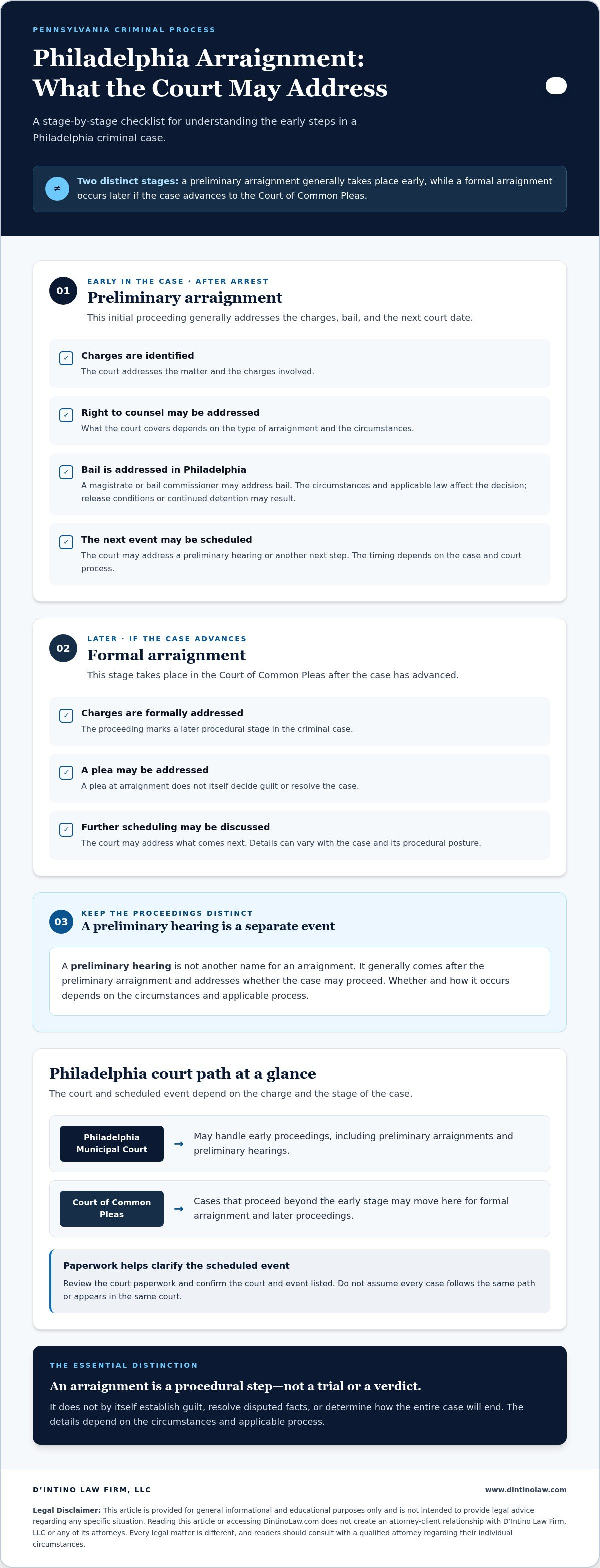
It’s understandable to feel unsure about what to say or do in court. Pennsylvania procedure distinguishes between a preliminary arraignment, which takes place shortly after an arrest and generally addresses charges, bail, and the next court date, and a formal arraignment held later in the Court of Common Pleas. These are separate steps, and the circumstances of a case can affect what to expect.
This article explains the general process in Philadelphia, what may happen at each stage, and how a defense lawyer may help you understand your options and prepare questions for counsel. It also explains why an arraignment is an early procedural milestone, not the whole case.
Key Takeaways
- Learn how Pennsylvania’s preliminary and formal arraignment stages differ, and why the timing and details can depend on the case.
- See what information to keep handy, including court paperwork and questions you may want to discuss with counsel.
- Understand what an arraignment does not decide, and why an early plea or court event should not be mistaken for a final outcome.
- Review how an arraignment lawyer Philadelphia residents consult may help explain the proceeding, review available information, and discuss legal options.
- Find out how direct communication with Attorney John D’Intino Jr. can help you understand the process and prepare questions about your case.
What Is an Arraignment in Philadelphia, Pennsylvania?
An arraignment is a court proceeding where a person is formally brought into the criminal process and receives information about the charges. It is a procedural stage, not a trial: the court does not decide guilt based on the evidence at that point. The general meaning of arraignment is useful background, but the steps in a case depend on Pennsylvania law and local Philadelphia court procedures.
There is not one identical sequence for every person. The charge, the stage of the case, and applicable procedures can affect what takes place and which court is involved. An arraignment lawyer Philadelphia defendants consult may help explain where a case stands and what a particular court event means, without predicting the case’s outcome.
Preliminary arraignment and formal arraignment are different stages
A preliminary arraignment generally occurs early in a Pennsylvania criminal case, after an arrest. It is an initial court proceeding connected to the charges and the next steps in the case. Bail may also be addressed at this stage. A formal arraignment occurs later, after the case has advanced to the Court of Common Pleas. Its purpose is to formally address the charges and move the case into the next phase of court proceedings. Details can vary with the case and its procedural posture.
A preliminary hearing is a separate proceeding, not another name for an arraignment. It generally comes after the preliminary arraignment and addresses whether the case may proceed. Whether and how that hearing occurs depends on the circumstances and applicable process.
Which Philadelphia court may handle the proceeding?
Philadelphia Municipal Court and the Court of Common Pleas of Philadelphia County are both part of the local criminal court system, but they have different roles. Municipal Court may handle early proceedings, including preliminary arraignments and preliminary hearings. Cases that proceed beyond that stage may move to the Court of Common Pleas, where formal arraignment and later proceedings may take place.
The charge and case stage matter. Do not assume that every case will follow the same path or appear in the same court. Reviewing the paperwork and confirming the court and event listed can help clarify what proceeding is scheduled. Counsel can explain how it fits into the case.
What Happens During a Philadelphia Arraignment?
The steps depend on whether the proceeding is a preliminary or formal arraignment, as well as the charge, case posture, and applicable court procedures. The legal definition of arraignment offers general context, but it does not describe every detail of a Philadelphia case. The sequence below is a general guide. Each event may not happen in this order.
- 1. The court identifies the proceeding and case. The court addresses the matter before it and the charges involved. At a preliminary arraignment, this is an early step after an arrest. A formal arraignment occurs later if the case advances.
- 2. The charges and rights may be addressed. The person may be informed of the charges and advised of the right to counsel. What the court covers can depend on the type of arraignment and the circumstances of the case.
- 3. Bail may be considered at the preliminary stage. In Philadelphia, bail is addressed during the preliminary arraignment. The decision depends on the circumstances and applicable law. The result may involve different release conditions or continued detention. No particular amount or condition is automatic.
- 4. The court may address a plea at formal arraignment. At this later stage, the court may formally address the charges and a plea. A plea at arraignment does not itself decide guilt or resolve the case.
- 5. The next procedural event may be set or confirmed. Depending on the stage, the court may address what comes next, such as a preliminary hearing or later proceedings. The scheduled event and timing depend on the case and court process.
What may be addressed at a preliminary arraignment?
This early proceeding may include notice of the charges, information about the right to counsel, a bail decision, and scheduling for a preliminary hearing. In Philadelphia, a magistrate or bail commissioner may address bail. Relevant circumstances can include the allegations and information presented to the decision-maker. The result is case-specific, so a general description cannot predict whether someone will be released or what conditions may apply.
What may happen at formal arraignment?
After the case advances, formal arraignment in the Court of Common Pleas may involve formally addressing the charges, the plea, and further case scheduling. Details may vary, and some procedural steps can be handled differently depending on the circumstances. A formal arraignment is not a trial on guilt. It is a procedural step in the criminal case.
An arraignment lawyer Philadelphia defendants consult can explain what a scheduled event means and help them identify questions about the process. For information about discussing Pennsylvania criminal-defense concerns with counsel, visit D’Intino Law Firm, LLC.
What an Arraignment Does Not Decide: And What Depends on the Case
An arraignment is one step in a Pennsylvania criminal case, not a verdict. It does not, by itself, establish guilt, resolve disputed facts, or determine how the entire case will end. A plea or other event at this stage is part of the procedure, not a guarantee of a particular outcome. Questions about release, scheduling, and later proceedings depend on the specific circumstances and applicable rules.
Is an arraignment the same as a preliminary hearing or trial?
No. These proceedings have different purposes. An arraignment formally addresses the charges and related procedural matters. A preliminary hearing, if held, is a separate proceeding that considers whether the case may move forward. A trial is where the charges are decided through the trial process. Later hearings may address other procedural or evidentiary questions, but they are not interchangeable with an arraignment.
That distinction matters because an event scheduled after arraignment does not necessarily decide guilt either. The issues considered at each stage depend on the proceeding and the case. Describing one step as if it were the final decision can create confusion about what the court has and has not resolved.
Why can the next steps differ between cases?
The path after arraignment can vary. The charges, the case’s procedural posture, court decisions, and case-specific facts can all affect what happens next. For example, one case may proceed to a preliminary hearing, while another may already be at a later stage when formal arraignment occurs. That general distinction does not establish what will happen in any particular matter.
Bail and release conditions are separate from the question of guilt. A decision about release does not decide the charges, and conditions or scheduling in one case should not be assumed to apply to another. The applicable rules and information before the court can matter.
For practical clarity, rely on case-specific court information rather than a general description of the process. Review the paperwork for the listed court, event, and date, and raise questions about anything uncertain with counsel. If information changes or seems inconsistent, an attorney can help explain what the available case information indicates.
An arraignment lawyer Philadelphia defendants consult can help distinguish a procedural event from a decision on the merits and discuss how the case’s posture may affect the next steps. Understanding what remains undecided can help you ask focused questions without assuming a particular result.
How to Prepare for an Arraignment in Philadelphia
Preparing for court can make an unfamiliar process easier to follow. These general steps can help you organize information and questions, but they are not a substitute for legal advice about your circumstances.
Information and questions to organize before court
Keep available paperwork together so you can refer to it when speaking with counsel. This may include court notices and documents related to the charges. Note the court, event, and date shown on any notice, and raise uncertainty about those details with your attorney or through reliable, case-specific court information.
Write down questions you want answered. For example, you may want to ask:
- What type of proceeding is scheduled, and what generally happens at that stage?
- Are there release conditions, and where can you find the terms that apply?
- What upcoming court dates or procedural events should you understand?
- What information should you discuss privately with counsel before court?
Avoid discussing details of the case publicly, including on social media or in messages that others may access. Do not alter, delete, hide, or dispose of anything that could relate to the case. If you have questions about records, messages, or other materials, raise them with counsel rather than making assumptions about what to do with them.
Why early case-specific advice can matter
General information can explain the broad process, but it cannot account for the particular charges, paperwork, or procedural posture in an individual matter. Counsel can review available information, explain what the scheduled proceeding may involve, and discuss rights and potential legal options. That discussion is specific to the circumstances and does not guarantee that any approach will produce a particular result.
An arraignment lawyer Philadelphia defendants consult can also help clarify questions about court information and next steps. For more about the firm’s work with criminal cases in the city, see the Philadelphia criminal defense overview.
D’Intino Law Firm, LLC represents people facing criminal matters in Philadelphia and surrounding Pennsylvania communities, including Media, West Chester, Conshohocken, Lower Merion, Upper Darby, Gladwyne, Drexel Hill, Ardmore, Blue Bell, Montgomery County, Bucks County, Delaware County, Lancaster County, and Lehigh. If you’re looking for guidance about your arraignment, you can contact D’Intino Law Firm, LLC to discuss your questions. Reading this information or reaching out does not, by itself, create an attorney-client relationship.
How a Philadelphia Arraignment Lawyer Can Help You Understand the Process
An attorney can help make an unfamiliar court process easier to understand. Counsel may explain which stage the case has reached, review available paperwork, and discuss how Pennsylvania procedure may apply. Guidance is case-specific: charges, court events, and possible options depend on the circumstances, and no lawyer can promise a particular result.
What to discuss with defense counsel
Bring your questions and any available court notices or charge-related paperwork to a conversation with counsel. You may want to ask:
- What stage is the case in, and what does the scheduled proceeding generally involve?
- What upcoming procedural events may apply, and how can the court information be understood?
- What concerns should be discussed about the charges, court appearance, or any release conditions?
- What legal options may be relevant under Pennsylvania law and the specific circumstances?
These questions can help organize a conversation, but they are not a substitute for advice based on the full details of a case. An attorney can explain the available information and help clarify what remains uncertain.
Discuss your Pennsylvania criminal-defense concerns
Attorney John D’Intino Jr. has more than two decades of experience and works directly with clients throughout representation. A consultation gives you an opportunity to discuss concerns about an arraignment and ask questions about the process. The firm offers free consultations. Contacting the firm or having an initial discussion does not, by itself, create an attorney-client relationship.
If you’re considering speaking with an arraignment lawyer Philadelphia defendants may consult, you can contact D’Intino Law Firm, LLC to discuss your concerns in a free consultation. The conversation can help you understand how counsel may review available information and explain potential options, without promising a specific outcome.
Move Forward With a Clearer Understanding
A Philadelphia arraignment is an early procedural step, not a trial or a final decision on guilt. Preliminary and formal arraignments serve different purposes, and bail, court dates, and later proceedings depend on the case and applicable procedures. Preparing your paperwork and questions can help you have a clearer conversation with counsel.
An arraignment lawyer Philadelphia defendants consult can explain the process and discuss options based on the circumstances. Attorney John D’Intino Jr. has more than two decades of experience and works directly with clients throughout representation. D’Intino Law Firm, LLC offers free consultations and flexible payment options. Contact D’Intino Law Firm, LLC to discuss your Pennsylvania criminal-defense concerns. A consultation or website visit alone does not create an attorney-client relationship.
Legal Disclaimer: This article is provided for general informational and educational purposes only and is not intended to provide legal advice regarding any specific situation. Reading this article or accessing dintinolaw.com/ does not create an attorney-client relationship with D’Intino Law Firm, LLC or any of its attorneys. Every legal matter is different, and readers should consult with a qualified attorney regarding their individual circumstances.
With clear information and case-specific guidance, you can approach the next step with greater understanding.
Frequently Asked Questions
What happens at a preliminary arraignment in Philadelphia?
A preliminary arraignment is an early court proceeding after an arrest. The person is generally informed of the charges and the right to counsel, and bail may be addressed. The court may also schedule a preliminary hearing. Details can depend on the case and its procedural posture, so a court notice or case-specific guidance can help clarify what is scheduled.
Is a preliminary arraignment the same as a formal arraignment in Pennsylvania?
No. A preliminary arraignment occurs early in the case, while a formal arraignment generally happens later in the Court of Common Pleas if the case advances. They serve different procedural purposes. A preliminary hearing is another separate event, not an alternative name for either arraignment. The sequence and details can vary based on the case and applicable court procedures.
Can a lawyer appear with me at a Philadelphia arraignment?
A lawyer may represent a person at an arraignment, but how counsel participates can depend on the type of arraignment and case circumstances. Some formal arraignments may be waived through counsel when permitted by the court. An arraignment lawyer Philadelphia defendants consult can explain what representation may involve for the particular proceeding. A consultation or initial contact alone does not create an attorney-client relationship.
Does an arraignment determine whether I am guilty?
No. An arraignment is a procedural step, not a trial on guilt. It may address the charges and other matters relevant to the stage of the case, but it does not by itself resolve the entire case. A plea or scheduling decision at this stage should not be treated as a guaranteed outcome. What happens later depends on the facts, applicable law, and procedural path.
Will bail be decided at a Philadelphia arraignment?
Bail is generally addressed at the preliminary arraignment in Philadelphia, but the decision and any release conditions depend on the circumstances and applicable law. A particular bail amount, release condition, or result is not automatic. Review the paperwork or case-specific information for any conditions that apply, and raise questions about them with counsel so their meaning can be explained in context.
What should I bring to an arraignment in Philadelphia?
Keep available court notices and charge-related paperwork organized, and note the court, proceeding, and date listed. You can also write down questions about the hearing, release conditions, or upcoming court events to discuss with counsel. This general preparation can help you follow the process, but it is not legal advice about what to do in a particular case.
Can I talk about my case before my arraignment?
You can discuss your concerns privately with a lawyer to ask about the proceeding and your legal options. Avoid discussing case details publicly, including on social media or in messages that others may access. Do not alter, delete, hide, or dispose of materials that could relate to the case. If you’re unsure how to handle information or records, raise that question with counsel.
Disclaimer
Legal Disclaimer: The information provided on dintinolaw.com/, including articles, blog posts, testimonials, case results, and other content, is for general informational and educational purposes only and does not constitute legal advice or create an attorney-client relationship with D’Intino Law Firm, LLC or any of its attorneys. Visiting this website, submitting a contact form, sending an email, calling, texting, or otherwise communicating with the firm does not establish an attorney-client relationship or obligate the firm to represent you. Do not submit confidential, privileged, or time-sensitive information through this website or electronic communications unless and until the firm has expressly agreed to represent you. Legal rights, procedures, statutes of limitation, filing deadlines, and other requirements vary based on the facts and jurisdiction and may change over time; nothing on this website should be relied upon to determine whether a legal deadline applies to your matter. If you have an urgent legal matter or a potential filing deadline, consult a qualified attorney promptly. Testimonials and statements regarding client experiences are individual opinions and experiences and are not a guarantee of future results. Prior results, verdicts, settlements, or case examples do not guarantee or predict the outcome of any future case, and every matter is different. This website may constitute attorney advertising under applicable Pennsylvania rules. D’Intino Law Firm, LLC makes no representation that the information on this website is complete, current, or applicable to your particular circumstances. For legal advice concerning your specific situation, consult directly with a qualified Pennsylvania attorney. D’Intino Law Firm, LLC | Philadelphia, Pennsylvania | dintinolaw.com/
