


Attorney
What happens when a disagreement over rent, repairs, access, or an alleged lease default puts your business occupancy in doubt? The dispute can affect daily operations and raise questions about what each party must do next. A commercial lease dispute lawyer Philadelphia business owners consult can review the lease, related communications, and the parties’ conduct to explain legal issues that may matter under Pennsylvania law. The answer may depend on several provisions and facts, not just one clause.
It can be difficult to know where to start when notices, payment records, and conversations are spread across emails and files. This article explains common commercial lease disputes, the terms and facts that may shape them, and the records that can help clarify what happened. It also outlines options an attorney may discuss. The goal is to help you organize the issue, not predict how a particular dispute will be resolved.
Key Takeaways
- Commercial lease disagreements can involve rent, repairs, notices, access, or other obligations. A disagreement alone does not establish a legal claim.
- Read relevant lease provisions together, including terms about responsibilities, payments, notices, default, and the lease’s duration.
- Direct discussion, attorney-assisted communication, and litigation are possible paths. Which may fit depends on the facts, lease, goals, and procedural posture.
- Organize the lease and amendments, relevant communications, notices, and payment records to help explain the dispute.
- A commercial lease dispute lawyer Philadelphia businesses consult can review the circumstances and discuss potential options under Pennsylvania law without guaranteeing an outcome.
Commercial Lease Disputes in Philadelphia: What Is at Stake?
A commercial lease dispute is a disagreement arising from a commercial landlord-tenant relationship. It may concern what the lease requires, whether a party met an obligation, or how to address a problem affecting the premises. A disagreement by itself does not establish that either party has a legal claim or that a particular remedy is available. The lease language, the parties’ communications and conduct, and the surrounding circumstances all matter.
The practical stakes can extend beyond the immediate point of conflict. A disagreement about rent or an alleged lease violation may affect a business’s budget. Questions about access or continued occupancy can disrupt planning, while a dispute over maintenance may require attention to the lease’s allocation of responsibilities. These are possible concerns, not conclusions about any particular landlord’s or tenant’s rights.
A commercial lease dispute concerns a landlord-tenant relationship; a purchase or sale disagreement concerns a transaction to buy or sell property. This guide addresses commercial landlord-tenant matters in Pennsylvania. It does not describe a nationwide rule. Applicable law and available options can vary with the facts and procedural posture.
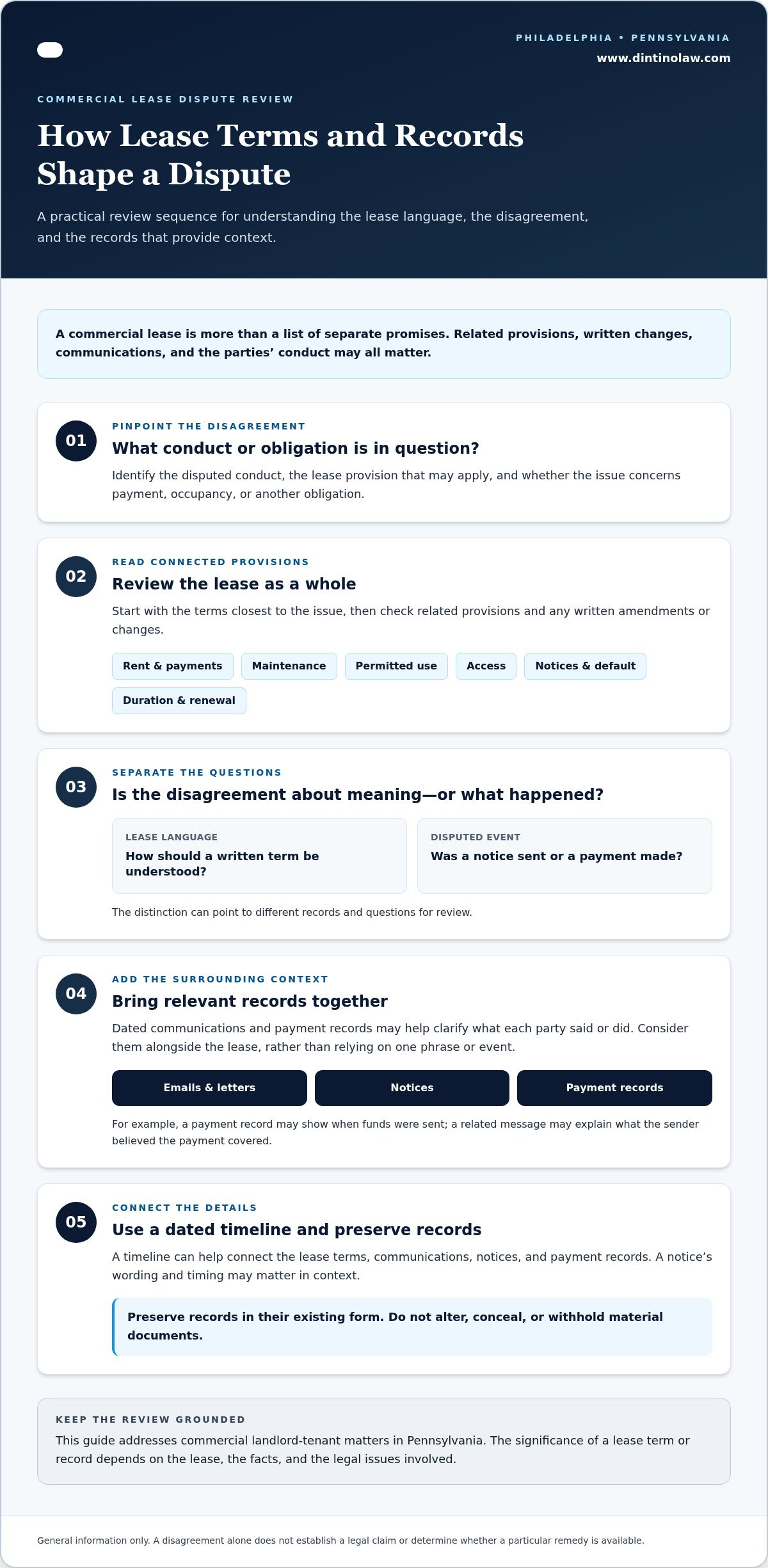
Before seeking advice, identify the specific point of disagreement: what conduct is disputed, which lease provision may apply, and whether the issue affects payment, occupancy, or another obligation. Separating those questions can help distinguish the core issue from the volume of messages and other paperwork surrounding it.
Which commercial landlord-tenant disagreements commonly arise?
Disputes often involve rent calculations or payments, alleged lease violations, responsibility for repairs or other tasks, access to the premises, and continued occupancy. The parties may disagree about what a lease term means, whether a particular obligation applies, or whether an event occurred. These examples do not automatically establish a legal violation or a right to a particular outcome.
Why the lease and the relationship both matter
The written lease is an important starting point, but understanding a disagreement may also require reviewing how the parties communicated and acted. Payment records, notices, and relevant messages can help establish a timeline and clarify what each party said or did. Under Pennsylvania law, the significance of those materials depends on the lease, the facts, and the legal issues involved.
Review records together rather than relying on one phrase or event. A payment record may show when an amount was sent, while a related message may explain what the sender believed it covered. A notice may identify a concern, but its wording and relationship to the lease matter too. A dated timeline can help connect those details.
Not every disagreement calls for the same response. The obligation at issue, its effect on the business, and the available records may shape which questions deserve closer attention. A Pennsylvania real estate attorney can review the circumstances and explain potential options without assuming that every conflict belongs in court or will lead to a particular result.
How Pennsylvania Lease Terms Shape a Philadelphia Dispute
A commercial lease is more than a list of separate promises. Its provisions work together to describe the parties’ responsibilities, payment arrangements, notice requirements, and the length or renewal of the tenancy. A phrase that seems clear on its own may need to be read alongside related terms, amendments, and the circumstances in which the parties acted.
For disputes in Philadelphia, review the actual lease and any written changes rather than assuming every commercial agreement uses the same wording. Pennsylvania law is the relevant jurisdiction for this guide, but the effect of a term can depend on the contract and facts. General landlord-tenant information from the Pennsylvania Department of Community and Economic Development may provide broader context, but it does not replace review of a specific commercial lease or current legal authority.
Which lease provisions may deserve closer review?
Start with the terms most closely connected to the disagreement. Depending on the issue, these may cover rent or other payments, maintenance responsibilities, permitted use, access, notices, default, or the lease’s duration. Leases vary, and negotiated wording can differ. Review amendments and related provisions as well, since a change to one term may affect how another is understood.
Then define the question precisely. Is the disagreement about what the written language means, or whether a particular event happened? For example, the parties may interpret a responsibility differently, or they may agree on the wording but dispute whether a notice was sent or a payment was made. Those questions call for different records and analysis.
How conduct and communications can affect the picture
Written terms provide the framework, while dated emails, letters, notices, and payment records can add context. A payment record may help establish when funds were sent; a related message may explain what the sender believed the payment covered. A notice’s wording and timing can also matter, depending on its context and the lease terms. Preserve records in their existing form. Do not alter, conceal, or withhold material documents.
Keep Pennsylvania-specific legal and procedural information grounded in current, reliable sources. The state’s Pennsylvania landlord-tenant law information provides general context, though residential and commercial situations may raise different issues. A commercial lease dispute lawyer Philadelphia businesses consult can review the lease wording, communications, and events together and explain which questions may need closer attention.
For more information about D’Intino Law Firm’s Pennsylvania real estate practice, visit D’Intino Law Firm.
Resolving a Commercial Lease Dispute: Compare Practical Paths
A disagreement does not automatically require a lawsuit. Depending on the lease, facts, each party’s goals, and the dispute’s procedural posture, possible paths may include direct discussion, attorney-assisted communication, or litigation. These are general options, not guaranteed stages or outcomes. Some matters may be addressed through discussion; others may require legal analysis of rights and available procedures under Pennsylvania law.
Seeking legal advice does not necessarily mean filing a case. A commercial lease dispute lawyer Philadelphia businesses consult can review the relevant terms and circumstances, explain potential options, and discuss considerations before a decision about next steps. The appropriate approach depends on whether the parties disagree about what the lease means, what happened, or both.
| Path | Purpose | Considerations |
|---|---|---|
| Direct discussion | Clarify the disputed issue between the parties. | May support practical communication, but depends on the parties’ willingness and the circumstances. |
| Attorney-assisted communication | Bring legal analysis and a more structured exchange to the discussion. | Can help identify lease-related questions and frame options; it does not guarantee agreement or a particular result. |
| Litigation | Use a formal legal process to address a dispute. | Requires case-specific review of the lease, facts, applicable Pennsylvania procedures, and procedural posture. |
When can communication or negotiation be considered?
A focused written account can keep a discussion grounded. It can identify the obligation in dispute, summarize relevant events, and point to supporting records without overstating what they establish. The parties may use discussion or negotiation to explore whether they can address the issue. This approach may not suit every circumstance, and this general information does not recommend particular statements, concessions, or terms.
When might litigation become part of the discussion?
Litigation may enter the conversation when a disagreement remains unresolved or formal legal action is being considered. Whether it is a suitable path depends on the lease, evidence, goals, and current posture of the matter. The applicable process and timing must be assessed under Pennsylvania law for the specific dispute. This section does not predict court action, duration, costs, or results.
Understanding the options can help bring order to an uncertain situation, even if no decision is made immediately. D’Intino Law Firm’s website includes information about its Pennsylvania real estate practice at D’Intino Law Firm.
Preparing for a Philadelphia Commercial Lease Dispute Review
A clear record can make an initial discussion more productive. You do not need to resolve every uncertainty before speaking with an attorney. Gather the documents connected to the disagreement and arrange them so the key events are easy to follow. Which records matter depends on the lease and the issue.
Consider organizing available materials in a simple sequence:
- The signed lease, along with amendments, renewals, or other written changes.
- Relevant emails, letters, and other communications between the landlord, tenant, or their representatives.
- Notices connected to the disagreement, including records showing when they were received or sent, if available.
- Payment records or other transaction documents that relate to the issue.
What records can help explain the disagreement?
Different disputes call for different records. A rent disagreement may involve payment confirmations and account statements. A disagreement about a lease obligation may turn on the relevant lease language and communications about that responsibility. Keep original files and documents intact, including dates and attachments. Avoid editing records in a way that could obscure their history. An attorney can help assess which materials matter under the circumstances.
If the lease has multiple versions, include the signed copy and any later written changes you can locate. Keep related documents together, but do not assume that one email, notice, or receipt proves the issue by itself. Its relevance may depend on wording, timing, and surrounding facts. A commercial lease dispute lawyer Philadelphia businesses consult can review the records alongside the applicable Pennsylvania law and lease terms.
What should a reader be ready to explain?
A brief chronology can help organize the first conversation. Note who the parties are and their roles, the issue in dispute, and key dates you can verify. Separate documented events from assumptions or unresolved questions. Then identify the lease provisions or communications that seem connected. This outline is a starting point, not a legal conclusion, and can be updated as additional records come to light.
Keep the chronology concise and distinguish what a document directly shows from what someone inferred at the time. For example, note the date of a message separately from your understanding of its meaning. This helps keep the account clear while leaving legal interpretation for review in context.
With the documents and chronology gathered, a discussion can focus on the issue, available information, and questions that need legal analysis. Learn more about D’Intino Law Firm, LLC at the firm’s website. Contacting the firm or reading this article alone does not create an attorney-client relationship.
Discuss Your Philadelphia Commercial Lease Dispute with D’Intino Law Firm
A commercial lease disagreement can leave business owners uncertain about the lease, their obligations, and possible options. D’Intino Law Firm, LLC handles Pennsylvania commercial landlord-tenant matters. Attorney John D’Intino Jr. has more than two decades of experience and works directly with clients from the initial consultation through resolution. The firm serves clients in Philadelphia and surrounding Pennsylvania communities, including Media, West Chester, Conshohocken, Lower Merion, Upper Darby, Gladwyne, Drexel Hill, Ardmore, Blue Bell, Montgomery County, Bucks County, Delaware County, Lancaster County, and Lehigh. Direct involvement keeps the discussion focused on the client’s circumstances and legal questions without assuring a particular outcome.
The firm offers free consultations and flexible payment options. An initial discussion can focus on the disagreement, relevant lease terms, and available information. The purpose is to frame the issues and consider potential paths under Pennsylvania law, not to assume litigation is necessary or predict a specific result.
What to expect when discussing a lease dispute
An initial discussion can help organize the central questions: what the parties disagree about, which parts of the lease appear relevant, and what facts or documents may need closer review. Any legal assessment depends on the specific circumstances and applicable Pennsylvania law. Contacting the firm alone does not create an attorney-client relationship.
Readers seeking broader real estate information may also find Real Estate Lawyer Philadelphia: Protecting Your Property and Interests relevant. A focused conversation about a commercial landlord-tenant dispute centers on the lease and the particular issue. A commercial lease dispute lawyer Philadelphia business owners consult can explain potential legal considerations without promising a resolution.
A careful, Pennsylvania-focused next step
You do not need to approach a discussion with every answer in hand. A clear account of the concern and the questions that remain can provide a useful starting point. An attorney can review the circumstances and discuss possible legal options, recognizing that the analysis may change as facts and applicable law are considered.
D’Intino Law Firm, LLC represents clients in Pennsylvania commercial landlord-tenant matters. An attorney can review the circumstances and discuss potential options; this article provides general information, not legal advice for an individual matter.
Legal Disclaimer: This article is provided for general informational and educational purposes only and is not intended to provide legal advice regarding any specific situation. Reading this article or accessing DintinoLaw.com does not create an attorney-client relationship with D’Intino Law Firm, LLC or any of its attorneys. Every legal matter is different, and readers should consult with a qualified attorney regarding their individual circumstances.
Take a Thoughtful Next Step
A lease disagreement can feel easier to address once the immediate business concern is separated from longer-term questions about the parties’ obligations. Consider which uncertainty most affects your ability to plan and what you need clarified before deciding how to proceed. That focus can make a legal discussion more useful without assuming what the answer or outcome will be.
A commercial lease dispute lawyer Philadelphia businesses consult can assess the relevant circumstances and explain legal options under Pennsylvania law. Any assessment depends on the specific facts and applicable law, and this general information cannot resolve an individual dispute.
To discuss a Pennsylvania commercial lease concern, contact D’Intino Law Firm. A conversation can help you consider the questions ahead and potential options.
Frequently Asked Questions
Can a commercial lease dispute be resolved without going to court?
Discussion or negotiation may be considered as alternatives to litigation. For example, parties might clarify how they understand a disputed maintenance responsibility or payment entry. Whether communication is suitable depends on the lease, facts, each party’s goals, and applicable Pennsylvania law. Discussion may not resolve every disagreement, and it does not establish that either party is legally right or require anyone to accept a particular proposal.
What documents should I gather for a commercial lease dispute?
Useful records may include the signed lease and amendments, relevant emails or letters, notices, and payment records connected to the disagreement. A brief timeline can show when key events occurred and distinguish confirmed dates from open questions. Not every document will matter in every dispute. Keep available records in their original form, including attachments or transaction details, so their context and history remain clear.
Can a Philadelphia commercial landlord change the terms of a lease during the tenancy?
There is no one answer that applies to every commercial lease. The written agreement, later communications or documents, the parties’ conduct, and the circumstances may all matter under Pennsylvania law. For instance, a message proposing a change may raise different questions from a signed amendment. Whether a term changed, and what effect that may have, requires review of the specific agreement and facts rather than an assumption based on one communication.
What happens if a commercial tenant and landlord disagree about a lease violation?
A disagreement about an alleged violation calls for examining the relevant lease language and available records. The parties may differ about whether a duty applied, what occurred, or how a notice should be understood. Those differences do not establish that a violation happened. Depending on the circumstances, possible options may be discussed after review of the agreement, communications, and applicable Pennsylvania law; no particular resolution can be assumed.
Does a commercial lease dispute automatically mean someone must file a lawsuit?
No. Getting legal advice and starting litigation are separate matters. An attorney can help identify what the lease and facts raise, then discuss possible paths without assuming a court filing is necessary. Whether litigation becomes relevant depends on the dispute, the parties’ goals, and its procedural posture under Pennsylvania law. A conversation about options does not guarantee agreement or eliminate the possibility of later considering formal legal steps.
How can a commercial lease dispute lawyer in Philadelphia help?
A commercial lease dispute lawyer Philadelphia businesses consult can review relevant lease documents and records, identify legal questions, and explain potential options under Pennsylvania law. For example, counsel may help distinguish a disagreement over what a clause means from a dispute about whether an event occurred. The analysis depends on the specific circumstances. Legal review can clarify issues to consider, but it cannot promise a particular result or replace an individualized assessment.
To discuss your Pennsylvania commercial lease matter, contact D’Intino Law Firm, LLC for a free consultation. An attorney can review the circumstances and discuss potential legal options.
Disclaimer
Legal Disclaimer: The information provided on DintinoLaw.com, including articles, blog posts, testimonials, case results, and other content, is for general informational and educational purposes only and does not constitute legal advice or create an attorney-client relationship with D’Intino Law Firm, LLC or any of its attorneys. Visiting this website, submitting a contact form, sending an email, calling, texting, or otherwise communicating with the firm does not establish an attorney-client relationship or obligate the firm to represent you. Do not submit confidential, privileged, or time-sensitive information through this website or electronic communications unless and until the firm has expressly agreed to represent you. Legal rights, procedures, statutes of limitation, filing deadlines, and other requirements vary based on the facts and jurisdiction and may change over time; nothing on this website should be relied upon to determine whether a legal deadline applies to your matter. If you have an urgent legal matter or a potential filing deadline, consult a qualified attorney promptly. Testimonials and statements regarding client experiences are individual opinions and experiences and are not a guarantee of future results. Prior results, verdicts, settlements, or case examples do not guarantee or predict the outcome of any future case, and every matter is different. This website may constitute attorney advertising under applicable Pennsylvania rules. D’Intino Law Firm, LLC makes no representation that the information on this website is complete, current, or applicable to your particular circumstances. For legal advice concerning your specific situation, consult directly with a qualified Pennsylvania attorney. D’Intino Law Firm, LLC | Philadelphia, Pennsylvania | DintinoLaw.com
