


Attorney
After a crash in West Chester, questions can come quickly: Who may be responsible, how will medical bills be handled, and what should you say to an insurance company? A car accident lawyer West Chester PA can explain Pennsylvania rules and claim issues that may apply, based on the facts rather than assumptions.
It’s understandable to feel overwhelmed while recovering, keeping track of missed work, and organizing records. Pennsylvania’s choice of full tort or limited tort coverage may affect a claim for pain and suffering. Questions about fault and available insurance can also shape how a claim is evaluated.
This article covers Pennsylvania-specific claim issues, useful records to preserve, and how medical expenses, lost income, and insurance communications may fit into the process. It also explains what you can raise in an initial conversation with D’Intino Law Firm, LLC. The issues and next steps depend on the circumstances of the crash and the coverage involved.
Key Takeaways
- Crash details may help clarify who could be responsible and how an injury claim is evaluated under Pennsylvania law.
- Organize scene information, medical records, insurance communications, and wage documents in separate categories.
- Some tasks involve keeping records and correspondence organized. Other questions depend on the facts and insurance coverage.
- A car accident lawyer West Chester PA can discuss how Pennsylvania-specific issues may apply and explain potential legal options.
- An initial discussion with D’Intino Law Firm, LLC can help you identify questions about an injury claim, without promising a particular result.
After a West Chester Car Accident: Understand the First Questions
Injuries, vehicle damage, and insurance calls can make the next steps after a West Chester crash feel unclear. Paperwork may be difficult to manage while you’re dealing with pain, appointments, or transportation problems. This guide addresses Pennsylvania car accident claims brought by injured people. It covers civil personal-injury matters, not criminal cases.
Generally, prioritize immediate safety and appropriate medical care. When circumstances allow, record what you remember and keep relevant documents. The order and practicality of these steps depend on what happened and what people involved can safely do. A Pennsylvania car accident injury claim is a civil claim seeking to hold a potentially responsible party accountable for injuries and related losses allegedly caused by a crash. Whether a claim can proceed, and what losses may be considered, depends on the facts, applicable law, and insurance coverage.
A car accident lawyer West Chester PA may help an injured person understand how responsibility, available records, and insurance coverage relate to a claim. Recording details early may help preserve what someone remembers, but it does not guarantee a particular outcome.
Which immediate details may help explain what happened?
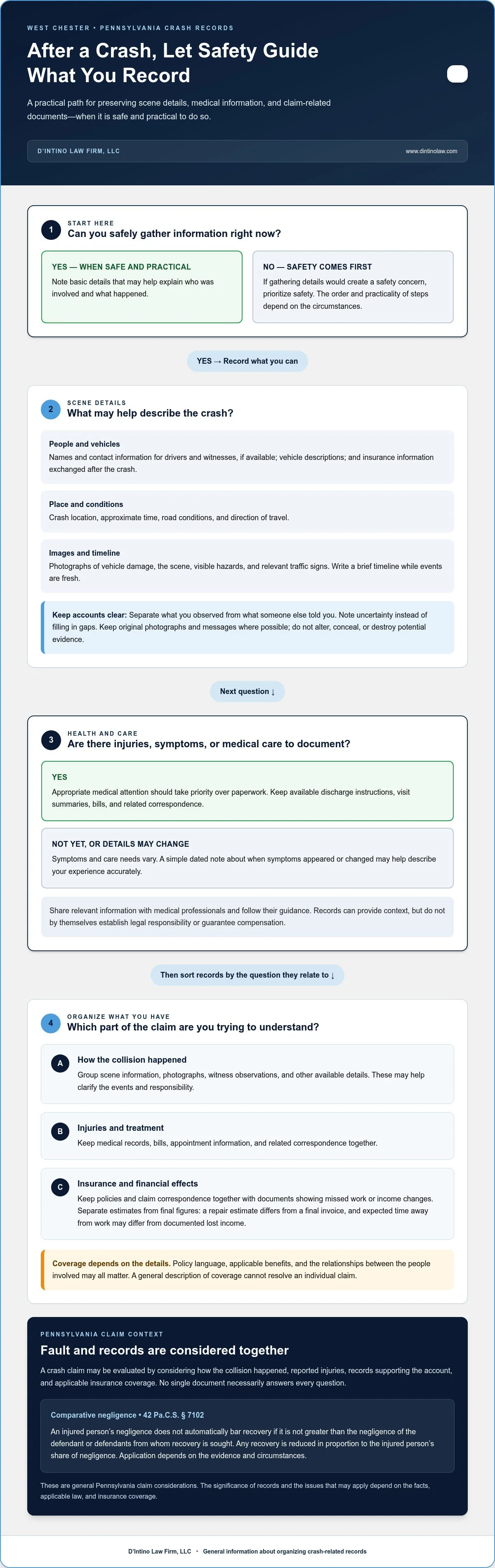
When it’s safe and practical, gather basic information that may help identify the people, vehicles, and circumstances involved. Useful details may include:
- Names and contact information for drivers and witnesses, if available.
- Vehicle descriptions and insurance information exchanged after the crash.
- The crash location, approximate time, road conditions, and direction of travel.
- Photographs of vehicle damage, the scene, visible hazards, and relevant traffic signs.
Write a brief timeline while the events are fresh. Separate what you observed from what someone else told you. Note uncertainty rather than filling in gaps. Keep original photographs and messages where possible, and don’t alter, conceal, or destroy potential evidence. If gathering details would create a safety concern, prioritize safety.
When should injuries and medical records enter the picture?
Appropriate medical attention should take priority over paperwork. Symptoms and care needs vary, and this article can’t assess an injury or recommend a treatment plan. Share relevant information with medical professionals and follow their guidance.
Records may document reported symptoms, care received, and appointment dates. Keep available discharge instructions, visit summaries, bills, and related correspondence. A simple dated note about when symptoms appeared or changed may help you describe your experience accurately. Medical records can provide useful context, but they don’t by themselves establish legal responsibility or guarantee compensation. Their significance depends on the circumstances and applicable law.
How Pennsylvania Car Accident Claims Are Evaluated
A crash claim may be evaluated by considering how the collision happened, what injuries are reported, which records support the account, and what insurance coverage may apply. These issues can connect. Photographs or witness accounts, for example, may help clarify the events, while treatment records and wage documents may describe the effects of an injury. No single document necessarily answers every question.
This article discusses Pennsylvania law, including the comparative-negligence rule in 42 Pa.C.S. § 7102. Under that statute, an injured person’s negligence does not automatically bar recovery if it is not greater than the negligence of the defendant or defendants from whom recovery is sought. Any recovery is reduced in proportion to the injured person’s share of negligence. How the rule applies depends on the evidence and circumstances.
How may responsibility and partial fault be considered?
Responsibility may involve more than one person’s actions. Depending on the crash, the conduct of multiple drivers or other circumstances may need consideration. The analysis may draw on accounts of what happened, photographs, vehicle damage, witness observations, and other available information.
A disagreement about fault doesn’t determine how a claim will be resolved. An early account or general example cannot predict the outcome of a particular crash. A car accident lawyer West Chester PA can review available information and explain how Pennsylvania law may apply without assuming that a particular argument will succeed.
What insurance and loss records may matter?
Relevant records may include auto insurance policies, claim correspondence, medical records, bills, and documents showing missed work or income changes. Keep estimates separate from final figures. A repair estimate, for example, is different from a final invoice, and expected time away from work may differ from documented lost income. Neither is necessarily a final calculation of claim value.
Coverage questions depend on policy language and the circumstances. The type of policy, applicable benefits, and relationships between the people involved may all matter. A general description of coverage can’t resolve an individual claim. PennDOT publishes statewide crash information through its Pennsylvania Department of Transportation crash statistics resource. Statewide data provides context, but it doesn’t establish what happened in a specific collision.
For more information about plaintiff-side injury issues, see D’Intino Law Firm, LLC’s Philadelphia personal injury guidance. An attorney can review records and explain potential legal issues, but outcomes depend on the facts, applicable law, and procedural circumstances. You can also contact D’Intino Law Firm, LLC to discuss a Pennsylvania injury matter. Visiting the site or reaching out doesn’t itself create an attorney-client relationship.
West Chester Crash Evidence: What to Preserve and Organize
After a crash in West Chester or elsewhere in Chester County, records can accumulate across phones, email, medical portals, and paper files. A simple system makes information easier to find and helps distinguish what you remember from what a document shows. This is an organizational aid, not a legal checklist or a guarantee that a claim will succeed. Keep original materials where possible, and don’t change, discard, or create records to strengthen a claim.
Try this process, adapting it to your circumstances:
- 1. Create a crash folder. Use a secure digital folder or physical file. Add the crash date and a short label, then keep related materials together.
- 2. Sort scene information. Save available photographs, contact and vehicle details, witness information, and any crash documents you received. Label files with the date and a brief description. Don’t edit original images or documents.
- 3. Keep medical records together. Collect available appointment summaries, treatment instructions, bills, and related records. Keep messages about appointments or care in this category, too.
- 4. Separate insurance communications. Save policy documents, claim letters, and emails. For phone calls, note the date, who you spoke with if known, and the general subject discussed.
- 5. Track work and other practical effects. Keep employer communications or available records of missed work and income changes. Store repair estimates, invoices, and transportation receipts separately, since they document different issues.
How can readers create a useful crash timeline?
Use a dated note or document to record locations, observations, appointments, and communications in sequence. Mark whether an entry reflects your memory, a photograph, a letter, or another person’s account. If you’re unsure of a time or detail, say so rather than guessing. Note where each copy came from and keep originals unchanged. Avoid posting private medical or identifying details publicly.
Which documents may help explain the impact of an injury?
Medical records and bills may describe reported symptoms and care. Work records may show absences or income changes, repair records may document vehicle damage, and insurer correspondence may help track claim communications. A document’s relevance depends on the circumstances. Don’t alter records or omit context to make an account appear stronger. If an official reporting requirement or legal deadline may apply, verify the current rule through an authoritative source or discuss it with a qualified Pennsylvania attorney. Requirements can depend on the facts, so don’t infer them from a general guide.
Organized records can make a discussion more focused. To talk about how Pennsylvania personal-injury issues may relate to your circumstances, contact D’Intino Law Firm, LLC. Reaching out does not by itself create an attorney-client relationship.
Choosing Next Steps After a West Chester Car Accident
Some post-crash tasks are administrative, such as keeping correspondence together, noting appointments, and tracking documents as they arrive. Other questions call for considering the facts under Pennsylvania law. The table can help organize topics for discussion. It’s general information, not a legal checklist, and can’t determine whether a particular person has a valid claim.
| Issue | Information to gather | Question an attorney may help evaluate |
|---|---|---|
| Responsibility for the crash | Available photographs, witness details, crash documents, and dated notes | How might the available evidence relate to disputed accounts of the collision? |
| Injuries and care | Treatment records, appointment dates, and documents describing reported symptoms | What information may help explain the claimed injuries and their connection to the crash? |
| Insurance communications | Policy documents, claim letters, emails, and notes of calls | What questions do the policy language and circumstances raise about potential coverage? |
| Work and other documented losses | Records of missed work or income changes, repair documents, and receipts | Which records may help explain the losses being considered? |
Many people can organize documents, write down questions, and track communications themselves. Applying Pennsylvania law to disputed facts, interpreting policy terms, or assessing how evidence fits together may call for a case-specific review. Keep documented amounts separate from estimates, and don’t treat a preliminary figure as a final valuation. The table is a starting point for questions, not an assessment of a claim’s value or likely result.
When may an attorney’s case-specific review be useful?
A review may be useful if accounts of responsibility conflict, injuries are serious or continue to affect daily activities, or insurance communications leave important questions unresolved. None of these circumstances automatically establishes a claim. An attorney can consider the information available, explain potential legal issues, and discuss options under Pennsylvania law.
What should readers expect from an initial discussion?
An initial conversation can focus on your main questions, such as how to understand an insurer’s letter or what information could clarify a disagreement about the crash. An attorney can explain potential issues based on the circumstances without promising a result. An initial inquiry is separate from a decision about representation.
If you want to discuss questions raised by a West Chester crash, contact D’Intino Law Firm, LLC to share your concerns and ask about possible next steps. You can begin with the information you have and identify records you may still need to locate. Contacting the firm does not by itself create an attorney-client relationship.
Discussing a West Chester Car Accident With D’Intino Law Firm
After sorting through crash information and Pennsylvania-specific claim questions, you may want to discuss how those issues relate to your circumstances. D’Intino Law Firm, LLC represents injured plaintiffs in Pennsylvania personal-injury matters. An initial conversation can give you a chance to raise questions about responsibility, injuries, insurance communications, or records and learn which legal issues may warrant further consideration. It can’t predict or guarantee an outcome.
How does the firm’s direct attorney involvement work?
Attorney John D’Intino Jr. works directly with clients through resolution, giving them a direct point of communication as questions arise. He has more than two decades of experience. Direct involvement allows for a personalized discussion of a client’s facts and concerns, but it is not a promise of a particular result or a comparison with other attorneys.
The firm offers free consultations and flexible payment options. You can ask about the terms that may apply to representation; this article does not describe or set those terms. A discussion can clarify potential legal options, but making an inquiry is separate from the firm agreeing to represent someone.
What should readers bring to a first conversation?
If available, useful materials may include a brief account of the crash, relevant insurance letters or emails, medical or repair documents, and notes about questions you’d like to ask. You don’t need every record organized before raising general questions. If a detail is uncertain, say so rather than guessing. Missing documents don’t prevent you from asking for general information.
You might ask how Pennsylvania rules could relate to a disputed account of the crash, what coverage questions a policy raises, or which records may help explain an injury’s impact. Answers depend on the facts and applicable law. A car accident lawyer West Chester PA can review the circumstances and discuss potential options without assuming that a claim is valid or predicting a result.
If you’d like to discuss your concerns, you’re welcome to contact D’Intino Law Firm, LLC. Reaching out or reading this article does not itself create an attorney-client relationship. Legal representation requires a separate agreement.
Legal Disclaimer: This article is provided for general informational and educational purposes only and is not intended to provide legal advice regarding any specific situation. Reading this article or accessing DintinoLaw.com does not create an attorney-client relationship with D’Intino Law Firm, LLC or any of its attorneys. Every legal matter is different, and readers should consult with a qualified attorney regarding their individual circumstances.
Take a Thoughtful Next Step
Recovery can take focus, and you don’t have to resolve every question at once. Consider what feels most uncertain, such as how to understand an insurance communication, how to approach conflicting accounts, or whether a legal issue needs closer review. A car accident lawyer West Chester PA can discuss how the circumstances may relate to Pennsylvania law, but no general article can determine what applies to an individual situation.
A conversation can help you raise questions, understand potential options, and identify information that may be useful. You can start with the concerns you’re comfortable discussing and ask about the process before deciding on a next step. You don’t need to have every answer prepared.
D’Intino Law Firm serves injured people in West Chester and throughout Pennsylvania, including Philadelphia, Media, Conshohocken, Lower Merion, Upper Darby, Gladwyne, Drexel Hill, Ardmore, Blue Bell, and surrounding communities in Montgomery, Bucks, Delaware, Berks, Lancaster, Chester, and Lehigh counties. If you’d like to discuss your Pennsylvania car accident concerns, contact the firm to learn about your options.
Frequently Asked Questions
Can I pursue a Pennsylvania car accident claim if I was partly at fault?
Possibly. Under Pennsylvania’s comparative-negligence law, partial fault does not automatically bar recovery if an injured person’s negligence is not greater than the defendant’s. Any recovery may be reduced according to the injured person’s share of negligence. The facts matter, and fault can’t be determined from a short description. A car accident lawyer West Chester PA can review available information and explain potential legal issues if responsibility is disputed.
What if the other driver in a West Chester crash has no insurance?
An uninsured driver doesn’t, by itself, answer whether another source of coverage may be available. The policies involved, who qualifies as an insured, and the crash circumstances can all matter. Look for your declarations page and policy documents, and keep insurer letters or messages together. Don’t assume a particular benefit applies based on a general description. An attorney can help identify coverage questions under Pennsylvania law.
Can a passenger bring a claim after a car accident in Pennsylvania?
An injured passenger may have legal options, but the facts and insurance policies need individual review. Depending on how the crash happened, questions may involve a driver’s conduct, more than one policy, or potentially responsible parties. A passenger can keep records in their own name, such as treatment documents and insurer communications. Those materials may help explain the situation, but don’t establish a right to recovery by themselves.
What if the driver who caused a West Chester accident left the scene?
If the other driver leaves, focus first on safety and appropriate medical care. When appropriate, share available information with authorities. Write down what you remember, including the time, location, vehicle description, and possible witness details, and keep related communications. Insurance options depend on the policies and facts. A Pennsylvania attorney can review the circumstances and discuss potential issues without assuming a particular coverage route applies.
How long do I have to file a Pennsylvania car accident lawsuit?
In general, Pennsylvania law sets a two-year deadline for many personal-injury lawsuits, including claims arising from car crashes, under 42 Pa.C.S. § 5524. The applicable start date and any exceptions can depend on the circumstances, parties, and type of claim. Don’t use a general article to calculate a filing date. An attorney can review the relevant facts and explain which deadlines may apply.
Do I need a police report to discuss a West Chester car accident with a lawyer?
No. You can raise general questions without a police report. Other materials, such as a claim number, photographs, insurer messages, medical paperwork, or witness contact details, may help describe what you know. Be clear about which details come from your memory and which come from documents. The absence of one record doesn’t decide whether a claim exists or what legal options may be available.
Does contacting D’Intino Law Firm create an attorney-client relationship?
No. Reading this article, visiting the firm’s website, or contacting the office doesn’t automatically create an attorney-client relationship. An initial conversation can be used to raise general concerns and learn about possible next steps. Representation is established separately under applicable terms, not simply by making an inquiry. Avoid sending sensitive information until you understand how it will be handled and whether the firm has agreed to represent you.
Disclaimer
Legal Disclaimer: The information provided on DintinoLaw.com, including articles, blog posts, testimonials, case results, and other content, is for general informational and educational purposes only and does not constitute legal advice or create an attorney-client relationship with D’Intino Law Firm, LLC or any of its attorneys. Visiting this website, submitting a contact form, sending an email, calling, texting, or otherwise communicating with the firm does not establish an attorney-client relationship or obligate the firm to represent you. Do not submit confidential, privileged, or time-sensitive information through this website or electronic communications unless and until the firm has expressly agreed to represent you. Legal rights, procedures, statutes of limitation, filing deadlines, and other requirements vary based on the facts and jurisdiction and may change over time; nothing on this website should be relied upon to determine whether a legal deadline applies to your matter. If you have an urgent legal matter or a potential filing deadline, consult a qualified attorney promptly. Testimonials and statements regarding client experiences are individual opinions and experiences and are not a guarantee of future results. Prior results, verdicts, settlements, or case examples do not guarantee or predict the outcome of any future case, and every matter is different. This website may constitute attorney advertising under applicable Pennsylvania rules. D’Intino Law Firm, LLC makes no representation that the information on this website is complete, current, or applicable to your particular circumstances. For legal advice concerning your specific situation, consult directly with a qualified Pennsylvania attorney. D’Intino Law Firm, LLC | Philadelphia, Pennsylvania | DintinoLaw.com
