


Attorney
What if the type of fracture alone doesn’t tell you what an injury claim may be worth? For anyone researching “broken bone injury settlement Pennsylvania,” the answer depends on more than whether an arm, leg, or another bone was broken. Medical documentation, recovery time, missed work, lasting limitations, and the circumstances of the accident can all shape how a claim is evaluated.
It’s understandable to focus on mounting medical bills and lost income while you’re trying to recover. Insurance rules can add another layer of uncertainty, especially after a car accident. In Pennsylvania, your auto policy’s tort option may affect whether you can seek pain-and-suffering damages, and limited-tort claims can involve additional legal questions.
This guide explains the Pennsylvania rules and practical factors that may affect a broken-bone claim, including liability, medical expenses, lost wages, and the impact of tort selection in auto cases. You’ll also learn how damages are generally considered and why careful documentation matters. The outcome depends on the facts of each case, so there’s no single settlement figure that applies to every fracture.
Key Takeaways
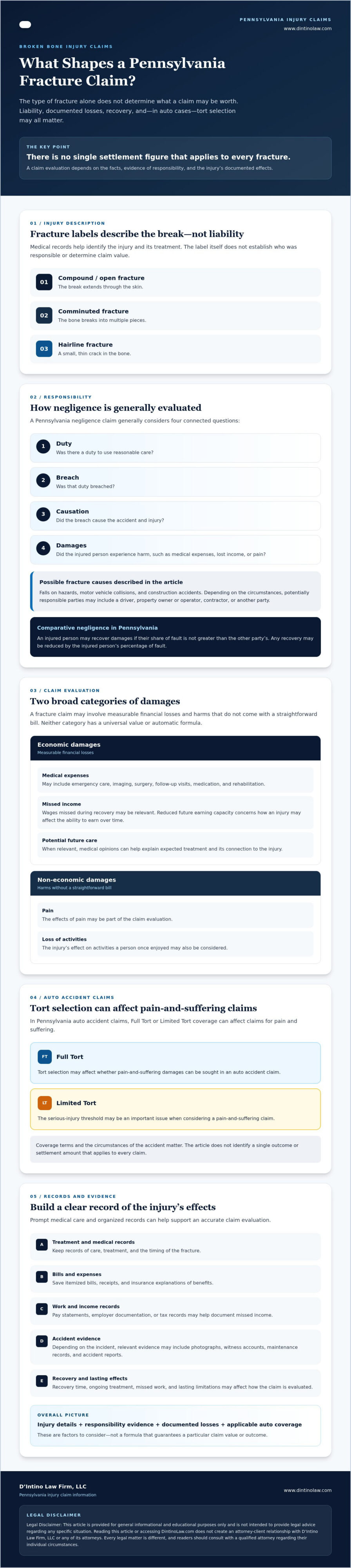
- A fracture’s medical classification can help explain the injury, but liability and documented effects on daily life also matter when evaluating a claim.
- A broken bone injury settlement Pennsylvania claim may involve both financial losses, such as medical expenses and lost wages, and non-economic harm.
- In auto accident claims, Full Tort or Limited Tort coverage can affect claims for pain and suffering; the serious-injury threshold may be an important issue under Limited Tort.
- Prompt medical care and organized records of treatment, expenses, missed work, and accident evidence can help support an accurate claim evaluation.
- Direct work with Attorney John D’Intino Jr. and trial-ready preparation can help ensure the claim is carefully developed, though no particular outcome is guaranteed.
Understanding Broken Bone Injuries and Liability in Pennsylvania
A fracture can range from a narrow crack to a break that damages surrounding tissue. Medical records identify the injury and treatment, but the fracture’s label alone doesn’t establish who was legally responsible or determine a claim’s value. In a broken bone injury settlement Pennsylvania claim, the evidence connecting the accident to the injury and another party’s conduct is central.
Common terms describe different features of a fracture. A compound fracture, also called an open fracture, breaks through the skin. A comminuted fracture breaks the bone into multiple pieces. A hairline fracture is a small, thin crack. These descriptions can help explain treatment and recovery, but liability still depends on the facts. For more background on fracture classifications and healing, see Bone fracture.
Common Causes of Fractures in PA Injury Claims
Broken bones may result from falls on hazards such as a wet floor, uneven walkway, or poorly maintained stairs at a commercial property. Motor vehicle collisions can also cause fractures through impact with a vehicle interior, another vehicle, or the roadway. Construction accidents may involve falls, falling objects, or unsafe site conditions. Depending on the circumstances, potentially responsible parties could include a driver, property owner or operator, contractor, or another party. The facts determine who may be legally accountable.
Establishing Negligence Under Pennsylvania Law
A Pennsylvania negligence claim generally involves four questions: Did the other party owe a duty of reasonable care? Did that party breach the duty? Did the breach cause the accident and injury? Did the injured person suffer damages, such as medical expenses, lost income, or pain? Evidence may include medical records, photographs, witness accounts, maintenance records, and accident reports.
The mechanism of injury, meaning how the fracture occurred, helps connect the event to the claimed harm. For example, the location and condition of a fall, vehicle damage, or the sequence of events at a worksite may matter when evaluating how the injury happened. Prompt medical documentation can also help show the nature and timing of the fracture.
Pennsylvania follows a modified comparative negligence rule. An injured person may recover damages if their share of fault is not greater than the other party’s, but any recovery may be reduced by their percentage of fault. Identifying all potentially responsible parties matters because responsibility and available insurance may vary. The specific facts and applicable law shape how these issues affect a claim.
Factors That Influence Broken Bone Settlement Values in PA
There’s no dependable average that can tell you what a fracture claim is worth. A broken bone injury settlement Pennsylvania claim depends on documented losses, the effects of the injury, evidence of liability, and other case-specific factors. Two people with similar fractures may have different damages if one returns to work quickly while the other needs ongoing treatment or faces lasting limitations.
Damages generally fall into two broad categories. Economic damages cover measurable financial losses. Non-economic damages address harms that don’t come with a straightforward bill, such as pain and losing activities a person once enjoyed. Neither category has a universal value or automatic formula.
Economic Damages: Calculating Your Financial Loss
Medical expenses may include emergency care, imaging, surgery, follow-up visits, medication, and rehabilitation. Keep itemized bills, receipts, insurance explanations of benefits, and treatment records. If a fracture may require future care, medical opinions can help explain the expected treatment and its connection to the injury. Depending on the dispute, expert testimony may help project future rehabilitation or other medical needs.
Lost income can include wages missed during recovery. Useful records may include pay statements, employer documentation, or tax records for someone who is self-employed. A claim for reduced future earning capacity concerns how an injury may affect a person’s ability to earn over time, not simply wages already missed. For Philadelphia-area professionals, relevant evidence might show reduced hours, missed work, or documented changes in job duties. A general estimate based only on occupation may not capture those individual effects.
Non-Economic Damages: Pain, Suffering, and Loss of Life’s Pleasures
Pain and suffering are subjective. A jury may consider the injury’s severity, treatment, symptom duration, physical limitations, and effects on daily activities. Surgery can document the extent of treatment, but a fracture treated with a cast may also disrupt daily life. The treatment method alone doesn’t determine the value of a claim.
A daily pain journal may help record symptoms, activity limits, sleep disruption, and missed events as they happen. Keep entries factual and consistent with medical records. Photographs and notes about specific tasks that became difficult may also help describe the injury’s practical impact.
Timing matters, too. Pennsylvania’s general filing deadline for many personal injury actions is two years. 42 Pa. Cons. Stat. § 5524(2) addresses certain injury claims, though exceptions may apply. For information about Pennsylvania injury representation, visit D’Intino Law Firm, LLC’s personal injury services.
The Impact of Full Tort vs. Limited Tort on Your Claim
After a Pennsylvania car accident, your policy’s tort option can affect whether you may seek non-economic damages, such as pain and suffering. Full Tort generally preserves the right to pursue those damages. Limited Tort generally restricts that right unless an exception applies, including when the injury meets Pennsylvania’s serious-injury standard. Pennsylvania’s Vehicle Code addresses these tort options in Section 1705.
An insurer may review the applicable policy and tort selection early in a claim. But Limited Tort doesn’t automatically resolve whether a person can pursue pain-and-suffering damages. The policy, the people covered, the nature of the accident, and the medical evidence may all matter. For a broken bone injury settlement Pennsylvania claim, the fracture’s impact on body function can be a key issue.
What Is the Serious Injury Threshold in Pennsylvania?
Pennsylvania law defines “serious injury” to include a personal injury resulting in death, serious impairment of body function, or permanent serious disfigurement. A fracture alone doesn’t automatically establish serious impairment. The question may include how the injury affected a significant body function, how long the limitations lasted, and whether they continue.
Surgery, including open reduction and internal fixation (ORIF), can provide evidence of the fracture’s severity and treatment. It doesn’t guarantee that the legal threshold is met. Medical records, treating-provider opinions, the recovery course, and evidence of restrictions in daily activities may help show the injury’s actual effect.
Limited Tort Exceptions to Consider
Pennsylvania law provides exceptions to Limited Tort restrictions in certain circumstances. Examples identified in the statute include situations involving a defendant convicted of driving under the influence and a vehicle registered outside Pennsylvania. The law also addresses other circumstances, including the type and insurance status of a vehicle. A commercial vehicle isn’t automatically an exception simply because it’s commercial; the specific statutory requirements and facts need review.
Don’t assume that selecting Limited Tort ends the inquiry. Exceptions may depend on details such as the vehicles involved, who was driving, and the applicable policies. An attorney can assess those facts and explain how the tort option may affect a claim. Readers seeking information about Pennsylvania plaintiff-side representation can visit D’Intino Law Firm, LLC’s personal injury services.
Protecting Your Right to Compensation: A Practical Checklist
Careful records can make it easier to explain how a fracture happened, what treatment it required, and how it affected work and daily life. If you’re pursuing a broken bone injury settlement Pennsylvania claim, keep evidence organized from the start, even while your recovery remains the priority.
Medical Documentation: Build a Clear Record
Seek prompt medical care after an accident. Emergency-room notes, imaging results such as X-rays, diagnosis records, and follow-up instructions can document the fracture and connect treatment to the reported incident. Keep copies of bills, prescriptions, referrals, and work restrictions. Follow your provider’s instructions and attend recommended appointments when possible. Gaps in care may raise questions about the injury’s duration or cause, while records can help explain any unavoidable interruption, such as difficulty obtaining an appointment.
If symptoms change or treatment becomes difficult, tell your provider and keep a record of the communication. Pennsylvania claims may also involve arguments about whether an injured person took reasonable steps to limit harm. Your medical team can guide care; legal questions about how treatment history affects a claim depend on the circumstances.
Preserve Evidence and Handle Insurance Contacts Carefully
If you can do so safely, document the scene. Photograph the hazard, vehicles, visible injuries, and surrounding conditions before anything changes. Note the date, location, and names and contact details of witnesses. Request or retain available incident or crash-report information. In Philadelphia, Montgomery, and Bucks counties, as elsewhere in Pennsylvania, details such as the exact location and the parties involved can help identify relevant records and potential witnesses.
Report the incident as required by the applicable policy, but be careful to distinguish what you know from what you’re unsure about. An insurer may ask for a recorded statement or offer an early settlement. Before giving a recorded statement or signing a release, consider getting legal advice; an early offer may not account for treatment that is still ongoing or future needs. Keep a simple log of communications and save receipts for prescriptions, medical supplies, parking, and travel to appointments. Mileage records can help show travel related to treatment.
Know the Pennsylvania Filing Deadline
Pennsylvania’s general statute of limitations for many personal injury claims is two years from the date of injury, under 42 Pa. C.S. § 5524. Exceptions may affect how a deadline applies, and claims involving government entities may have separate notice requirements. Don’t assume that the general period applies to every situation. An attorney can assess the relevant facts and deadlines.
For information about discussing a Pennsylvania injury claim with counsel, contact D’Intino Law Firm, LLC.
Personalized Advocacy for Pennsylvania Injury Victims
A broken-bone claim involves more than a diagnosis. It may require connecting the accident to the fracture, organizing treatment and wage-loss records, and assessing how the injury affects daily life. D’Intino Law Firm, LLC represents injured plaintiffs in Pennsylvania, with a hands-on approach in which Attorney John D’Intino Jr. handles cases personally rather than handing them off to associates.
That direct involvement means clients communicate with the attorney responsible for their case. A trial-ready approach also means preparing the evidence and legal arguments carefully, even if a matter ultimately resolves through negotiations. Strong preparation can help present a claim clearly, but it can’t guarantee a settlement or a particular result.
Claims in Philadelphia, Montgomery, and Bucks counties may involve different venues and case-specific procedural considerations. The location of an accident, the parties involved, and other facts can affect where and how a claim proceeds. An attorney can review those details and explain the relevant legal process under Pennsylvania law.
Direct, Case-Specific Representation
No two fracture claims are identical. The strategy may depend on the accident evidence, medical records, treatment needs, insurance coverage, and any dispute about fault. Attorney John D’Intino Jr. handles each case personally, allowing the legal approach to stay focused on the individual facts rather than a one-size-fits-all formula for a broken bone injury settlement Pennsylvania claim.
Fee arrangements also deserve a clear discussion. D’Intino Law Firm offers free initial consultations. During a conversation about representation, readers can ask how attorney fees and case expenses would work, including whether a proposed agreement uses a contingency fee and what its terms mean. Any arrangement should be understood before deciding how to proceed.
What to Expect When You Reach Out
An initial consultation is an opportunity to describe what happened, ask questions, and discuss possible legal issues. If available, relevant materials may include medical records, accident or incident reports, photographs, insurance correspondence, and information about missed work. The attorney can consider liability, the documented injury, potential damages, and applicable Pennsylvania rules. An initial discussion doesn’t guarantee that a claim will be accepted or produce a particular outcome.
For injured people in Philadelphia and surrounding counties, speaking with counsel can help clarify the questions that matter in a fracture claim. Contact D’Intino Law Firm to discuss your Pennsylvania injury concerns and learn whether an attorney can evaluate your circumstances.
Take the Next Step Toward Clarity
The phrase “broken bone injury settlement Pennsylvania” points to a claim with no universal value. Liability, medical documentation, financial losses, and, in auto cases, tort selection can all affect how a claim is evaluated. Organized records and a clear understanding of your circumstances can help you have a more informed conversation about your options.
D’Intino Law Firm, LLC offers hands-on representation for Pennsylvania injury plaintiffs. Attorney John D’Intino Jr. handles cases personally, bringing over two decades of legal experience in Pennsylvania and a trial-ready approach to advocacy. The firm offers a free initial consultation to discuss your concerns.
Contact D’Intino Law Firm, LLC today for a free consultation about your Pennsylvania injury claim. Reaching out doesn’t create an attorney-client relationship, and any legal options depend on the facts of your matter.
Legal Disclaimer: This article is provided for general informational and educational purposes only and is not intended to provide legal advice regarding any specific situation. Reading this article or accessing DintinoLaw.com does not create an attorney-client relationship with D’Intino Law Firm, LLC or any of its attorneys. Every legal matter is different, and readers should consult with a qualified attorney regarding their individual circumstances.
With clear information and thoughtful guidance, you can take the next step with greater confidence.
Frequently Asked Questions
How much is the average settlement for a broken bone in Pennsylvania?
There’s no reliable average that can predict the value of an individual Pennsylvania fracture claim. The amount, if any, depends on factors such as medical expenses, lost income, recovery, lasting limitations, liability evidence, available insurance, and applicable tort coverage in an auto case. A broken bone injury settlement Pennsylvania claim should be evaluated using its documented facts, not a generalized calculator or a single figure for a particular fracture.
Can I still get a settlement if I have Limited Tort insurance?
Possibly. Limited Tort generally restricts recovery for pain and suffering in Pennsylvania auto cases unless the injury meets the serious-injury threshold or an exception applies. Economic losses, such as medical expenses and lost wages, are separate considerations. A fracture alone doesn’t automatically establish serious impairment of body function. The medical evidence, effects on daily activities, policy terms, and accident circumstances can all matter.
What happens if I was 20% at fault for the accident that broke my bone?
If you’re found 20% at fault, Pennsylvania’s modified comparative negligence rule may allow recovery if your share of fault isn’t greater than the other party’s. Any damages awarded may be reduced by your percentage of fault. For example, a 20% reduction would apply to damages otherwise determined, if liability and other requirements are established. The facts and allocation of fault can be disputed, so an attorney can assess the circumstances.
How long do I have to file a broken bone lawsuit in Pennsylvania?
For many Pennsylvania personal injury claims, the general deadline to file a lawsuit is two years from the injury date under 42 Pa. C.S. § 5524. Exceptions can affect how a deadline applies. Claims involving government entities may also have notice requirements with shorter timelines. Don’t assume the general period covers every case. An attorney can review the incident and identify which deadlines may apply.
Will my case have to go to trial to get a fair settlement?
No. Many injury claims are resolved through settlement negotiations, but settlement isn’t guaranteed and some disputes proceed to trial. A trial-ready approach means developing evidence and preparing the claim carefully, not promising a particular result or requiring every case to go to court. Whether settlement is appropriate depends on issues such as liability, documented damages, insurance, and the parties’ positions.
Does a fracture requiring surgery result in a higher settlement in Pennsylvania?
Not automatically. Surgery, including a procedure to stabilize a fracture, may help document the injury’s severity and treatment, but it doesn’t set a settlement amount or establish liability. Evaluation may also consider medical expenses, recovery time, lasting impairment, pain, work effects, and available coverage. A fracture treated without surgery can still affect someone substantially. The complete medical record and specific circumstances matter.
What if the person who caused my broken bone doesn’t have enough insurance?
Your own auto policy may include uninsured or underinsured motorist coverage, which could be relevant after a vehicle accident, depending on the policy and circumstances. Coverage availability, limits, and requirements vary by policy. Preserve the insurance information and review your declarations and policy documents. An attorney can help assess potential sources of coverage and explain the options without assuming a particular policy will pay.
How much does it cost to hire a personal injury lawyer for a broken bone case?
Fees depend on the representation agreement, so ask how attorney fees and case expenses are handled before deciding whether to proceed. D’Intino Law Firm handles Pennsylvania injury matters on a contingency-fee basis and offers a free initial consultation; the specific terms should be explained in the agreement. The firm serves injury clients in Philadelphia and surrounding areas, including Media, West Chester, Montgomery and Bucks counties, and nearby communities.
Disclaimer
Legal Disclaimer: The information provided on DintinoLaw.com, including articles, blog posts, testimonials, case results, and other content, is for general informational and educational purposes only and does not constitute legal advice or create an attorney-client relationship with D’Intino Law Firm, LLC or any of its attorneys. Visiting this website, submitting a contact form, sending an email, calling, texting, or otherwise communicating with the firm does not establish an attorney-client relationship or obligate the firm to represent you. Do not submit confidential, privileged, or time-sensitive information through this website or electronic communications unless and until the firm has expressly agreed to represent you. Legal rights, procedures, statutes of limitation, filing deadlines, and other requirements vary based on the facts and jurisdiction and may change over time; nothing on this website should be relied upon to determine whether a legal deadline applies to your matter. If you have an urgent legal matter or a potential filing deadline, consult a qualified attorney promptly. Testimonials and statements regarding client experiences are individual opinions and experiences and are not a guarantee of future results. Prior results, verdicts, settlements, or case examples do not guarantee or predict the outcome of any future case, and every matter is different. This website may constitute attorney advertising under applicable Pennsylvania rules. D’Intino Law Firm, LLC makes no representation that the information on this website is complete, current, or applicable to your particular circumstances. For legal advice concerning your specific situation, consult directly with a qualified Pennsylvania attorney. D’Intino Law Firm, LLC | Philadelphia, Pennsylvania | DintinoLaw.com
