


Attorney
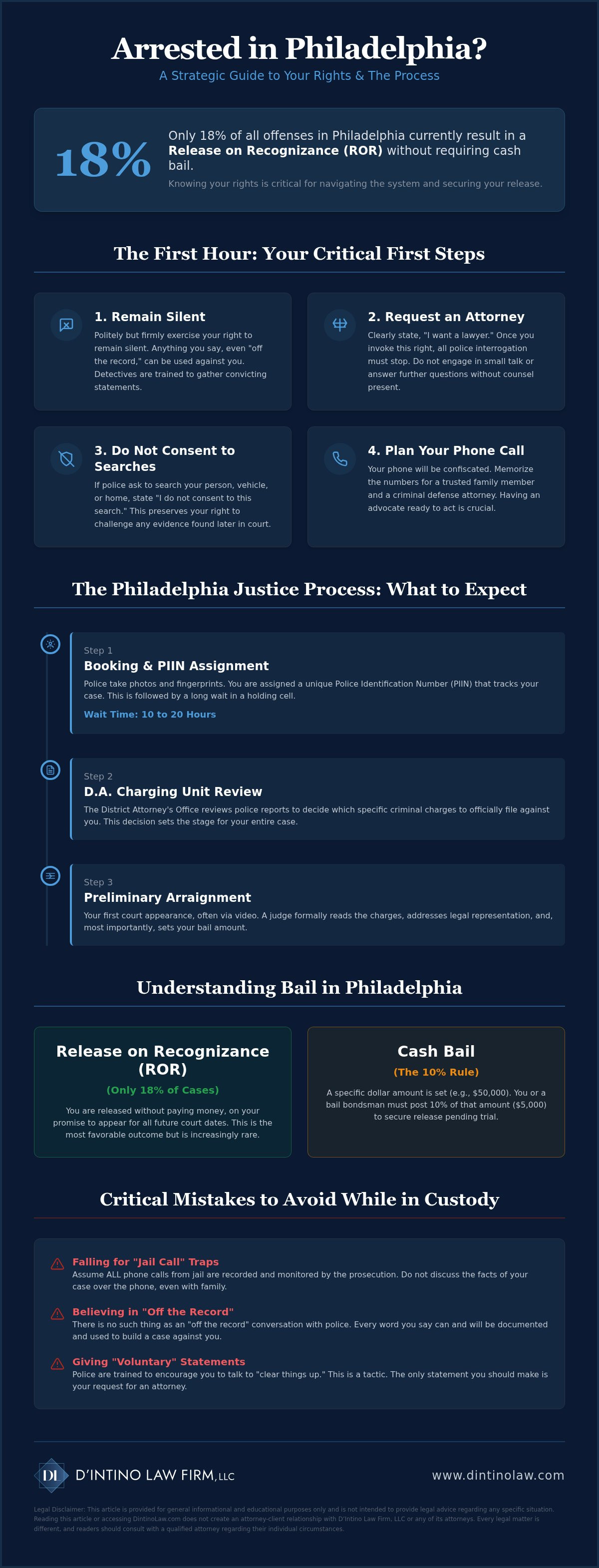
Did you know that only 18 percent of all offenses in Philadelphia currently result in a Release on Recognizance without a cash bail? If you are arrested in Philadelphia what to do first is a question that requires an immediate, strategic answer. You’re likely feeling a mix of fear and confusion as you wonder about jail time, your career, and your reputation. It’s completely normal to feel anxious about the unknown steps ahead; the system is often intimidating and complex.
This guide provides a strategic roadmap to protect your rights. We’ll walk you through the preliminary arraignment, explain how bail is determined in Pennsylvania, and show you how to find a seasoned advocate who treats your case as a priority. You don’t have to face this high-stakes battle alone. Having a clear plan is the best way to secure your release and start building a strong defense.
Legal Disclaimer: This article is provided for general informational and educational purposes only and is not intended to provide legal advice regarding any specific situation. Reading this article or accessing DintinoLaw.com does not create an attorney-client relationship with D’Intino Law Firm, LLC or any of its attorneys. Every legal matter is different, and readers should consult with a qualified attorney regarding their individual circumstances.
Key Takeaways
- Learn why exercising your right to remain silent and requesting an attorney immediately are the most critical steps to take after being taken into custody.
- Discover exactly what happens during the PPD booking process so you know what to expect if you are arrested in Philadelphia what to do next.
- Understand how the Philadelphia bail system works, including the 10% rule and the differences between Release on Recognizance and cash bail.
- Identify the common “jail call” traps and other critical mistakes that can inadvertently provide the prosecution with evidence against you.
- Find out why working directly with a seasoned trial attorney like John D’Intino Jr. ensures your case receives personal attention instead of being handed to a junior associate.
Immediate Actions: The First Hour After a Philadelphia Arrest
The moments following an arrest are chaotic and high stakes. Your adrenaline is surging, and your natural instinct might be to explain your way out of the situation. This is a critical mistake. In Pennsylvania, the first 60 minutes of custody often determine the strength of the prosecution’s case. If you are understanding the arrest process and wondering about being arrested in Philadelphia what to do, the answer is simple: stop talking and start protecting your future.
You must exercise your right to remain silent immediately. Do this politely but firmly. You aren’t being difficult; you’re exercising a fundamental constitutional right. Anything you say to an officer, even if they claim it is “off the record,” is legally admissible as evidence against you in court. Philadelphia detectives are skilled at building rapport to encourage “voluntary” statements, but their goal is to secure a conviction, not to help you.
Invoking Your Right to Counsel
Clearly stating “I want a lawyer” is your most powerful defense. Once you make this request, the police must stop all interrogation. Don’t engage in small talk about the weather, your family, or the circumstances of your arrest. These casual conversations are often used to gather information that bypasses Miranda protections. A single, direct sentence explaining that you won’t answer questions without an attorney present effectively shuts down the interrogation room and prevents you from accidentally incriminating yourself.
Handling Police Interactions and Searches
Never consent to a search of your person, vehicle, or home. If an officer asks to look around, say “I do not consent to this search.” This refusal doesn’t make you look guilty; it preserves your legal standing to challenge evidence later. If the police claim they have a warrant, ask to see it and read it carefully. In Philadelphia, street stops require probable cause or reasonable suspicion, but giving consent waives your right to contest the legality of that search in the future.
You’ll eventually be allowed to make a phone call. Don’t rely on your cell phone’s contact list, as the police will likely have confiscated your device during booking. Memorize two essential numbers: a trusted family member and a seasoned criminal defense attorney. Knowing exactly who to call when you are arrested in Philadelphia what to do next becomes much clearer. Having an advocate ready to move on your behalf is the first step toward securing your release.
Legal Disclaimer: This article is provided for general informational and educational purposes only and is not intended to provide legal advice regarding any specific situation. Reading this article or accessing DintinoLaw.com does not create an attorney-client relationship with D’Intino Law Firm, LLC or any of its attorneys. Every legal matter is different, and readers should consult with a qualified attorney regarding their individual circumstances.
Navigating the Philadelphia Criminal Justice Process
Philadelphia’s legal system is a massive, high-speed machine that runs 24 hours a day, seven days a week. Once you are in custody, the clock starts ticking on a series of administrative and judicial steps. Understanding Philadelphia’s criminal justice process is essential for anyone trying to figure out being arrested in Philadelphia what to do. You aren’t just a name anymore; you’re a file being processed by the Philadelphia Police Department (PPD) and the District Attorney’s Charging Unit.
The Booking Phase and PIIN Assignment
The booking process is the first administrative hurdle. Officers take your photographs and fingerprints to catalog your personal information into the city’s database. A central part of this stage is the assignment of your Police Identification Number, or “PIIN.” This unique identifier stays with you and tracks every movement of your case through the local system. Wait times in Philadelphia district holding cells or the Police Detention Unit (PDU) can be grueling. It often takes 10 to 20 hours for the District Attorney’s Charging Unit to review the police reports and determine which specific charges to officially file against you.
The Preliminary Arraignment
Your first encounter with a judicial officer is the Preliminary Arraignment. In Philadelphia, this typically happens via a video link between the holding facility and a bail commissioner sitting in a different location. This isn’t a trial to determine guilt. It is a procedural hearing where you are formally told of your charges and your bail is set. Having a private attorney who specializes in Philadelphia criminal defense is invaluable here. An experienced advocate can argue for lower bail or non-monetary release conditions. Without a strong voice to represent you, the bail commissioner might set a high cash bail based solely on the prosecutor’s summary of the allegations.
The 24-hour cycle means these hearings happen at all hours of the day and night. If you’re processed at 3 AM, your arraignment might happen shortly after sunrise. This speed can be overwhelming for families trying to figure out being arrested in Philadelphia what to do for their loved one. You need someone on your side who is ready to move just as fast to protect your rights from the very start. Professional representation ensures that you aren’t just another number in a crowded system.
Legal Disclaimer: This article is provided for general informational and educational purposes only and is not intended to provide legal advice regarding any specific situation. Reading this article or accessing DintinoLaw.com does not create an attorney-client relationship with D’Intino Law Firm, LLC or any of its attorneys. Every legal matter is different, and readers should consult with a qualified attorney regarding their individual circumstances.
Understanding Bail and Release in Philadelphia Courts
After the preliminary arraignment, your primary goal is securing your release. In Pennsylvania, bail is designed to ensure you appear for all future court dates, not to serve as a pre-trial punishment. If you are wondering about being arrested in Philadelphia what to do regarding your freedom, you must understand how the city’s specific “10 percent rule” functions. This system allows you to post a fraction of the total bail amount to the court to get home while your case is pending.
Philadelphia uses several types of bail. Release on Recognizance (ROR) is the most favorable, requiring only a signature and a promise to appear. However, the current ROR rate in Philadelphia is only about 18 percent for all offenses. For more serious charges, such as firearms possession, the District Attorney’s data shows that bail is set at over $25,000 in 78 percent of cases. Under the 10 percent rule, if your bail is $25,000, you only need to pay $2,500 to the court to be released. This money is typically returned at the end of the case, provided you attend every hearing, though the city keeps a small administrative fee.
The Bail Commissioner weighs several factors when setting these amounts, including your community ties, employment status, and any past record. While a city “Bail Advocate” provides a basic report to the Commissioner, they are handling hundreds of cases. A private defense attorney provides a far more personalized argument, focusing on your specific stability and why you aren’t a flight risk.
Securing Your Release
Once bail is set, payment can be made in person at the Criminal Justice Center (CJC) at 1301 Filbert Street or through the city’s online portal. Even after payment, release isn’t immediate. It often takes several hours for the paperwork to move through the Philadelphia Prison System. If you cannot afford the amount set, you’ll remain in custody. In these situations, being arrested in Philadelphia what to do becomes a matter of legal strategy; your lawyer can file a formal motion to have a judge review and potentially lower the bail amount.
Bail Revocation and Conditions
Release often comes with strict conditions. You might be ordered to wear a GPS monitoring device, stay under house arrest, or comply with “stay away” orders regarding specific individuals. Violating these rules can lead to immediate bail revocation and a return to jail. If the initial conditions are too restrictive, a seasoned attorney can petition the court for a modification. This proactive approach ensures you can maintain your employment and family life while preparing for your defense.
Legal Disclaimer: This article is provided for general informational and educational purposes only and is not intended to provide legal advice regarding any specific situation. Reading this article or accessing DintinoLaw.com does not create an attorney-client relationship with D’Intino Law Firm, LLC or any of its attorneys. Every legal matter is different, and readers should consult with a qualified attorney regarding their individual circumstances.
Critical Mistakes to Avoid While in Custody
Being locked in a cell is an isolating experience. You feel a desperate need to reach out to loved ones or explain your side of the story to anyone who will listen. This vulnerability is exactly what the prosecution counts on. If you are arrested in Philadelphia what to do next depends on your ability to stay quiet. Silence remains your best defense when you are behind bars.
Every conversation you have inside a Philadelphia holding facility is a potential piece of evidence. This includes talking to your cellmate. While they might seem supportive or share their own legal troubles to build trust, many inmates are looking for a way to reduce their own sentences. They can and will testify against you if you share details about your case. Information is currency in jail; don’t pay for someone else’s freedom with your own.
You must also stay off social media. Even if you have access to a device or have a friend post for you, don’t share “your side” online. A vague post about “getting through this” or an angry comment about the police can be used to establish your location or state of mind. Similarly, don’t discuss the case with family. Pennsylvania law does not recognize a “family privilege.” If you tell your brother or mother what happened, the District Attorney can subpoena them to testify against you in court.
The Recorded Phone Call Warning
Philadelphia jails use sophisticated recording technology for every outbound call. Only calls to your attorney are legally privileged. Prosecutors routinely listen to these recordings looking for a “consciousness of guilt.” Even a seemingly innocent apology or a request for someone to “hide my stuff” can be twisted into a confession of intent. The rule is absolute: never discuss the facts of the crime over a jail phone. If you need a Philadelphia criminal defense attorney who will protect you from these traps, you need an advocate who handles your case personally.
The Myth of the “Friendly” Detective
Detectives in Philadelphia are trained in rapport-building techniques. They might offer you water, a cigarette, or a chance to “clear things up” so you can go home. They aren’t your friends. They are professional investigators gathering evidence to support a conviction. You can shut down questioning without appearing combative by simply stating that you won’t answer questions without your lawyer. This isn’t a sign of guilt; it is a sign of intelligence that protects your future, and this advice is vital in any jurisdiction, including during the complex undercover stings described at tadlaw.com.
Legal Disclaimer: This article is provided for general informational and educational purposes only and is not intended to provide legal advice regarding any specific situation. Reading this article or accessing DintinoLaw.com does not create an attorney-client relationship with D’Intino Law Firm, LLC or any of its attorneys. Every legal matter is different, and readers should consult with a qualified attorney regarding their individual circumstances.
Why Direct Representation from John D’Intino Jr. Matters
Choosing the right lawyer is the most consequential decision you’ll make after being taken into custody. Many large law firms operate like factories. They use a senior partner to sign you up, only to hand your case file to a junior associate who may have very little courtroom experience. This “hand-off” model often leaves clients feeling ignored and undervalued during the most stressful time of their lives. When you are arrested in Philadelphia what to do next should involve finding an advocate who stays with you from the preliminary arraignment through the final resolution.
John D’Intino Jr. provides direct, hands-on representation for every client. With over 20 years of experience specifically within the Pennsylvania criminal justice system, he understands the nuances of local courtrooms and the tendencies of Philadelphia prosecutors. Whether you are facing a VUFA (Uniform Firearms Act) violation, a DUI, or a high-stakes felony, your strategy is crafted personally by an attorney who has spent two decades in the trenches. You aren’t just a case number here; you are a priority.
The Advantage of a Boutique Defense Firm
Working with a boutique firm means you benefit from a limited caseload and personalized attention. Because we don’t juggle hundreds of files at once, we have the time to investigate every detail of your arrest and identify weaknesses in the prosecution’s evidence. This direct accountability ensures that your lawyer knows your case as well as you do. To make elite defense accessible to those who need it most, we also offer flexible payment options tailored to your financial situation.
Trial-Ready Advocacy
We prepare every case as if it is going to trial. This “fighter” mentality is a strategic necessity in Pennsylvania. When the District Attorney knows a defense lawyer is prepared to litigate aggressively in front of a jury, they are often more willing to offer favorable plea deals or non-custodial sentences. John D’Intino’s history of aggressive litigation means he won’t back down when the stakes are high. If you are facing charges, schedule your free consultation with John D’Intino Jr. today.
Legal Disclaimer: This article is provided for general informational and educational purposes only and is not intended to provide legal advice regarding any specific situation. Reading this article or accessing DintinoLaw.com does not create an attorney-client relationship with D’Intino Law Firm, LLC or any of its attorneys. Every legal matter is different, and readers should consult with a qualified attorney regarding their individual circumstances.
Take Control of Your Legal Future
Navigating the Philadelphia criminal justice system requires a blend of silence, strategy, and seasoned advocacy. You now know the importance of invoking your right to counsel immediately and the risks of recorded jail calls. Understanding how the 10 percent bail rule works in Pennsylvania gives you the foundation to fight for your release. When you are arrested in Philadelphia what to do next is choose an advocate who treats your case with the urgency it deserves.
While local laws vary, the need for a strong defense is universal, and you can learn more about Law Offices of Gary Churak if you are seeking similar legal guidance in the San Antonio region.
Attorney John D’Intino Jr. brings over 20 years of criminal defense experience to your side. You’ll work directly with him, ensuring your case never gets handed off to a junior associate. We offer free initial consultations and flexible payment options to ensure you have access to a fighter in the courtroom. Secure your defense—contact Attorney John D’Intino Jr. for a free consultation. You don’t have to face this process alone; we’re ready to help you move forward.
Legal Disclaimer: This article is provided for general informational and educational purposes only and is not intended to provide legal advice regarding any specific situation. Reading this article or accessing DintinoLaw.com does not create an attorney-client relationship with D’Intino Law Firm, LLC or any of its attorneys. Every legal matter is different, and readers should consult with a qualified attorney regarding their individual circumstances.
Frequently Asked Questions
How long can the Philadelphia police hold me without charges?
Philadelphia police can generally hold you for up to 48 hours before you must be brought before a judicial officer for a preliminary arraignment. In most cases, the District Attorney’s Charging Unit makes a charging decision within 10 to 20 hours. If you aren’t charged within this window, you must be released. Having an attorney monitor the process ensures you don’t stay in custody longer than Pennsylvania law allows.
Will I get a phone call after being arrested in Philly?
You are entitled to make at least one phone call after being processed at a Philadelphia police district. This typically happens after fingerprints and photographs are taken, which can take several hours. Remember that these calls are recorded and aren’t private. Use your call to contact a family member or a lawyer who knows being arrested in Philadelphia what to do to secure your release and protect your rights.
What is a Preliminary Hearing, and why is it different from Arraignment?
A Preliminary Arraignment is your first appearance where a commissioner sets bail and reads the charges. In contrast, a Preliminary Hearing happens 3 to 10 days later. At this hearing, the prosecution must present enough evidence to show that a crime was likely committed and that you were the one who committed it. It’s a critical stage where your attorney can cross-examine witnesses in Pennsylvania courts to challenge the case.
Do I need a lawyer for a misdemeanor arrest in Philadelphia?
Yes, you should always have legal representation for a misdemeanor arrest because the consequences are still life altering. Misdemeanors in Pennsylvania can lead to jail time, significant fines, and a permanent criminal record that shows up on background checks. An experienced attorney helps you understand the specific charges and works to protect your future employment and housing opportunities. Don’t underestimate the impact of any criminal conviction on your record.
What happens if I missed my court date in Philadelphia?
If you miss a court date in Philadelphia, the judge will likely issue a bench warrant for your arrest. This means the police can take you into custody during a routine traffic stop or at your home. Your bail could also be revoked or increased significantly. If you missed a date, contact an attorney immediately to file a motion to lift the warrant and reschedule your appearance before you are picked up.
Can my Philadelphia criminal record be expunged later?
Many criminal records in Pennsylvania can be expunged or sealed depending on the outcome of the case. If your charges were dismissed or you were found not guilty, you are generally eligible for expungement. Under Pennsylvania’s Clean Slate law, some misdemeanor convictions can be sealed from public view after 10 years without a new arrest. An attorney can review your specific record to determine your eligibility and guide you through the process.
How much does a criminal defense lawyer cost in Philadelphia?
The cost of a criminal defense lawyer in Philadelphia varies based on the complexity of the charges and whether the case goes to trial. Most private attorneys use a flat-fee structure for specific stages of the case. While fees for a felony defense are generally higher than for a summary offense, many boutique firms offer flexible payment options to make elite representation more accessible. Always discuss financial transparency during your initial consultation.
What is the difference between a felony and a misdemeanor in PA?
The primary difference between a felony and a misdemeanor in Pennsylvania is the maximum potential sentence. Felonies are the most serious crimes, often carrying years of prison time and the loss of certain civil rights, such as the right to own a firearm. Misdemeanors are less severe but can still result in up to five years of incarceration depending on the grade. Knowing being arrested in Philadelphia what to do starts with understanding these classifications.
Legal Disclaimer: This article is provided for general informational and educational purposes only and is not intended to provide legal advice regarding any specific situation. Reading this article or accessing DintinoLaw.com does not create an attorney-client relationship with D’Intino Law Firm, LLC or any of its attorneys. Every legal matter is different, and readers should consult with a qualified attorney regarding their individual circumstances.
Disclaimer
Legal Disclaimer: The information provided on DintinoLaw.com, including articles, blog posts, testimonials, case results, and other content, is for general informational and educational purposes only and does not constitute legal advice or create an attorney-client relationship with D’Intino Law Firm, LLC or any of its attorneys. Visiting this website, submitting a contact form, sending an email, calling, texting, or otherwise communicating with the firm does not establish an attorney-client relationship or obligate the firm to represent you. Do not submit confidential, privileged, or time-sensitive information through this website or electronic communications unless and until the firm has expressly agreed to represent you. Legal rights, procedures, statutes of limitation, filing deadlines, and other requirements vary based on the facts and jurisdiction and may change over time; nothing on this website should be relied upon to determine whether a legal deadline applies to your matter. If you have an urgent legal matter or a potential filing deadline, consult a qualified attorney promptly. Testimonials and statements regarding client experiences are individual opinions and experiences and are not a guarantee of future results. Prior results, verdicts, settlements, or case examples do not guarantee or predict the outcome of any future case, and every matter is different. This website may constitute attorney advertising under applicable Pennsylvania rules. D’Intino Law Firm, LLC makes no representation that the information on this website is complete, current, or applicable to your particular circumstances. For legal advice concerning your specific situation, consult directly with a qualified Pennsylvania attorney. D’Intino Law Firm, LLC | Philadelphia, Pennsylvania | DintinoLaw.com
